 Preview
 Send
Send Share
Share
 Details

 Download
 Similars
 X-Ray
X-Ray Diaporama
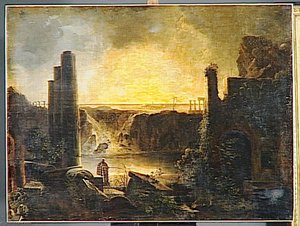
VUE DE CAZZAFANI, DANS L'ILE DE CHYPRE


 Read More
Hand Made Oil Reproduction
Hand-painted oil on canvas in your size and frame, made to order by our artists. ( Buy Print Buy Image)




P118B $10

P118H $10

P118W $10

P438Z $10

P508JH $12

P508YH $12

P805H $10

P805Z $10

P919BZ $10

P919G $10

P919XJ $10

P959ZH $10

P968JZ $12

W106C $8

W218G $10

W218JH $8

W218Y $10

W307PJ $10

W316G $10

W316PJ $8

W316Y $10

W398PJ $8

W4111J $10

W500HY $15

W500JH $15

W692G $12

W849H $8

W940BG $15

W953PJ $8




Pick from our preset sizes that match the artwork's original proportions.

You may enter your own dimensions to fit a specific frame or space. If your selected size does not match the original image's proportions, we will either crop the artwork or extend the painting with additional hand-painted elements. A digital mockup will be sent for your approval before production begins.
Please note that the on-screen preview does not reflect the actual cropping or extension. Only the mockup will accurately show the final composition.
While custom sizes are available, we recommend selecting a dimension from the predefined list to preserve the original proportions.
After order, ArtsDot.com team will email client for instructions and provide a mockup preview
Worldwide Delivery () in 3/4 weeks instead of standard 5 weeks. (17 August). No compromise on quality.

Free Worldwide Express Shipping

High-Quality Linen Canvas

Full Shipping Insurance

Customs Tax Refund Guarantee

True Color Matching Guarantee

60-Day Return Policy (Defects Only)

100% Money-Back Guarantee

Bulk Discount Offer
 Glass option is only available in size under 110 CM

VUE DE CAZZAFANI, DANS L'ILE DE CHYPRE
Reproduction Medium
Reproduction Size
-


Total Price
$ 263
Artwork Description
A Haunting Echo: Auguste de Forbin’s ‘Vue de Cazzafani’
Auguste de Forbin’s “Vue de Cazzafani, dans l'île de Chypre” isn’t merely a depiction of a landscape; it’s an experience. A visceral encounter with the relentless passage of time, rendered in a masterful blend of realism and evocative abstraction. The painting, a fragmented testament to a bygone era, immediately draws the viewer into its melancholic embrace – a ghostly reminder of beauty lost and the enduring power of decay. It's a work that whispers stories of conflict, artistic ambition, and the inevitable erosion of all things.
The Artist and His Time: Forbin’s Complex Legacy
Auguste de Forbin (1777 – 1841) was a figure caught between the idealism of the Romantic era and the pragmatic realities of Napoleonic France. Born into a noble family in Provence, his early life was shaped by both artistic training and personal tragedy—the assassination of his father during the tumultuous events of the French Revolution profoundly impacted him. His career as a painter and antiquarian intertwined with military service, diplomatic missions, and ultimately, a deep engagement with the art world of Paris. Forbin’s journey reflects the broader shifts occurring in European society – a transition from revolutionary fervor to the restoration of the monarchy, marked by both artistic innovation and political instability.
His association with Princess Pauline Borghese, a passionate affair that spanned several years, further cemented his place within the circles of power and influence. This connection not only shaped his personal life but also informed his artistic sensibilities, imbuing his work with a sense of both grandeur and vulnerability. The painting’s subject matter – a ruined landscape – can be interpreted as a reflection of this complex interplay between personal experience and historical context.
Deconstructing Decay: Technique and Symbolism
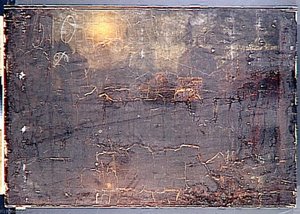
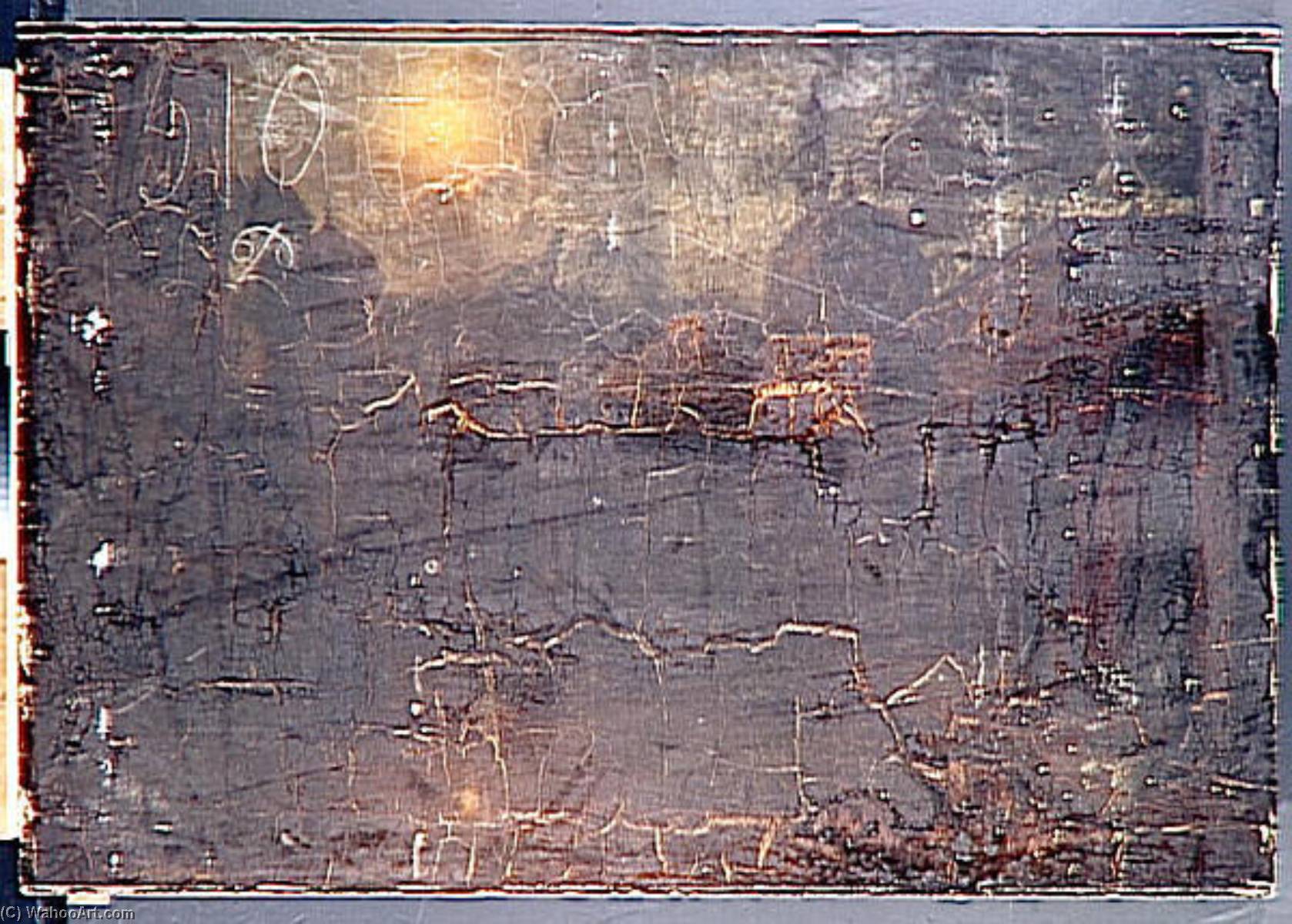
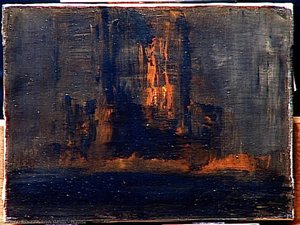
“Vue de Cazzafani” is executed in oil on canvas, utilizing a layered technique that emphasizes the texture of decay. The surface is a chaotic tapestry of cracks, fissures, and discoloration—a deliberate representation of time’s relentless assault. The artist doesn't shy away from revealing the underpainting; instead, he embraces it as an integral part of the narrative. Hints of figures – perhaps a ship or a crumbling fortress – emerge from the damage, suggesting memories struggling to surface amidst the ruins. The muted palette—dominated by dark browns, grays, and subtle hints of yellow and orange—contributes to the painting’s somber mood.
The choice of subject matter itself is laden with symbolism. A ruined landscape speaks to loss, impermanence, and the futility of human ambition. It's a meditation on the cyclical nature of history – destruction followed by potential rebirth—a theme particularly resonant in the context of 19th-century Europe grappling with the aftermath of revolution and war.
A Fragment of Remembrance: The Painting Today
“Vue de Cazzafani, dans l'île de Chypre” is more than just a historical artifact; it’s a powerful emotional experience. Its damaged state invites contemplation on the fragility of beauty and the enduring power of memory. The painting’s evocative quality makes it particularly compelling for interior designers seeking to create spaces that evoke a sense of history, mystery, and quiet reflection. Reproductions offer an accessible way to bring this haunting masterpiece into your home, allowing you to experience its melancholic beauty firsthand.
Related Artworks
Artist Biography
Auguste de Forbin: A Painter Caught Between Romantic Idealism and Napoleonic Pragmatism
Auguste de Forbin (1777 – 1841) stands as a fascinating figure in French art history, embodying the complexities of his era—a period marked by turbulent political upheaval and burgeoning artistic innovation. Born into a noble family at Château La Roque-d’Anthéron, Provence, he possessed an innate talent for drawing from a young age, nurtured by a formative friendship with François Marius Granet, a relationship that would endure throughout their lives. This early training instilled in him a sensitivity to observation and detail, qualities that would characterize his artistic endeavors. His artistic journey began amidst the fervor of the French Revolution, where he witnessed firsthand the dramatic shifts reshaping French society. The assassination of his father, Marquis de Pont-à-Mousson, during the Lyon insurrection profoundly impacted Forbin’s life, highlighting the dangers inherent in political instability. Remarkably resilient, he escaped unscathed thanks to his youth and continued his artistic pursuits alongside Granet, honing their skills in the tranquil countryside—a deliberate contrast to the tumultuous urban landscape of Paris. David's Studio: The Crucible of Style The Directory offered Forbin a crucial opportunity for artistic advancement – access to Jacques-Louis David’s prestigious studio, a bastion of neoclassical ideals. Here, he collaborated closely with Granet, absorbing the stylistic influences of David and establishing himself firmly within the dominant artistic movement. This association proved invaluable in shaping his aesthetic sensibilities and propelling him toward mastery of technique. From Rome to Napoleon: Artistic Pilgrimage and Imperial Patronage Forbin’s travels to Rome in 1804 solidified his commitment to classical art principles, immersing him in the vibrant intellectual atmosphere of francophile Roman society. He embraced a carefree lifestyle, indulging in leisure pursuits alongside Granet—a period marked by considerable artistic experimentation. Notably, he secured the patronage of Princess Pauline Borghese, Napoleon’s sister, forging a romantic relationship that lasted until 1807 and produced a celebrated villa at Aix-en-Provence. His military service during the Napoleonic Wars – Portugal and Austria – earned him recognition and honors, including the Croix d'honneur. He returned to Italy, producing monumental history paintings that showcased his ambition and artistic prowess. Notable Works & Legacy Forbin’s oeuvre comprises a diverse range of subjects—primarily landscapes and historical scenes—characterized by meticulous realism combined with subtle expressive qualities. “Vue de Jérusalem” exemplifies his masterful depiction of architectural grandeur and atmospheric perspective, while "Vue de Cazzafani" presents a hauntingly beautiful portrayal of ruin—a poignant reflection on the passage of time and decay. His exploration of color palettes and brushwork demonstrates an evolving artistic style that anticipates elements of Impressionism. Auguste de Forbin’s contribution to French art is significant not only for his technical skill but also for representing the intellectual currents of his era, bridging the gap between Romantic idealism and Napoleonic pragmatism—a testament to a painter who navigated the complexities of history with unwavering dedication and artistic vision.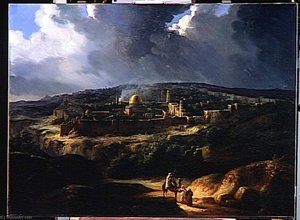
Auguste de Forbin
1777 - 1841
Quick Facts
- Artistic Movement Or Style: Romanticism
- Artists Or Movements Influenced By This Artist: ['Neoclassicism']
- Artists Who Influenced This Artist: ['François Marius Granet']
- Date Of Birth: 1777
- Date Of Death: 1841
- Full Name: Auguste de Forbin
- Nationality: French
- Notable Artworks:
- Vue de Jérusalem, prise de la vallée de Josaphat
- Vue de Cazzafani, dans l’île de Chypre
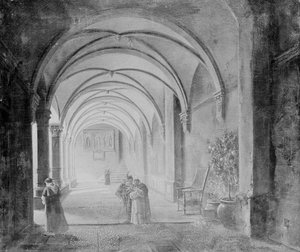
- Vue d’un cloître sur les bords de la Méditerranée, près de Carrère
- Place Of Birth: Laroched'antheron, France
Related Articles

Demandes Commerciales
APS ofrece reproducciones de bellas artes y encargos personalizados desde 2004. Confían en nosotros corporaciones, hoteles y coleccionistas selectos para obras de arte de calidad museística, servicio discreto y soluciones artísticas completas. ¡Póngase en contacto con nosotros para obtener un presupuesto personalizado!
Renoir's Masterpieces: Explore 25 Iconic Paintings & Bring Art Home | ArtsDot
Explore 25 iconic Pierre-Auguste Renoir paintings! Discover the stories behind Impressionist masterpieces like 'Dance at Le Moulin de la Galette' & 'Luncheon of the Boating Party'. Find museum-quality art reproductions and elevate your home decor with ArtsDot.com.

Goya's Masterpieces: Explore 25 Iconic Paintings & Art Prints | ArtsDot
Delve into the world of Francisco Goya with ArtsDot. Explore 25 iconic paintings – from 'The Third of May' to his haunting Black Paintings. Discover the stories, techniques & emotions behind these Spanish masterpieces. Find museum-quality art reproductions for your home at ArtsDot.com!

Abstract Expressionism's 10 Defining Masterpieces |
Explore 10 defining Abstract Expressionism masterpieces by Pollock, Rothko & de Kooning. Discover the stories behind these iconic paintings and find museum-quality art reproductions to elevate your home decor on .

Kandinsky's Masterpieces: 25 Paintings That Define Abstract Art | ArtsDot
Journey through Wassily Kandinsky's 25 most iconic abstract paintings. Explore his revolutionary use of color, form & spiritual expressionism. Find museum-quality Kandinsky reproductions and elevate your home decor with ArtsDot.com. Discover all masterpieces on ArtsDot.com!