 Preview
 Send
Send Share
Share
 Details

 Download
 Similars
 X-Ray
X-Ray Diaporama
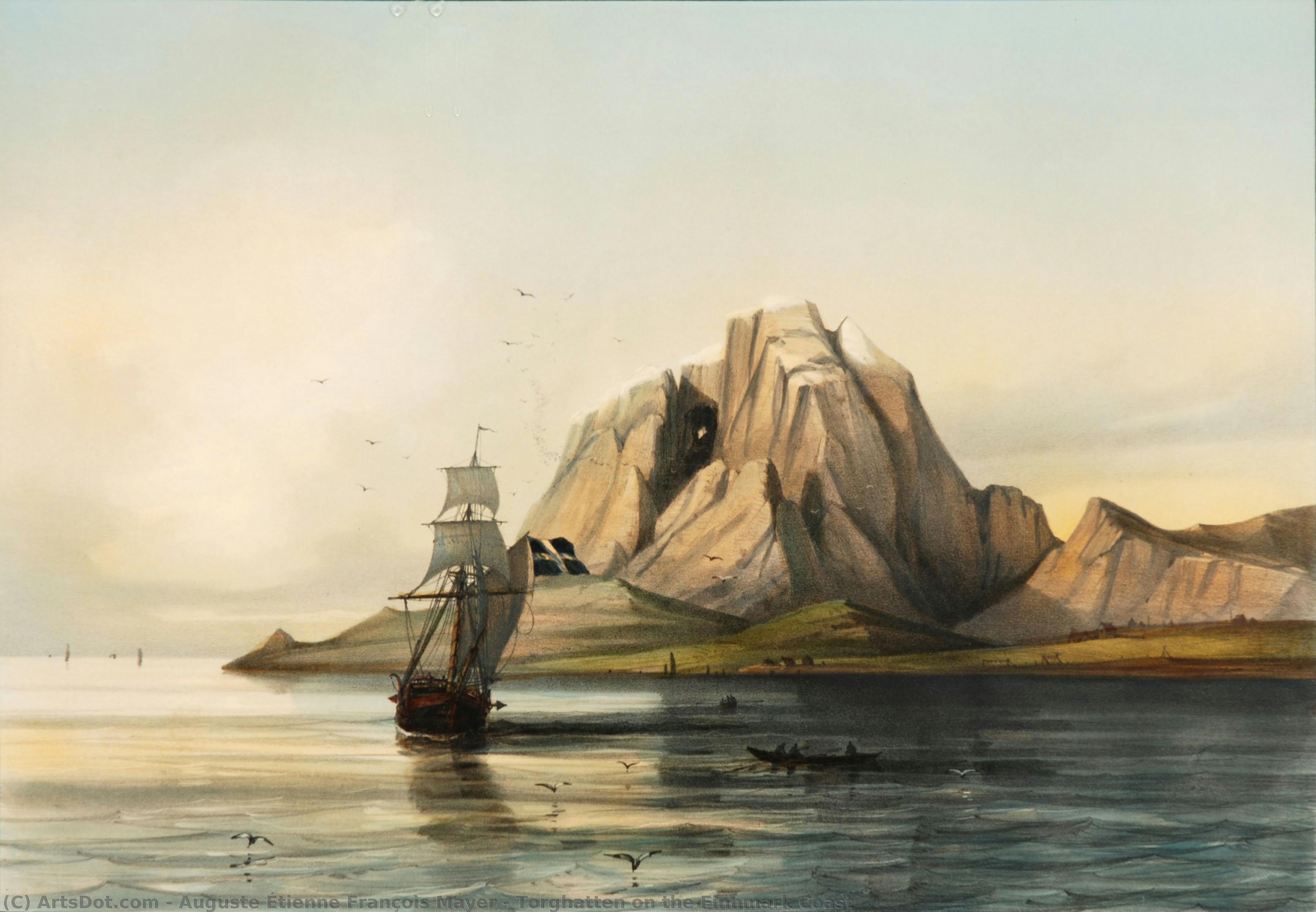
Torghatten on the Finnmark Coast
 1856
1856 24.0 x 35.0 cm
 Nordnorsk Kunstmuseum
 Read More
Hand Made Oil Reproduction
Hand-painted oil on canvas in your size and frame, made to order by our artists. ( Buy Print Buy Image)




































Pick from our preset sizes that match the artwork's original proportions.

You may enter your own dimensions to fit a specific frame or space. If your selected size does not match the original image's proportions, we will either crop the artwork or extend the painting with additional hand-painted elements. A digital mockup will be sent for your approval before production begins.
Please note that the on-screen preview does not reflect the actual cropping or extension. Only the mockup will accurately show the final composition.
While custom sizes are available, we recommend selecting a dimension from the predefined list to preserve the original proportions.
After order, ArtsDot.com team will email client for instructions and provide a mockup preview
Worldwide Delivery () in 3/4 weeks instead of standard 5 weeks. (31 August). No compromise on quality.

Free Worldwide Express Shipping

High-Quality Linen Canvas

Full Shipping Insurance

Customs Tax Refund Guarantee

True Color Matching Guarantee

60-Day Return Policy (Defects Only)

100% Money-Back Guarantee

Bulk Discount Offer
 Glass option is only available in size under 110 CM

Torghatten on the Finnmark Coast
Reproduction Medium
Reproduction Size
-


Total Price
$ 263
Related Artworks









Artist Biography
The Navigator of the Canvas: The Life and Legacy of Auguste Mayer
In the grand tapestry of nineteenth-century French art, few figures possess a spirit as inextricably linked to the salt spray and shifting ice as Auguste Étienne François Mayer. Born in the maritime stronghold of Brest in 1805, Mayer was a man whose very soul was shaped by the rhythmic pulse of the Atlantic. He was not merely a painter observing the sea from the safety of a shore; he was a naval artist in the truest sense, a figure who bridged the gap between the rigorous discipline of maritime engineering and the ethereal beauty of romantic seascape painting. His life, spanning from the Napoleonic era to the twilight of the nineteenth century, serves as a profound chronicle of an age defined by both scientific curiosity and an unyielding romanticism for the unknown.
Mayer’s artistic journey was deeply rooted in his formal education at the École Navale, an institution that provided him with more than just technical skill; it gifted him with a profound understanding of naval architecture and the mechanics of the sea. This scientific foundation allowed him to approach his subjects with a level of precision that few of his contemporaries could match. When he captured the imposing silhouette of a warship or the complex rigging of a sailing vessel, he did so with an eye for structural truth. Yet, this academic rigor never stifled his poetic sensibility. Instead, it served as the skeleton upon which he draped the dramatic, luminous textures of light and water, creating works that were simultaneously documents of naval reality and evocative masterpieces of atmosphere.
Beyond the Horizon: Arctic Expeditions and Scientific Discovery
While Mayer’s early career was marked by his regular presence at the prestigious Paris Salon—where he first exhibited an oil painting in 1824—it was his transition from a painter of ships to a chronicler of the frozen north that secured his historical significance. As the Victorian era became gripped by the fever of polar exploration, Mayer embarked on several scientific expeditions, most notably the Crocker Expedition to Franz Josef Land in 1879. These voyages transformed his palette and his perspective. The turbulent, deep blues of the open ocean gave way to the stark, blinding whites and ethereal cerulean shadows of the Arctic wilderness.
In these remote reaches of the globe, Mayer’s role evolved into that of a visual scientist. He utilized his lithographic skills and painterly mastery to document landscapes that were, for many in Europe, entirely mythical. His work from these expeditions captures a unique intersection of genres:
- The Sublime Arctic Landscape: Depictions of massive icebergs and desolate polar vistas that evoke the terrifying beauty of the natural world.
- Maritime Endurance: Scenes of ships navigating treacherous ice floes, highlighting the tension between human technology and elemental force.
- Scientific Observation: Meticulous renderings of geological formations and maritime phenomena encountered during his travels through Norway, Iceland, and beyond.
A Legacy Written in Salt and Light
The significance of Auguste Mayer extends far beyond the borders of France or the confines of naval academies. He stands as a pivotal voice in the history of marine art, representing a moment when the artist’s brush became an essential tool for scientific exploration. His travels through the Netherlands, Sweden, Turkey, and Egypt expanded his cultural horizons, yet it was the cold, crystalline light of the Arctic that truly defined his artistic zenith. Through his work, the era's fascination with discovery was given a tangible, breathtaking form.
Even as he rose to distinction within the French honors system—becoming a Chevalier in the Legion of Honour and later an Officer—Mayer remained a student of the sea. His ability to marry the meticulous detail of academic realism with the sweeping emotionality of the romantic movement allowed him to capture the dual nature of the ocean: its terrifying power and its transcendent grace. Today, his legacy lives on in the archives of maritime history, reminding us of a time when art and exploration were two sides of the same adventurous coin, forever navigating the boundary between the known world and the infinite horizon.
auguste étienne françois mayer
1805 - 1890 , France
Quick Facts
- Artistic Movement Or Style: Marine art
- Date Of Birth: July 3, 1805
- Full Name: Auguste Étienne François Mayer
- Nationality: French
- Notable Artworks: ['Torghatten on the Finnmark Coast']
- Place Of Birth: Brest, France