 Preview
 Send
Send Share
Share
 Details

 Download
 Similars
 X-Ray
X-Ray Diaporama
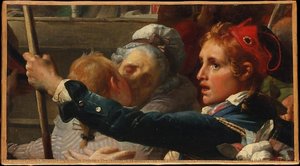
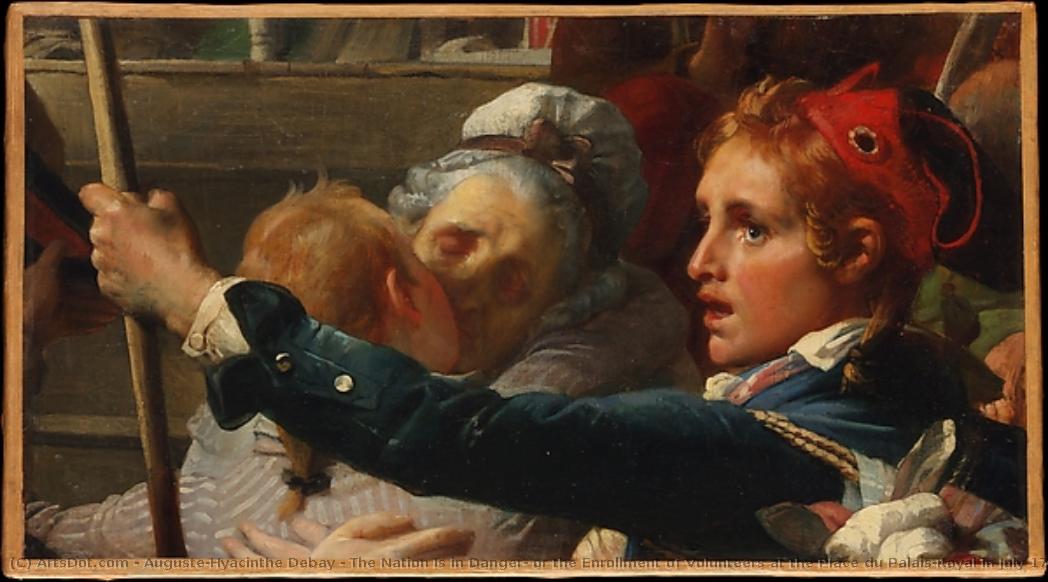
The Nation Is in Danger, or the Enrollment of Volunteers at the Place du Palais-Royal in July 1792
 1832
1832 29.0 x 53.0 cm
 Read More
Hand Made Oil Reproduction
Hand-painted oil on canvas in your size and frame, made to order by our artists. ( Buy Print Buy Image)




































Pick from our preset sizes that match the artwork's original proportions.

You may enter your own dimensions to fit a specific frame or space. If your selected size does not match the original image's proportions, we will either crop the artwork or extend the painting with additional hand-painted elements. A digital mockup will be sent for your approval before production begins.
Please note that the on-screen preview does not reflect the actual cropping or extension. Only the mockup will accurately show the final composition.
While custom sizes are available, we recommend selecting a dimension from the predefined list to preserve the original proportions.
After order, ArtsDot.com team will email client for instructions and provide a mockup preview
Worldwide Delivery () in 3/4 weeks instead of standard 5 weeks. (2 September). No compromise on quality.

Free Worldwide Express Shipping

High-Quality Linen Canvas

Full Shipping Insurance

Customs Tax Refund Guarantee

True Color Matching Guarantee

60-Day Return Policy (Defects Only)

100% Money-Back Guarantee

Bulk Discount Offer
 Glass option is only available in size under 110 CM

The Nation Is in Danger, or the Enrollment of Volunteers at the Place du Palais-Royal in July 1792
Reproduction Medium
Reproduction Size
-


Total Price
$ 263
Related Artworks







Artist Biography
Auguste-Hyacinthe Debay: A Parisian Sculptor Bridging Romanticism and Realism
Auguste-Hyacinthe Debay (1804 – 1865) stands as a prominent figure in French art history, recognized primarily for his sculptural achievements but also celebrated as a skilled painter who honed his craft under the tutelage of Antoine-Jean Gros. Born in Nantes, France, Debay’s artistic lineage traced back to his father, Joseph Jan Baptiste de Bay, a respected sculptor whose Parisian studio and local commissions established a foundation for Debay's own burgeoning talent. From childhood, he absorbed sculptural techniques from his father, demonstrating an early aptitude for manipulating form and material—a skill that would ultimately define his artistic legacy.- Early Training & Artistic Influences: Gros’s mentorship proved pivotal in shaping Debay’s artistic vision, introducing him to the principles of Romanticism while simultaneously grounding him in meticulous observation and realistic representation. Gros's emphasis on dramatic narrative and emotional intensity resonated deeply with Debay, influencing his approach to historical painting and contributing to his distinctive style.
- Prix de Rome & Artistic Shift: Debay’s triumph at the Prix de Rome in 1823 propelled him onto the international stage as a painter, yet he swiftly abandoned this medium for sculpture—a decision that cemented his reputation as one of France's foremost sculptors of the era. This deliberate redirection reflected a growing fascination with capturing human emotion and physicality through three-dimensional form, prioritizing expressive detail over idealized beauty.
Notable Sculptural Works & Artistic Style
Debay’s sculptural output encompassed a diverse range of commissions, including monumental sculptures for public spaces like the fountain in Place de la Concorde and the facade of École des Beaux-Arts—projects that showcased his mastery of technique and his ability to convey grandeur and emotion. His style was characterized by a blend of Romantic idealism and Realist precision, evident in works such as *The First Cradle*, depicting Eve and her sons Cain and Abel. This sculpture, lauded at the Great Exhibition of 1851, exemplifies Debay’s commitment to capturing psychological nuance alongside anatomical accuracy—a hallmark of his oeuvre. The inclusion of bas-reliefs on the base further underscored this dual focus on narrative and detail, mirroring Gros's influence and solidifying Debay’s position within the artistic landscape of his time.Historical Significance & Legacy
Debay’s sculptures gained considerable acclaim during his lifetime and continued to inspire admiration for decades afterward. His work served as a testament to the Romantic spirit’s fascination with dramatic storytelling and emotional expression, while simultaneously upholding the Realist tradition's dedication to meticulous observation and truthful depiction. Debay’s contribution to French sculpture is particularly noteworthy considering the period’s artistic climate—a time marked by debates over aesthetic ideals and stylistic conventions. His enduring popularity speaks to the power of his art to convey profound human emotions and capture timeless themes of motherhood, innocence, and moral conflict.Further Exploration
Debay's paintings can be viewed at Versailles, showcasing his versatility as an artist. For more detailed information about Debay’s life and artistic accomplishments, consult resources such as Musée Hyacinthe Rigaud and explore online databases like Dahesh Museum of Art and The Metropolitan Museum of Art. Access to digitized images and scholarly articles facilitates a deeper understanding of Debay's artistic contributions and their place within the broader context of 19th-century French art.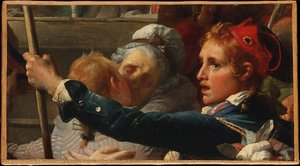
Auguste-Hyacinthe Debay
1804 - 1865 , France
Quick Facts
- Artistic Movement Or Style: Romanticism
- Artists Or Movements Influenced By This Artist: ['Romanticism']
- Artists Who Influenced This Artist: ['Antoine-Jean Gros']
- Date Of Birth: April 2, 1804
- Date Of Death: 1865
- Full Name: Auguste-Hyacinthe Debay
- Nationality: French
- Notable Artworks:
- The Nation Is in Danger, or the Enrollment of Volunteers at the Place du Palais-Royal in July 1792
- The First Cradle: Eve and Her Two Children
- Place Of Birth: Nantes, France