Preview
 Send
Send Share
Share
 Details

 Download
 Similars
 X-Ray
X-Ray Diaporama
 Stats
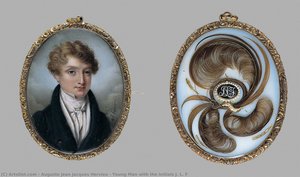
StatsYoung Man with the Initials J. L. F
 1830
1830 7.0 x 5.0 cm
 Read More
Hand Made Oil Reproduction
Hand-painted oil on canvas in your size and frame, made to order by our artists. ( Switch to Print Switch to Digital Image)




































Pick from our preset sizes that match the artwork's original proportions.

You may enter your own dimensions to fit a specific frame or space. If your selected size does not match the original image's proportions, we will either crop the artwork or extend the painting with additional hand-painted elements. A digital mockup will be sent for your approval before production begins.
Please note that the on-screen preview does not reflect the actual cropping or extension. Only the mockup will accurately show the final composition.
While custom sizes are available, we recommend selecting a dimension from the predefined list to preserve the original proportions.
After order, ArtsDot.com team will email client for instructions and provide a mockup preview
Worldwide Delivery () in 3/4 weeks instead of standard 5 weeks. (12 September). No compromise on quality.

Free Worldwide Express Shipping

High-Quality Linen Canvas

Full Shipping Insurance

Customs Tax Refund Guarantee

True Color Matching Guarantee

100-Day Return Policy (Defects Only)

100% Money-Back Guarantee

Bulk Discount Offer
 Glass option is only available in size under 110 CM

Young Man with the Initials J. L. F
Reproduction Medium
Reproduction Size
-


Total Price
$ 263
Related Artworks



Artist Biography
The Echoes of Industry: A Biography of William Adnison
William Adnison (1817-1858), a name perhaps less heralded than his contemporaries in the burgeoning American art scene, nevertheless carved out a distinctive and profoundly evocative style. Born in New York City, Adnison’s life was inextricably linked to the industrial transformation of 19th-century America – an influence that permeated every brushstroke of his work. His career unfolded against a backdrop of rapid urbanization, burgeoning factories, and a shifting national identity, themes he masterfully translated onto canvas through a unique blend of realism, romanticism, and a subtle, almost melancholic, sense of observation. Adnison’s early life offered little indication of the artistic path that lay ahead. He apprenticed as a lithographer, a skill which undoubtedly honed his eye for detail and understanding of tonal values – crucial elements in his later paintings. However, it was during this period that he began to develop an interest in painting, initially sketching scenes from the docks and warehouses of New York’s bustling harbor. These early works weren't grand landscapes or heroic portraits; they were intimate studies of working-class life, capturing the grit and grime of a city undergoing rapid change. This focus on the everyday, the overlooked, would become a defining characteristic of his oeuvre.A Style Forged in Observation
Adnison’s artistic style is often described as “luminist realism,” though he resisted easy categorization. He eschewed the dramatic lighting and idealized forms favored by many of his contemporaries, instead opting for a subdued palette dominated by grays, browns, and muted blues – colors that mirrored the atmospheric conditions prevalent in New York's industrial landscape. His brushwork was meticulous yet loose, creating a sense of atmosphere and depth without resorting to heavy impasto or dramatic contrasts. He meticulously observed light and shadow, capturing the subtle shifts in illumination as they played across brick walls, factory windows, and the faces of his subjects. Crucially, Adnison wasn’t simply documenting; he was interpreting – imbuing these scenes with a quiet dignity and a poignant sense of loneliness.Influences and Connections
While often considered an independent artist, Adnison's work reveals connections to several key artistic movements and figures. The influence of the Hudson River School is evident in his interest in landscape and his commitment to depicting American scenes with a degree of realism. However, unlike the grand vistas celebrated by artists like Frederic Church, Adnison focused on the smaller, more intimate landscapes surrounding New York City – the docks, warehouses, and industrial fringes. He also shared affinities with German Romantic painters such as Caspar David Friedrich, particularly in his use of light and shadow to evoke mood and atmosphere. Notably, he was a member of the National Sculpture Society, suggesting an appreciation for both visual arts and a broader understanding of artistic expression.Key Works and Recognition
Adnison’s most celebrated works include *The Dockyard*, *Warehouse Scene*, and *Evening at the Docks*. These paintings offer glimpses into the lives of longshoremen, laborers, and factory workers – figures often absent from the narratives of American art history. *The Dockyard*, in particular, is considered a masterpiece for its masterful depiction of light, shadow, and human interaction within an industrial setting. Despite his talent and growing recognition, Adnison’s career was tragically cut short by illness at the relatively young age of 41. He received limited formal training and struggled to gain widespread acclaim during his lifetime, largely due to the prevailing biases against depicting working-class subjects in art.Legacy and Historical Significance
Today, William Adnison is increasingly recognized as a significant figure in American art history – a chronicler of an era often overlooked. His paintings offer a powerful testament to the lives of ordinary people during a period of profound social and economic transformation. Adnison’s commitment to depicting the realities of industrial life with honesty and empathy paved the way for later artists who sought to capture the complexities of American society. He reminds us that beauty can be found not only in grand landscapes or idealized portraits, but also in the quiet dignity of everyday existence – a lesson powerfully conveyed through the evocative echoes of industry captured on his canvases. His work serves as a poignant reminder of the often-unseen stories within America’s rapid industrial growth.
auguste jean jacques hervieu
1858 , France
Quick Facts
- Artistic Movement Or Style: World Goes Pop
- Artists Or Movements Influenced By This Artist: ['']
- Artists Who Influenced This Artist: ['']
- Date Of Death: 1858
- Notable Artworks: ['Various works featured in The EY Exhibition: The World Goes Pop']