 Preview
 Send
Send Share
Share
 Details

 Download
 Similars
 X-Ray
X-Ray Diaporama
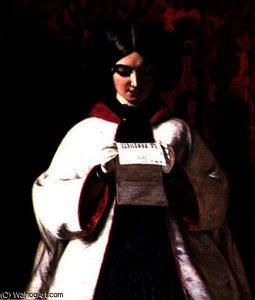
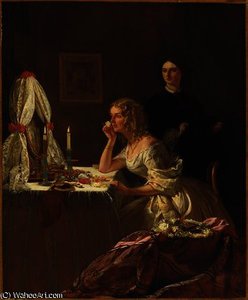
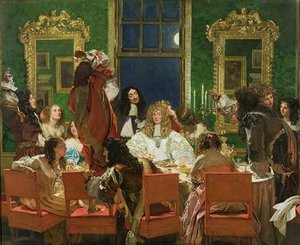
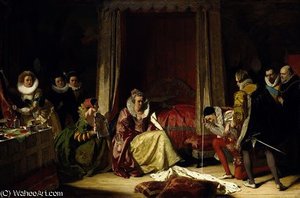
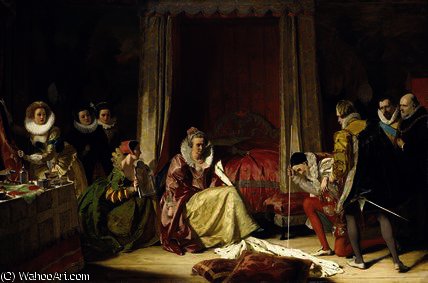
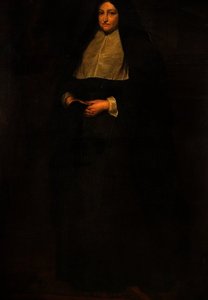
Queen Elizabeth discovers she is no longer young
 Read More
Hand Made Oil Reproduction
Hand-painted oil on canvas in your size and frame, made to order by our artists. ( Buy Print Buy Image)




































Pick from our preset sizes that match the artwork's original proportions.

You may enter your own dimensions to fit a specific frame or space. If your selected size does not match the original image's proportions, we will either crop the artwork or extend the painting with additional hand-painted elements. A digital mockup will be sent for your approval before production begins.
Please note that the on-screen preview does not reflect the actual cropping or extension. Only the mockup will accurately show the final composition.
While custom sizes are available, we recommend selecting a dimension from the predefined list to preserve the original proportions.
After order, ArtsDot.com team will email client for instructions and provide a mockup preview
Worldwide Delivery () in 3/4 weeks instead of standard 5 weeks. (20 August). No compromise on quality.

Free Worldwide Express Shipping

High-Quality Linen Canvas

Full Shipping Insurance

Customs Tax Refund Guarantee

True Color Matching Guarantee

60-Day Return Policy (Defects Only)

100% Money-Back Guarantee

Bulk Discount Offer
 Glass option is only available in size under 110 CM

Queen Elizabeth discovers she is no longer young
Reproduction Medium
Reproduction Size
-


Total Price
$ 263
Related Artworks
Artist Biography
The Moral Canvas of a Victorian Visionary
In the heart of nineteenth-century London, amidst the burgeoning social complexities of the Victorian era, Augustus Leopold Egg emerged as a painter who did more than merely capture light and shadow; he captured the very conscience of his age. Born in 1816 to a family of distinguished gunsmiths, Egg’s upbringing provided him with a foundation of discipline that would later manifest in the meticulous, almost surgical precision of his brushwork. As a student at the Royal Academy, he began to cultivate a style that bridged the gap between classical tradition and a burgeoning modern realism. His early years were marked by an intense engagement with literary subjects, where he sought to translate the written word into visual narratives that resonated with the moral sensibilities of his contemporaries.
Egg was not a solitary figure in the London art scene; rather, he was a vital thread in the social fabric of the artistic community. As a prominent member of The Clique, an influential group of artists including Richard Dadd, Egg participated in a movement that challenged the stale academicism of the time. This period of his life was defined by a profound connection to literature and social activism. A close friend of Charles Dickens, Egg shared a vision of art as a vehicle for philanthropy and social commentary. Together, they established the Guild of Literature and Art, an ambitious endeavor designed to provide a safety net for struggling creators, proving that his commitment to the "moral" in art was not merely aesthetic, but deeply humanitarian.
Narrative Depth and the Power of the Triptych
The true genius of Augustus Leopold Egg lies in his ability to weave complex, often harrowing, social narratives into the fabric of a single composition. While many of his peers focused on idyllic landscapes or static portraits, Egg turned his gaze toward the domestic tragedies and hidden fractures within middle-class Victorian life. His work often utilized chiaroscuro—the dramatic interplay of light and dark—to mirror the psychological tension of his subjects. This technique allowed him to imbue even a quiet room with an atmosphere of impending doom or profound introspection, as seen in works like A Young Lady at her Toilet, where the shadows seem to hold the weight of unspoken secrets.
Nowhere is his mastery of narrative more evident than in his most celebrated achievement, the modern triptych Past and Present. In this groundbreaking work, Egg utilized a cinematic approach to storytelling long before the medium of film existed. By presenting three interconnected scenes, he guided the viewer through a temporal journey:
- The central panel depicts a prosperous, seemingly stable middle-class family, yet it is pregnant with the tension of a hidden transgression.
- The flanking panels reveal the tragic consequences of that transgression, showing the displaced mother and her children living in the stark, unforgiving reality of poverty.
- Through subtle visual clues—a discarded letter, a specific glance, or a change in setting—Egg forces the viewer to reconstruct the timeline of a family's disintegration.
Legacy and the Shadows of Realism
As his health began to decline, Egg sought refuge in the warmer climates of continental Europe, yet his artistic spirit remained tethered to the themes of identity and duality. His later works, such as Travelling Companions, suggest a move toward more ambiguous, symbolic territory, exploring the concept of the self through near-identical figures. This evolution demonstrates that while he was rooted in the moral realism of the Hogarthian tradition, he was also deeply receptive to the emerging Pre-Raphaelite movement, sharing an interest in color theory and intense detail with artists like William Holman Hunt.
The historical significance of Augustus Leopold Egg extends far beyond his technical skill. He remains a pivotal figure who successfully navigated the transition from romanticized illustration to a gritty, socially conscious realism. By treating the canvas as a stage for moral inquiry, he challenged the Victorian public to look beneath the polished surface of their domestic lives. His legacy is found in every artwork that dares to use beauty to expose truth, and in his enduring ability to make the viewer an active participant in the unfolding drama of the human condition.
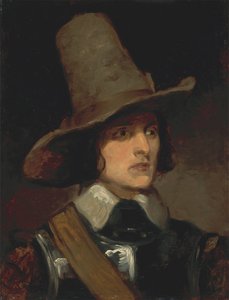
augustus leopold egg
1816 - 1863 , United Kingdom
Quick Facts
- Artistic Movement Or Style: Luminism
- Artists Or Movements Influenced By This Artist:
- Hudson River School
- Luminism
- Artists Who Influenced This Artist:
- Asher B. Durand
- Thomas Cole
- Benjamin Champney
- Date Of Birth: 1816
- Date Of Death: 1872
- Full Name: John Frederick Kensett
- Nationality: American
- Notable Artworks:
- Hudson River Views
- The Old Rocks at Stony Point
- Twilight in the Adirondacks
- Place Of Birth: Cheshire, Connecticut