 Preview
 Send
Send Share
Share
 Details

 Download
 Similars
 X-Ray
X-Ray Diaporama
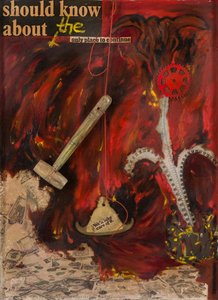
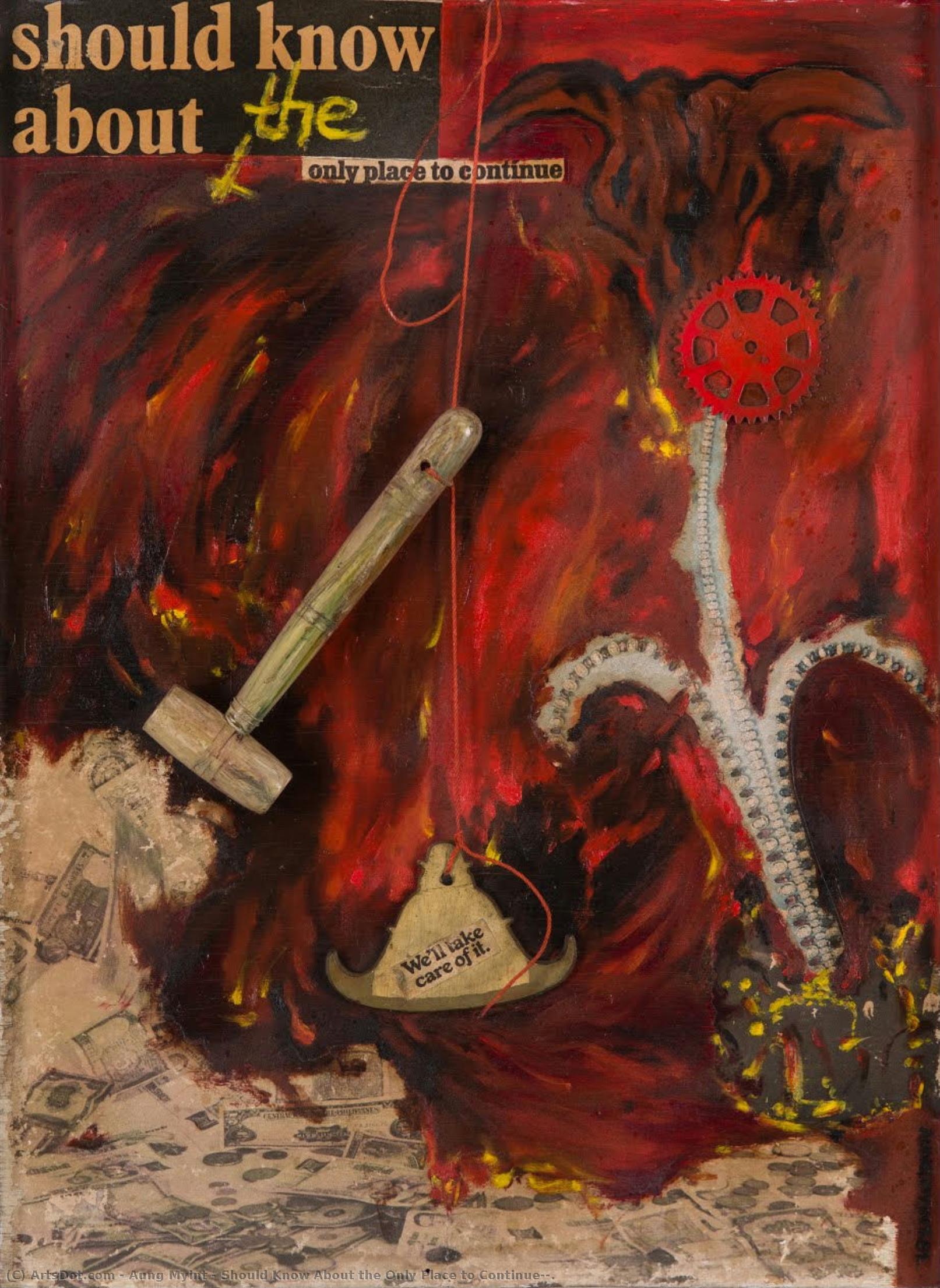
Should Know About the Only Place to Continue…….
 Painting
- Contemporary Art
 Contemporary
 44.0 x 61.0 cm
 National Gallery Singapore
 Read More
Hand Made Oil Reproduction
Hand-painted oil on canvas in your size and frame, made to order by our artists. ( Buy Print Buy Image)




P118B $10

P118H $10

P118W $10

P438Z $10

P508JH $12

P508YH $12

P805H $10

P805Z $10

P919BZ $10

P919G $10

P919XJ $10

P959ZH $10

P968JZ $12

W106C $8

W218G $10

W218JH $8

W218Y $10

W307PJ $10

W316G $10

W316PJ $8

W316Y $10

W398PJ $8

W4111J $10

W500HY $15

W500JH $15

W692G $12

W849H $8

W940BG $15

W953PJ $8




Pick from our preset sizes that match the artwork's original proportions.

You may enter your own dimensions to fit a specific frame or space. If your selected size does not match the original image's proportions, we will either crop the artwork or extend the painting with additional hand-painted elements. A digital mockup will be sent for your approval before production begins.
Please note that the on-screen preview does not reflect the actual cropping or extension. Only the mockup will accurately show the final composition.
While custom sizes are available, we recommend selecting a dimension from the predefined list to preserve the original proportions.
After order, ArtsDot.com team will email client for instructions and provide a mockup preview
Worldwide Delivery () in 3/4 weeks instead of standard 5 weeks. (24 August). No compromise on quality.

Free Worldwide Express Shipping

High-Quality Linen Canvas

Full Shipping Insurance

Customs Tax Refund Guarantee

True Color Matching Guarantee

60-Day Return Policy (Defects Only)

100% Money-Back Guarantee

Bulk Discount Offer
 Glass option is only available in size under 110 CM

Should Know About the Only Place to Continue…….
Reproduction Medium
Reproduction Size
-


Total Price
$ 263
Artwork Description
A Tapestry of Memory and Passage
The canvas before us presents itself not merely as an arrangement of objects, but as a richly charged tableau vivant—a visual meditation on time, conflict, and the weight of accumulated knowledge. Dominated by a vibrant, arresting red background, the painting immediately pulls the viewer into its emotional vortex. It is a composition that refuses simple categorization; instead, it invites deep contemplation, suggesting a narrative unfolding across disparate, symbolic elements. The sheer density of objects—the gleaming swords, the aged books, and the prominent timepiece—creates an atmosphere thick with unspoken history.
Symbolism in Steel and Parchment
Scattered throughout this dramatic field are potent symbols that speak to human experience. Consider the large sword hanging dramatically from the upper left quadrant; it suggests readiness, perhaps a defense against encroaching darkness, or maybe the sharp edge of necessary confrontation. Complementing this martial presence is the clock, visibly damaged or arrested in its passage. This juxtaposition—the tools of conflict alongside the broken measure of time—speaks volumes about moments suspended between action and reflection. The inclusion of multiple swords, positioned at varying levels of prominence, hints at different battles fought, both external and internal. Meanwhile, the three scattered books act as anchors to intellect and accumulated wisdom, suggesting that knowledge itself is a resource, sometimes overlooked amidst the clamor.
The Hand of Aung Myint: A Voice from Myanmar
This work bears the unmistakable signature of Aung Myint, an artist whose career has been instrumental in charting the course of Burmese experimental art. His style, as evidenced here, moves beyond mere representation; it is deeply emotive and intellectually rigorous. Influenced by a confluence of Western modernism and profound local aesthetics, Myint crafts pieces that feel both anciently resonant and startlingly contemporary. The technique employed seems to favor bold, saturated color fields—that commanding red—against which the metallic gleam of the weaponry and the muted tones of the books achieve striking contrast. It is a masterful balancing act between controlled chaos and deliberate composition.
Emotional Resonance for the Modern Collector
For the collector or designer seeking an art piece with palpable depth, this reproduction offers more than mere decoration; it offers conversation. The emotional impact is one of dramatic tension—a beautiful struggle between permanence (the books) and transience (the broken clock). Placing such a piece in a space imbues it with gravitas, suggesting that the room itself is steeped in stories worth remembering. It speaks to those who appreciate art that demands looking closer, rewarding the viewer with layers of meaning upon repeated viewing.
Related Artworks
Artist Biography
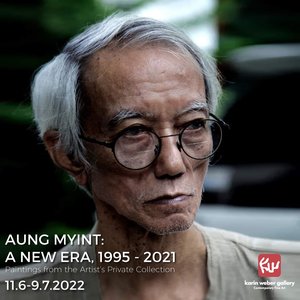
Aung Myint: A Pioneer of Burmese Experimental Art
Born in Yangon, Myanmar, in 1946, Aung Myint stands as a pivotal figure in the evolution of Burmese art and a compelling voice within contemporary Southeast Asian artistic expression. Rejecting the conventions of romanticism and embracing a deeply personal yet socially conscious approach, he has consistently pushed the boundaries of his medium – painting, performance, and installation – forging a unique style characterized by raw emotion, fragmented forms, and a potent dialogue with both Western art history and traditional Burmese aesthetics.
Myint’s artistic journey began in the 1960s, during a period of burgeoning creativity within Yangon's art scene. He attended the Rangoon Arts and Science University, graduating with a degree in Psychology, an education that arguably informed his later exploration of human emotion through visual representation. Initially influenced by artists like Willem de Kooning and Jackson Pollock – particularly their “action painting” techniques – Myint quickly developed a distinct voice, one that diverged significantly from mere imitation. He sought to distill the essence of these influences while simultaneously grounding his work in the rich tapestry of Burmese artistic heritage.
Early Development and Stylistic Evolution
Myint’s early works demonstrated a fascinating transition between semi-abstract forms incorporating cubist elements and a later period marked by fragmentation. The 1970s and 80s saw him deliberately breaking down images, creating layers of visual complexity that mirrored the turmoil he sought to express. This stylistic shift culminated in the 1990s with a powerfully emotive style characterized by dramatic splashes, smearing, and dripping paint – echoes of Pollock’s techniques but imbued with a distinctly Burmese sensibility. The swirling forms and vibrant reds recall the dynamism of the alphabet, reflecting a deep connection to Myanmar's cultural identity.
A particularly striking example of this evolution is “White Stupa Doesn,” a work that juxtaposes Edvard Munch’s iconic “scream faces” with imagery referencing Buddhist temple stupas. This piece, created in 2001, powerfully communicates themes of anxiety and spiritual questioning, drawing on both Western psychological symbolism and the visual language of Burmese religious art. The deliberate use of red paint, reminiscent of blood and ritual, amplifies the work’s emotional intensity.
Technique and Influences: One-Line Painting and Beyond
Myint's artistic practice is deeply rooted in the tradition of “one-line painting,” a technique prevalent in Burmese mural art from Bagan and continuing into traditional painting. This method, characterized by a continuous, flowing line that conveys emotion and mood, profoundly influences his later work, particularly his celebrated series of monochromatic drawings depicting mother and child. These pieces, born from the grief of losing his own mother as an infant, are imbued with a poignant sense of loss and abandonment. The fluid lines evoke the works of masters like Henry Moore and Pablo Picasso, demonstrating Myint’s ability to synthesize diverse influences into a uniquely personal style.
Furthermore, he has consistently referenced the circular forms and swirling patterns found in the Myanmar alphabet, integrating them seamlessly into his compositions. This deliberate engagement with traditional elements demonstrates a commitment to honoring Burmese artistic heritage while simultaneously pushing its boundaries through experimentation.
Recognition and Legacy
Aung Myint’s work has garnered significant international recognition, exhibited in prestigious venues such as the Singapore Art Museum, Fukuoka Asian Art Museum, and the Solomon R. Guggenheim Museum. He received the PEN/Barbara Goldsmith Freedom to Write Award in 2002, a testament to his commitment to artistic expression as a form of social commentary. His pieces are held in private collections across Asia and North America, solidifying his place as a leading figure in contemporary Burmese art.
Beyond individual achievements, Myint’s legacy lies in his pioneering spirit – his willingness to challenge conventions, explore complex themes, and forge a distinctive artistic voice that reflects both the personal and the collective experiences of Myanmar. He remains an influential artist whose work continues to provoke thought and inspire dialogue within the art world.
aung myint
1946 - , Myanmar
Quick Facts
- Artistic Movement Or Style: Experimental art, Action painting
- Artists Or Movements Influenced By This Artist:
- Henry Moore
- Pablo Picasso
- Artists Who Influenced This Artist:
- Willem de Kooning
- Jackson Pollock
- Date Of Birth: Oct 27, 1946
- Full Name: Aung Myint
- Nationality: Burmese
- Notable Artworks:
- White Stupa Doesn
- Mother and Child
- Place Of Birth: Yangon, Myanmar
Related Articles

Crimson Threads of Narrative: Exploring Symbolism & Representation in Artworks Featuring the Red Dress
Explore the rich symbolism of the red dress in art history! From ancient power displays to iconic portraits like Cézanne’s 'Madame Cezanne', discover the cultural and artistic significance behind this captivating color. Expert analysis & insights.
Silent Narratives: Exploring the Enduring Appeal of Still Life Painting Across Centuries
Explore the rich history of still life painting with ArtsDot. Discover Dutch Masters, decode vanitas symbolism & learn about collecting timeless art. Expert insights and museum-quality reproductions.
The Enduring Appeal of Still Life: A Historical & Contemporary Exploration
Explore the rich history & symbolism of still life painting with ArtsDot. Discover masterpieces from the Dutch Golden Age, learn about vanitas art, and find expert guidance for collecting timeless artworks.
Clyfford Still's Abstract Expressionism: A Study of Color, Form & the Existential Landscape
Explore the profound world of Clyfford Still's Abstract Expressionism with ArtsDot. Discover his unique style, existential themes & investment potential. Expert analysis for discerning collectors.
From Classical Still Life to Contemporary Abstraction: Elevating Villa Entertaining Spaces Through Artful Reproduction
Explore the history of still life painting & discover how artful reproductions elevate villa entertaining spaces. Expert guidance, museum-quality prints & custom artwork at ArtsDot.com.