 Preview
 Send
Send Share
Share
 Details

 Download
 Similars
 X-Ray
X-Ray Diaporama
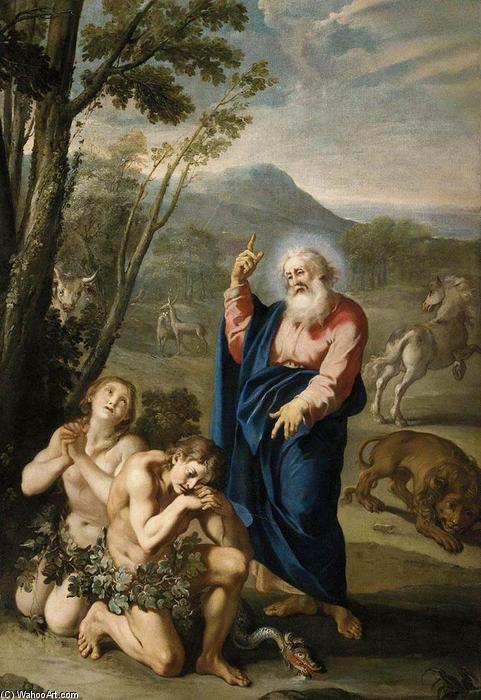
Expulsion of Adam and Eve
 153.0 x 106.0 cm
 Read More
Hand Made Oil Reproduction
Hand-painted oil on canvas in your size and frame, made to order by our artists. ( Buy Print Buy Image)




































Pick from our preset sizes that match the artwork's original proportions.

You may enter your own dimensions to fit a specific frame or space. If your selected size does not match the original image's proportions, we will either crop the artwork or extend the painting with additional hand-painted elements. A digital mockup will be sent for your approval before production begins.
Please note that the on-screen preview does not reflect the actual cropping or extension. Only the mockup will accurately show the final composition.
While custom sizes are available, we recommend selecting a dimension from the predefined list to preserve the original proportions.
After order, ArtsDot.com team will email client for instructions and provide a mockup preview
Worldwide Delivery () in 3/4 weeks instead of standard 5 weeks. (23 August). No compromise on quality.

Free Worldwide Express Shipping

High-Quality Linen Canvas

Full Shipping Insurance

Customs Tax Refund Guarantee

True Color Matching Guarantee

60-Day Return Policy (Defects Only)

100% Money-Back Guarantee

Bulk Discount Offer
 Glass option is only available in size under 110 CM

Expulsion of Adam and Eve
Reproduction Medium
Reproduction Size
-


Total Price
$ 263
Related Artworks

Artist Biography
A Life Immersed in Baroque Splendor
Aureliano Milani, a name resonating with the echoes of late-Baroque artistry, was born in Bologna in 1675—a city already steeped in artistic tradition. While not hailing from one of the most prominent Bolognese art families, his early life was nonetheless profoundly shaped by the legacy of masters like the Carracci. He wasn’t merely a product of his environment; he actively sought to revive their dynamic style for a new generation of artists. His initial training came under the guidance of his uncle, Giulio Cesare Milani, followed by formal instruction with Lorenzo Pasinelli and Cesare Gennari. However, it was the intensive study of Annibale Carracci’s frescoes in Palazzo Magnani and Palazzo Fava that truly ignited his artistic path. He wasn't simply copying; he absorbed the energy, the muscularity, the dramatic compositions—the very essence of the Carracci’s approach to figure articulation. This dedication, facilitated by Count Alessandro Fava who granted him access to the Palazzo Fava, became a defining characteristic of Milani’s early work.From Bologna to Rome: A Flourishing Career
The demands of supporting a large family—ten children in total—led Milani to relocate to Rome in 1719. This wasn't a retreat, but rather a strategic move towards greater opportunity. Rome, the heart of Papal patronage, offered a landscape brimming with commissions and artistic possibilities. He quickly established himself as a significant figure, securing projects for numerous churches. His altarpieces became increasingly sought after, showcasing his ability to blend religious fervor with Baroque grandeur. The Palazzo Doria Pamphilj became home to one of his most ambitious undertakings: a fresco cycle depicting the ‘Story of Hercules’ completed in 1732. This project exemplifies Milani's skill in narrative storytelling and his mastery of large-scale decorative painting. He wasn’t merely executing commissions; he was contributing to the visual fabric of Rome itself, working alongside prominent artists like Domenico Maria Muratori and Donato Creti.Influences and Artistic Style
Milani's artistic lineage is clearly traceable through his work. The Carracci were not simply models but foundational influences. He absorbed their emphasis on anatomical accuracy, dynamic composition, and emotional intensity. However, Milani wasn’t a mere imitator. His style developed a unique character—a blend of Baroque drama with emerging Rococo sensibilities. While retaining the powerful musculature and energetic figures characteristic of his predecessors, he also incorporated a greater sense of fluidity and grace. This is evident in his religious scenes, where figures are often depicted in moments of heightened emotion, their gestures conveying both spiritual fervor and human vulnerability. His drawings, praised by contemporaries like Gianpietro Zanotti and Luigi Crespi, reveal an immediacy and skill that rivaled the masters he so admired. He excelled at using techniques such as touching, heightening, and shadowing to create a sense of depth and realism in his depictions of nude figures—whether biblical scenes or classical myths.Beyond Painting: A Legacy in Draftsmanship
While celebrated for his paintings, Milani’s reputation as a draughtsman arguably surpassed even that of his work with oils. His drawings weren't simply preparatory sketches; they were works of art in their own right—possessing a remarkable level of detail and expressive power. He produced numerous studies inspired by Carraccesque models, often focusing on episodes from the Passion of Christ. These drawings demonstrate not only his technical skill but also his deep understanding of anatomy and composition. His ability to capture movement, emotion, and light with such precision earned him widespread acclaim among contemporary artists and collectors. The *Expulsion of Adam and Eve*, for example, showcases this mastery—a dynamic scene rendered with both anatomical accuracy and emotional depth.Historical Significance and Lasting Impact
Aureliano Milani occupies a fascinating position in the transition between the High Baroque and the Rococo periods. He wasn’t simply clinging to tradition; he was adapting it, infusing it with new sensibilities while remaining true to the core principles of his artistic education. His work reflects the changing tastes of the 18th century—a move towards greater elegance and refinement without sacrificing the drama and emotional intensity that defined the Baroque era. Though perhaps not as widely recognized today as some of his more famous contemporaries, Milani’s legacy endures through his numerous paintings and drawings scattered throughout Italy. His ability to seamlessly blend tradition with innovation ensured his place among the prominent artists of his time, leaving a lasting mark on both the Bolognese and Roman art scenes. He was not just an artist; he was a bridge between eras—a testament to the enduring power of artistic dedication and skillful execution.
aureliano milani
1675 - 1749 , Italy
Quick Facts
- Artistic Movement Or Style: Late Baroque
- Artists Who Influenced This Artist: ['Carracci']
- Date Of Birth: 1675
- Date Of Death: 1749
- Full Name: Aureliano Milani
- Nationality: Italian
- Place Of Birth: Bologna, Italy