

 Preview
 Send
Send Share
Share
 Details

 Download
 Similars
 X-Ray
X-Ray Diaporama
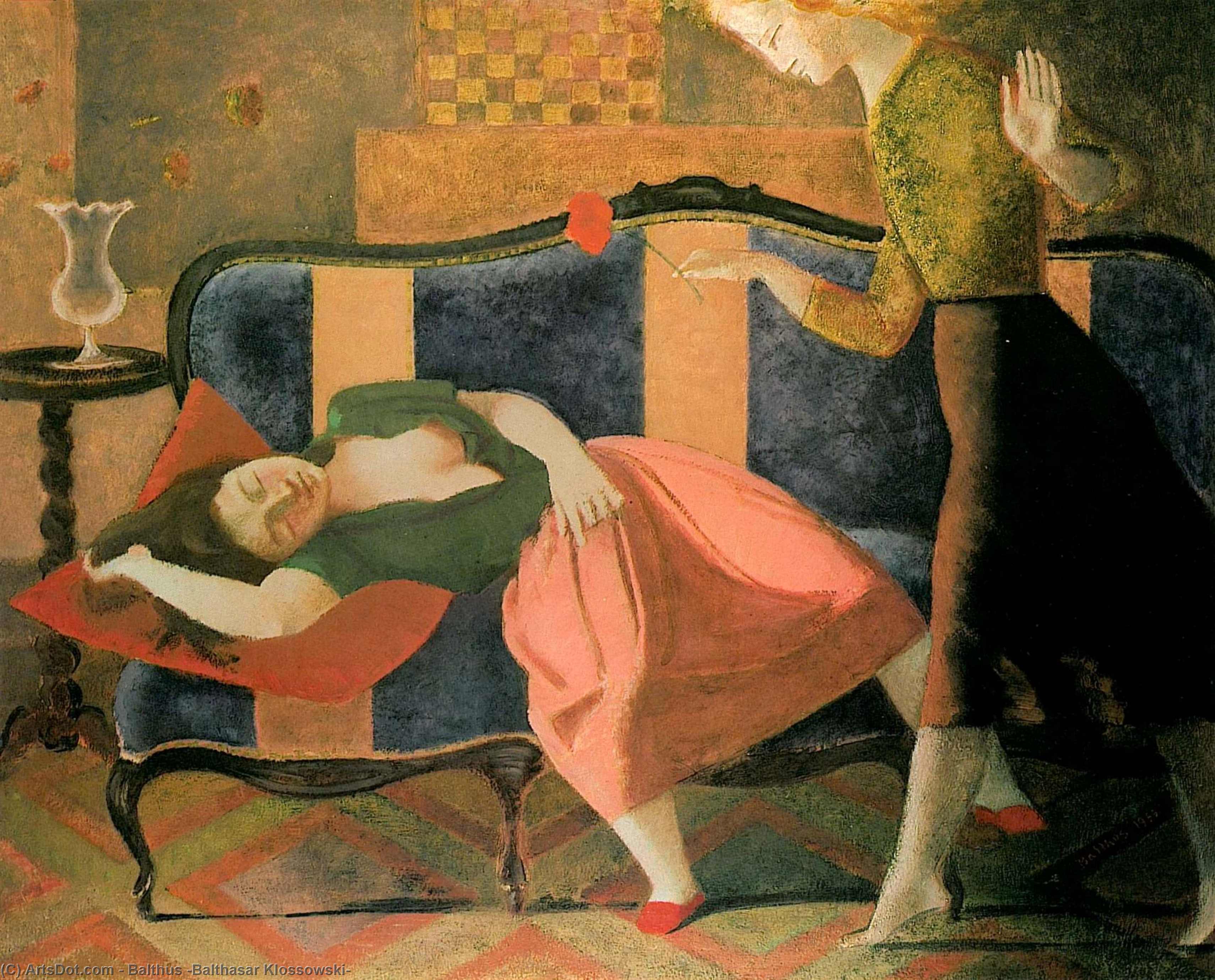
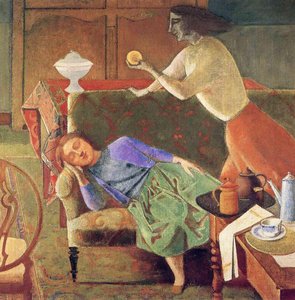
The Dream
 Oil On Canvas
- WallArt
- Expressionism
 1955
1955 162.0 x 130.0 cm
 Read More
Purchase a high-resolution, enhanced digital image, far superior to the online preview.
Each file is meticulously prepared by our in-house specialists using advanced tools and expert manual retouching. We ensure every image has exceptional clarity, precise color accuracy, and fine detail.
The final file is delivered via email within 72 hours, optimized for immediate use in professional, editorial, and print environments. This is the same quality trusted by top-tier design studios, publishers, and galleries.
Digital Image
Download a high-resolution file for personal display, printing, and creative projects. ( Buy Print Buy Hand Made Painting)
Included in Every Digital Image Order
Expert Digital Delivery, Guaranteed
When you choose ArtsDot.com, you're not just getting an image - you're receiving a professionally enhanced digital artwork, crafted with precision and backed by a satisfaction guarantee. Here's everything that comes with your order, automatically:

Fast Email Delivery
Your high-resolution digital image file will be emailed to you within 72 hours of ordering - ready for immediate use.

AI-Enhanced Digital File
Your artwork is professionally optimized using advanced AI tools and manual editing, ensuring maximum detail, clarity, and color accuracy.

Free Lifetime Re-Delivery
Accidentally deleted or lost your file? No worries - we'll resend it to you anytime, free of charge.

No Import Fees - Ever
Enjoy your artwork instantly with zero customs, duties, or delivery fees - digital downloads are always tax-free.

Color Accuracy Guarantee
We ensure your digital image reflects the original colors as closely as possible using professional tools and color management.

60-Day Satisfaction Guarantee
If you're not satisfied with your digital image, we'll revise it or refund 100% within 60 days - no questions asked.

100% Money-Back Guarantee
Not satisfied? Get a full refund within 60 days of receiving your digital file - no questions asked.

Bulk Order Discounts
Buy 3 images, save 10% - Buy 5, save 15% - Buy 10+, save 20%. Great for creative projects, galleries, and agencies.
Collectible Description
The Enigmatic Stillness of Balthus's "The Dream"
To stand before Balthus’s The Dream is to step across the threshold into a meticulously constructed, yet deeply unsettling, private moment. This painting, dating from around 1955, captures an atmosphere so thick with unspoken narrative that it feels less like paint on canvas and more like captured memory itself. The scene centers on a woman reclined upon a couch, her head surrendered to the soft embrace of a pillow—a portrait steeped in vulnerability and repose. Nearby, another figure observes this slumber, their presence adding a layer of complex tension to what initially appears to be a simple tableau of rest.
A Study in Atmosphere and Composition
Balthus’s technique here is masterful in its ability to render the palpable weight of silence. The composition guides the eye through carefully placed objects: the elegant curve of the couch, the suggestion of a nearby chair, the delicate placement of a vase, and the solitary cup near the edge. These elements are not mere props; they are anchors in a dreamlike reality. While the painting is categorized within Expressionism—a style that allows for heightened emotional resonance over strict realism—Balthus grounds his vision with an almost classical attention to form. The interplay between the languid curves of the sleeping figure and the vertical lines suggested by the standing observer creates a subtle, yet profound, visual rhythm.
Symbolism Woven into Slumber
The very title, The Dream, invites endless interpretation, which is perhaps Balthus’s greatest gift to the viewer. Sleep itself becomes a potent symbol—a liminal space where consciousness dissolves and deeper truths surface. The dynamic between the sleeping subject and the watchful observer hints at themes of voyeurism, intimacy, and the complex dynamics of observation. Artistically, these moments often explore the delicate boundary between desire and detachment. For collectors and those seeking art for a sophisticated interior, this piece offers depth; it does not simply decorate a wall, but rather initiates a conversation within the room itself.
Echoes of Tradition in Modern Sensibility
Balthus’s career is often read as a dialogue with history. Though his work feels intensely modern, there are echoes of Old Master painting traditions—a reverence for figure study and narrative weight—filtered through a distinctly 20th-century lens. This tension between classical structure and psychological unease is what gives the piece its enduring power. Owning a reproduction of The Dream allows one to bring this sophisticated, emotionally charged dialogue into your own space. It speaks to an appreciation for art that rewards prolonged contemplation, suggesting that true beauty often resides in the moments just before waking.
Related Artworks




Artist Biography
A World Apart: The Enigmatic Vision of Balthus
Balthasar Klossowski de Rola, known to the world as Balthus, remains one of the most compelling and controversial figures in 20th-century art. Born in Paris on February 29, 1908, into a family steeped in intellectual and artistic circles, his life was marked by an early immersion in culture and a deliberate rejection of prevailing artistic trends. His father, Erich Klossowski, was a respected art historian, while his mother, Baladine Klossowska, was a painter herself, fostering an environment where aesthetic contemplation was not merely encouraged but lived. This upbringing instilled in the young Balthus a deep reverence for the Old Masters and a skepticism towards the burgeoning avant-garde movements that dominated the Parisian scene. He wasn’t interested in breaking with tradition; rather, he sought to revitalize classical forms with a distinctly modern sensibility, creating a world uniquely his own—a world often unsettling, always captivating.Formative Years and Artistic Awakening
Balthus's early life was nomadic, disrupted by the outbreak of World War I and his parents’ subsequent separation. These experiences instilled in him a sense of displacement and introspection that would profoundly influence his artistic vision. He began drawing at a remarkably young age, demonstrating an exceptional talent for capturing form and atmosphere. Mentored by Rainer Maria Rilke during his mother's relationship with the poet, Balthus received encouragement to pursue his artistic inclinations. This period was crucial in shaping his aesthetic sensibilities; Rilke’s poetic explorations of inner life resonated deeply with the young artist, fostering a fascination with psychological depth and symbolic resonance. He absorbed influences from diverse sources—pre-Renaissance Italian painters like Piero della Francesca and Simone Martini, as well as literary figures such as Emily Brontë and Lewis Carroll—creating a unique artistic language that defied easy categorization. His early works already hinted at the themes that would define his career: adolescence, solitude, and the complex interplay between innocence and desire.Controversy and Recognition
Balthus first exhibited publicly in 1934, presenting a body of work that immediately sparked controversy. Paintings like The Guitar Lesson, with its ambiguous depiction of a young girl receiving instruction from an older man, ignited debate about the artist’s intentions and the nature of his gaze. Critics were divided, some condemning the perceived eroticism while others praised the painting's psychological complexity and technical mastery. This controversy, however, only served to solidify Balthus’s reputation as a provocative and unconventional artist. He deliberately cultivated an air of mystery around himself, resisting attempts at biographical interpretation and insisting that his paintings should be experienced directly, without the filter of external commentary. Throughout the 1930s and 40s, he continued to develop his distinctive style, characterized by elongated figures, dramatic lighting, and a meticulous attention to detail. His compositions often featured young girls in states of reverie or contemplation, their poses both graceful and unsettling.A Legacy of Introspection and Influence
Despite remaining somewhat aloof from the mainstream art world, Balthus achieved significant recognition during his lifetime. He held major exhibitions at the Museum of Modern Art in New York (1956) and throughout Europe, solidifying his position as a leading figure in 20th-century painting. In 1977, he was appointed director of the Académie de France in Rome, a prestigious post that further cemented his status within the artistic establishment. His influence can be seen in the work of numerous contemporary artists, including Jan Saudek, Will Barnet, Duane Michals, and John Currin, who share his interest in figurative painting, psychological realism, and the exploration of complex emotional states. Balthus’s legacy extends beyond his technical skill; he challenged conventional notions of beauty and representation, forcing viewers to confront uncomfortable truths about desire, power, and the human condition. He died in 2001, leaving behind a body of work that continues to provoke, intrigue, and inspire. The Fondation Beyeler and the Balthus Foundation continue to preserve his legacy, ensuring that future generations will encounter the enigmatic world he so meticulously created. His paintings are not merely images; they are portals into a realm of dreams, anxieties, and unspoken desires—a testament to the enduring power of art to challenge our perceptions and illuminate the hidden corners of the human soul.Key Works and Enduring Themes
Throughout his career, Balthus consistently returned to certain motifs and themes. La Rue (1933) exemplifies his early mastery of composition and atmosphere, depicting a street scene with an unsettling sense of isolation. The Mountain (1937), a monumental work featuring two adolescent girls in a stark landscape, embodies the artist’s fascination with youth and solitude. Later works, such as Girl at a Window (1957) – famously featured in François Truffaut's film Domicile Conjugal – showcase his ability to capture fleeting moments of introspection and vulnerability. His paintings are often characterized by a sense of stillness and silence, inviting viewers to contemplate the inner lives of his subjects. He was also deeply influenced by music, particularly the works of Wolfgang Amadeus Mozart, which he believed reflected the same balance between order and emotion that he sought to achieve in his art. Balthus’s enduring appeal lies not only in his technical virtuosity but also in his ability to tap into universal human experiences—the longing for connection, the fear of isolation, and the search for meaning in a chaotic world.
Balthus
1908 - 2001 , France
Quick Facts
- Artistic Movement Or Style: Classical, Figurative
- Artists Or Movements Influenced By This Artist:
- Jan Saudek
- John Currin
- Artists Who Influenced This Artist:
- Masaccio
- Piero della Francesca
- Ingres
- Date Of Birth: February 29, 1908
- Date Of Death: February 18, 2001
- Full Name: Balthasar Klossowski de Rola
- Nationality: French-Polish
- Notable Artworks:
- The Street
- Girl with Cat
- The Sweet Bye and Bye
- Place Of Birth: Paris, France

