 Preview
 Send
Send Share
Share
 Details

 Download
 Similars
 X-Ray
X-Ray Diaporama
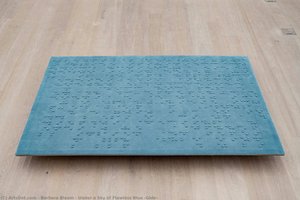
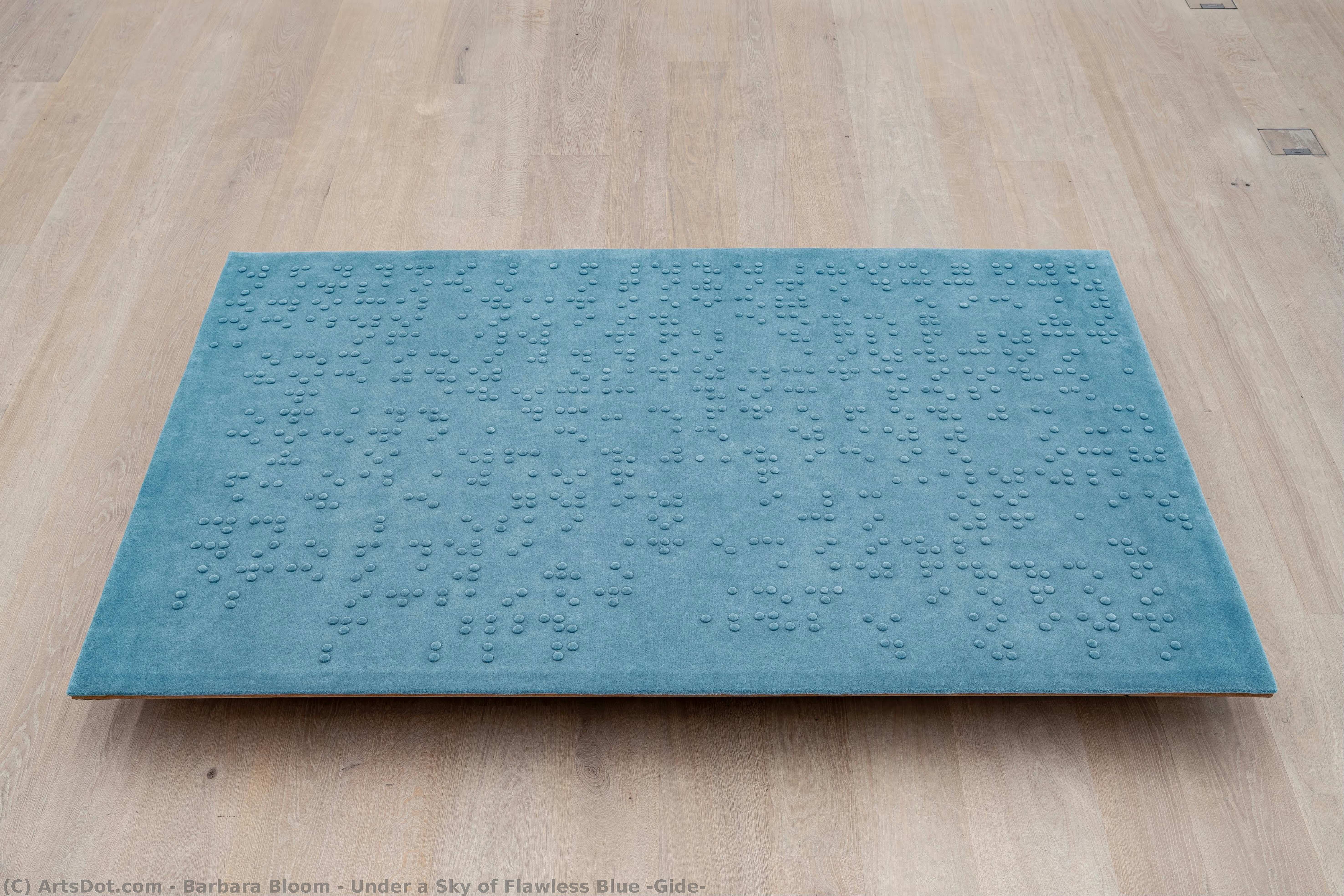
Under a Sky of Flawless Blue (Gide)
 2015
2015 274.0 x 183.0 cm
 Read More
Giclée / Art Print
Museum-quality giclée or canvas print with fast production and flexible finish options. ( Buy Hand Made Painting Buy Image)




































Pick from our preset sizes that match the artwork's original proportions.

You may enter your own dimensions to fit a specific frame or space. If your selected size does not match the original image's proportions, we will either crop the artwork or extend the image with a mirrored or solid-fill edge. A digital mockup will be sent for your approval before production begins.
Please note that the on-screen preview does not reflect the actual cropping or extension. Only the mockup will accurately show the final composition.
While custom sizes are available, we recommend selecting a dimension from the predefined list to preserve the original proportions.
Worldwide Delivery () in 2 weeks instead of standard 4/5 weeks. (6 September)

Free Worldwide Express Shipping

High-Quality Linen Canvas

Full Shipping Insurance

Customs Tax Refund Guarantee

True Color Matching Guarantee

100-Day Return Policy (Defects Only)

100% Money-Back Guarantee

Bulk Discount Offer
 Glass option is only available in size under 110 CM

Under a Sky of Flawless Blue (Gide)
Giclée / Art Print
Reproduction Size
-


Total Price
$ 63
Related Artworks









Artist Biography
The Architect of Memory: The Conceptual World of Barbara Bloom
In the vast, often fragmented landscape of contemporary art, few creators navigate the delicate boundary between the seen and the felt as masterfully as Barbara Bloom. Born in Los Angeles in 1951, Bloom emerged from a lineage of West Coast experimentation, carrying with her a profound fascination for how we perceive reality through the layers of memory and objecthood. Her artistic journey is not merely a progression of styles, but an ongoing investigation into the very nature of looking. Often describing herself as a novelist who inadvertently found herself in the queue of visual artists, Bloom approaches her installations with a literary depth, treating space as a narrative medium where every placement and juxtaposition tells a silent, evocative story.
Bloom’s formative years were deeply rooted in the intellectual ferment of the California Institute of the Arts, where she studied under the legendary conceptual pioneer John Baldessari. This mentorship was pivotal; from Baldessari, she inherited a penchant for questioning conventional representation and a sharp, witty approach to the subversion of artistic norms. Her early exposure to the avant-garde film scenes and the experimental atmosphere of Southern California provided the foundation for a practice that would eventually transcend the boundaries of traditional media, moving toward the creation of immersive, multi-sensulated environments.
A European Odyssey and the Evolution of Style
The trajectory of Bloom’s career was profoundly altered by her decades spent traversing the cultural hubs of Europe. Moving from California to London and eventually settling in Amsterdam and Berlin, she immersed herself in a continent rich with historical weight and artistic tradition. This period of residency, spanning much of her twenties and thirties, allowed her to absorb diverse cultural contexts that would later permeate her work. It was during these years that her practice began to coalesce into the complex, multi-media installations for which she is now globally recognized—works that do not merely exist in a space but actively construct new, psychological landscapes.
As her practice matured, Bloom developed a signature technique characterized by the meticulous layering of photographic elements with tactile, sensory materials. One of her most hauntingly beautiful innovations involves the use of carpets adorned with raised-dot patterns that translate literary texts into Braille. This deliberate juxtaposition of the visual and the haptic forces the viewer to engage with the work through multiple senses, challenging the primacy of sight and inviting a more profound, embodied way of experiencing art. Through these intricate textures, she explores themes of blindness, perception, and the elusive nature of information, turning the act of viewing into an act of tactile discovery.
Legacy and the Art of the Encounter
The significance of Barbara Bloom’s contribution to the Pictures Generation and contemporary installation art lies in her ability to transform the gallery into a site of profound intellectual encounter. Her work does not rely on single, isolated images; instead, it thrives on the relationships between objects—the tension found in their proximity and the meanings generated by their arrangement. This philosophy has earned her prestigious recognition and solo exhibitions at some of the world's most esteemed institutions, including:
- The Museum of Modern Art (MoMA), New York
- The Jewish Museum, New York
- The Serpentine Gallery, London
- Martin-Gropius-Bau, Berlin
- Stedelijk Museum, Amsterdam
Beyond her physical installations, Bloom has often accompanied her environments with meticulously produced books, which serve as the conceptual scaffolding for her exhibitions. These publications allow her to bridge the gap between visual art and literature, offering a way for the audience to enter the labyrinth of her thinking. Today, living and working in New York, Bloom continues to push the boundaries of how we interpret the world around us, reminding us that art is not just something to be seen, but something to be felt, read, and remembered.

Barbara Bloom
1951 - , United States of America
Quick Facts
- Artistic Movement Or Style: Conceptual Art
- Artists Or Movements Influenced By This Artist: ['Pictures Generation']
- Artists Who Influenced This Artist: ['John Baldessari']
- Date Of Birth: 1951
- Full Name: Barbara Bloom
- Nationality: American
- Notable Artworks:
- Under a Sky of Flawless Blue (Gide)
- Church of St Barbara
- Place Of Birth: Los Angeles, United States