 Send
Send Share
Share
 Details

 Download
 Similars
 Diaporama
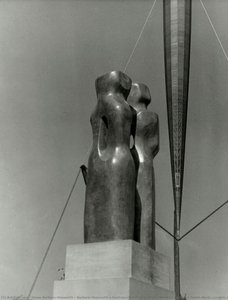
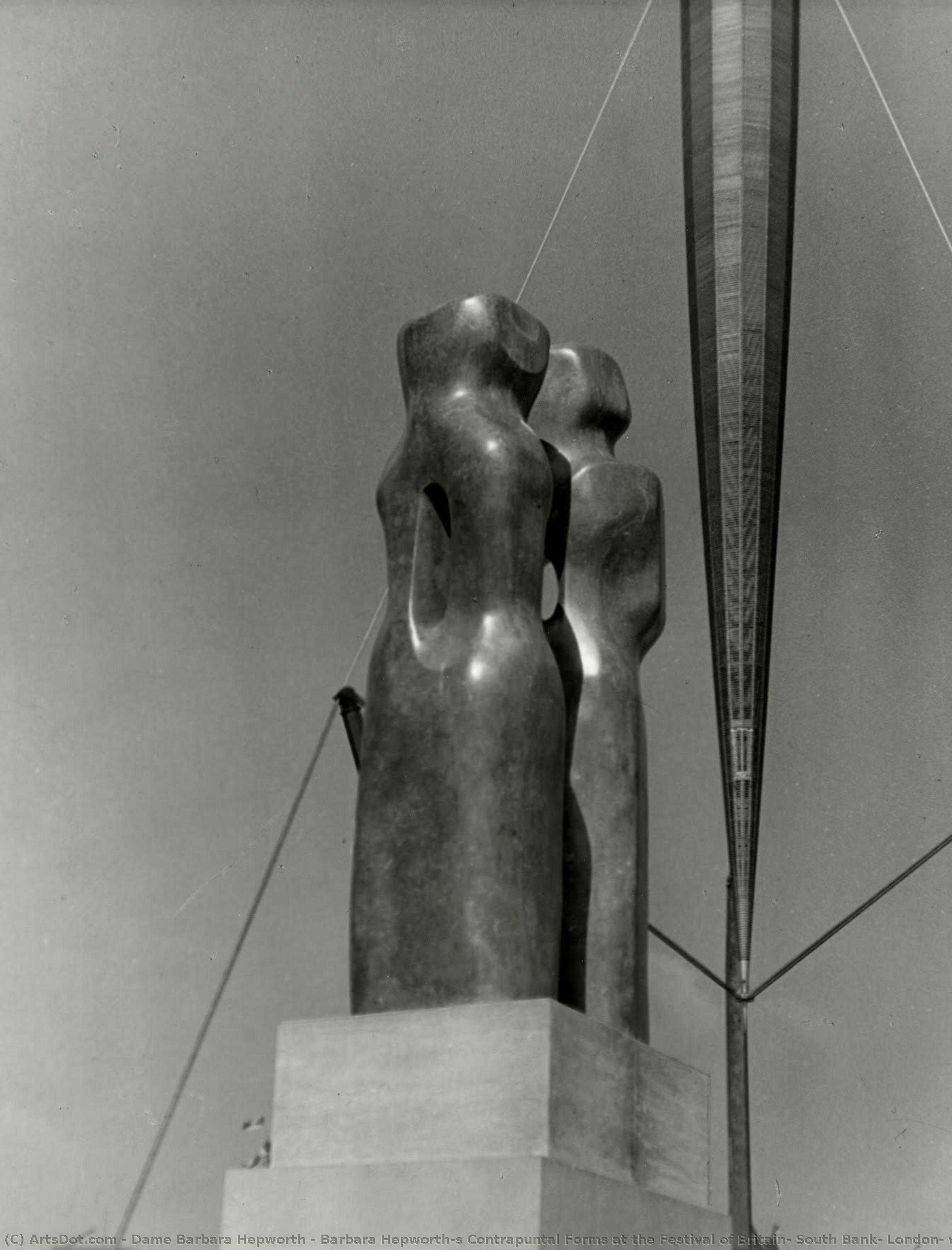
Barbara Hepworth’s Contrapuntal Forms at the Festival of Britain, South Bank, London, with the Skylon, 1951. Photograph by Anthony Panting


 Read More
Hand Made Oil Reproduction
Hand-painted oil on canvas in your size and frame, made to order by our artists. ( Buy Print Buy Image)




































Pick from our preset sizes that match the artwork's original proportions.

You may enter your own dimensions to fit a specific frame or space. If your selected size does not match the original image's proportions, we will either crop the artwork or extend the painting with additional hand-painted elements. A digital mockup will be sent for your approval before production begins.
Please note that the on-screen preview does not reflect the actual cropping or extension. Only the mockup will accurately show the final composition.
While custom sizes are available, we recommend selecting a dimension from the predefined list to preserve the original proportions.
After order, ArtsDot.com team will email client for instructions and provide a mockup preview
Worldwide Delivery () in 3/4 weeks instead of standard 5 weeks. (22 August). No compromise on quality.

Free Worldwide Express Shipping

High-Quality Linen Canvas

Full Shipping Insurance

Customs Tax Refund Guarantee

True Color Matching Guarantee

60-Day Return Policy (Defects Only)

100% Money-Back Guarantee

Bulk Discount Offer
 Glass option is only available in size under 110 CM

Barbara Hepworth’s Contrapuntal Forms at the Festival of Britain, South Bank, London, with the Skylon, 1951. Photograph by Anthony Panting
Reproduction Medium
Reproduction Size
-


Total Price
$ 263
Artwork Description
A Moment Frozen in Modernist Grace
In this evocative black and white photograph by Anthony Panting, we are transported back to the summer of 1951, a pivotal moment in British cultural history. The image captures Barbara Hepworth’s Contrapuntal Forms as they stood prominently at the Festival of Britain on London's South Bank. Set against the backdrop of the iconic Skylon, the composition presents a masterclass in modernist balance. The photograph does more than merely document a physical installation; it captures a dialogue between sculpture and space. Through the lens of Panting, the metallic surfaces of Hepworth’s work catch the light in ways that suggest movement and rhythm, creating a visual melody—a true contrapuntal arrangement where each form plays its part in a larger, harmonious whole.
The interplay of shadows and highlights within this monochromatic frame emphasizes the tactile nature of the sculptures. Even through a two-dimensional medium, one can sense the weight and the deliberate curvature of the metal. The presence of a solitary figure on the periphery serves as a poignant scale reference, grounding these abstract, ethereal shapes in the human experience. This juxtaposition between the monumental, avant-garde structures and the quiet observation of a passerby invites the viewer to contemplate our relationship with the built environment and the enduring power of abstract art to command attention within a bustling urban landscape.
The Spirit of Abstraction and Post-War Optimism
To understand the profound impact of this scene, one must consider the historical heartbeat of the Festival of Britain. Emerging from the shadows of World War II, the festival was a celebration of recovery, innovation, and a bright, design-led future. Hepworth’s sculptures were at the vanguard of this movement, embodying the spirit of Unit One—the art collective she co-founded to bridge the gap between surrealism and pure abstraction. Her work during this period moved away from traditional figurative sculpture toward organic, hollowed forms that explored the relationship between interior and exterior space.
The technique displayed in these forms is nothing short of revolutionary for its time. By utilizing negative space—the "pierced" form—Hepworth allowed light and air to become active participants in the sculpture itself. In this photograph, we see how those voids interact with the surrounding architecture of the South Bank, creating a sense of transparency and lightness. For the modern collector or interior designer, this piece represents more than just an aesthetic choice; it is an invitation to embrace the concept of spatial fluidity. Bringing a reproduction of such a moment into a contemporary space offers a sophisticated touch of mid-century elegance, evoking a sense of intellectual depth and historical continuity.
An Enduring Legacy for the Modern Interior
For those seeking to curate a collection that speaks to strength, balance, and timelessness, this photographic capture of Hepworth’s vision is an incomparable choice. The stark, clean lines of the modernist era continue to resonate in contemporary minimalism, making such imagery a perfect focal point for high-end residential or gallery settings. The emotional impact of the work lies in its ability to evoke tranquility through structure; it is a study in how geometry can feel deeply organic and soulful.
Owning a high-quality reproduction of this historical moment allows one to preserve the legacy of Dame Barbara Hepworth within a personal sanctuary. Whether placed in a sunlit study or a grand living hall, the image serves as a window into an era of profound artistic courage. It is a tribute to the ability of art to reshape our perception of the world, turning a simple public installation into an eternal dance of form and light.
Related Artworks

Artist Biography
early life and education
dame barbara hepworth, a renowned english artist and sculptor, was born on january 10, 1903, in wakefield, yorkshire. she attended the leeds school of art from 1920 and later won a county scholarship to study at the royal college of art (rca) in london from 1921 until she was awarded the diploma in 1924.artistic career
- dame barbara hepworth's work exemplifies modernism, particularly modern sculpture. she was one of the few female artists to achieve international prominence.
- in 1933, she co-founded the unit one art movement with ben nicholson, paul nash, and others, seeking to unite surrealism and abstraction in british art.
- hepworth's early work was characterized by abstraction and her involvement with the paris-based art movement, abstraction-création.
notable works and exhibitions
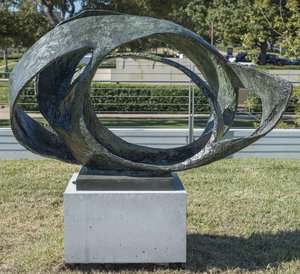
- oval form (trezion), a bronze sculpture, is part of the kimbell art museum collection in fort worth, united states. (view on ArtsDot)
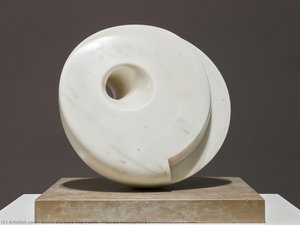
- two forms, a sculpture, is exhibited at the hepworth wakefield in wakefield, united kingdom. (view on ArtsDot)
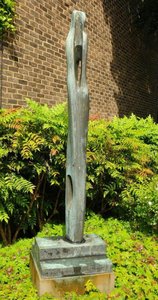
- totem, a marble sculpture, is also part of the collection at the hepworth wakefield. (view on ArtsDot)
legacy and museum collections
barbara hepworth's work is widely recognized, with her sculptures and paintings forming part of various museum collections worldwide. the hepworth wakefield, named after the artist, houses numerous masterpieces from renowned artists, including hepworth's own works. (discover more about the hepworth wakefield on ArtsDot)conclusion
dame barbara hepworth's pioneering work in modern british sculpture has left an indelible mark on the art world. her legacy continues to inspire artists and art enthusiasts alike, with her works remaining a testament to her innovative spirit and artistic genius. more about barbara hepworth on wikipedia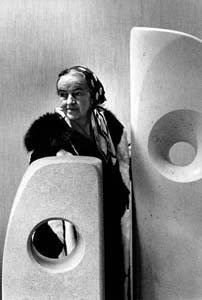
Barbara Hepworth
1903 - 1975 , United Kingdom
Quick Facts
- Artistic Movement Or Style: Modernism, Abstraction
- Artists Or Movements Influenced By This Artist:
- Abstraction-Création
- Unit One
- Artists Who Influenced This Artist:
- Henry Moore
- Ben Nicholson
- Date Of Birth: 1903-01-10
- Date Of Death: 1975-05-20
- Full Name: Barbara Hepworth
- Nationality: British
- Notable Artworks:
- Oval Form (Trezion)
- Two Forms
- Totem
- Place Of Birth: Wakefield, UK
Related Articles
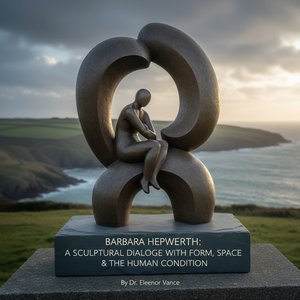
Barbara Hepworth: A Sculptural Dialogue with Form, Space & the Human Condition
Explore the profound world of Barbara Hepworth's sculpture. Discover her artistic evolution, iconic forms, and lasting influence on modern art. A guide for collectors & enthusiasts.

Bronze Sculptures That Defined Art History | ArtsDot
Journey through art history with our Top 10 bronze sculptures! Explore masterpieces by Rodin, Michelangelo & more. Discover stories behind iconic statues and find museum-quality reproductions for your home decor at ArtsDot.com.

The Enduring Form: Exploring Themes & Techniques in Sculpture Across Historical Periods
Explore the rich history of sculpture from ancient masterpieces to contemporary innovations. Discover key techniques, influential artists & investment potential for discerning art collectors.
The Enduring Form: Sculpture Across History, Technique & Emotional Resonance
Explore the rich history of sculpture with ArtsDot. Discover key techniques, influential artists & investment potential for discerning collectors. Expert insights into valuing and collecting timeless masterpieces.

Bronze Age to Modern Masters: 10 Sculptures That Redefined Art | ArtsDot
Journey through art history with 10 legendary bronze sculptures – from Michelangelo's David to Rodin’s Thinker. Explore the stories, techniques & timeless beauty of these masterpieces. Find museum-quality reproductions & elevate your home decor on ArtsDot.com.