 Preview
 Send
Send Share
Share
 Details

 Download
 Similars
 X-Ray
X-Ray Diaporama
Tibia Graft
 Drawing
- WallArt
- Modernism
 1949
1949 52.0 x 37.0 cm
 The Hepworth Wakefield
 Read More
Hand Made Oil Reproduction
Hand-painted oil on canvas in your size and frame, made to order by our artists. ( Buy Print Buy Image)




P118B $10

P118H $10

P118W $10

P438Z $10

P508JH $12

P508YH $12

P805H $10

P805Z $10

P919BZ $10

P919G $10

P919XJ $10

P959ZH $10

P968JZ $12

W106C $8

W218G $10

W218JH $8

W218Y $10

W307PJ $10

W316G $10

W316PJ $8

W316Y $10

W398PJ $8

W4111J $10

W500HY $15

W500JH $15

W692G $12

W849H $8

W940BG $15

W953PJ $8




Pick from our preset sizes that match the artwork's original proportions.

You may enter your own dimensions to fit a specific frame or space. If your selected size does not match the original image's proportions, we will either crop the artwork or extend the painting with additional hand-painted elements. A digital mockup will be sent for your approval before production begins.
Please note that the on-screen preview does not reflect the actual cropping or extension. Only the mockup will accurately show the final composition.
While custom sizes are available, we recommend selecting a dimension from the predefined list to preserve the original proportions.
After order, ArtsDot.com team will email client for instructions and provide a mockup preview
Worldwide Delivery () in 3/4 weeks instead of standard 5 weeks. (17 August). No compromise on quality.

Free Worldwide Express Shipping

High-Quality Linen Canvas

Full Shipping Insurance

Customs Tax Refund Guarantee

True Color Matching Guarantee

60-Day Return Policy (Defects Only)

100% Money-Back Guarantee

Bulk Discount Offer
 Glass option is only available in size under 110 CM

Tibia Graft
Reproduction Medium
Reproduction Size
-


Total Price
$ 263
Artwork Description
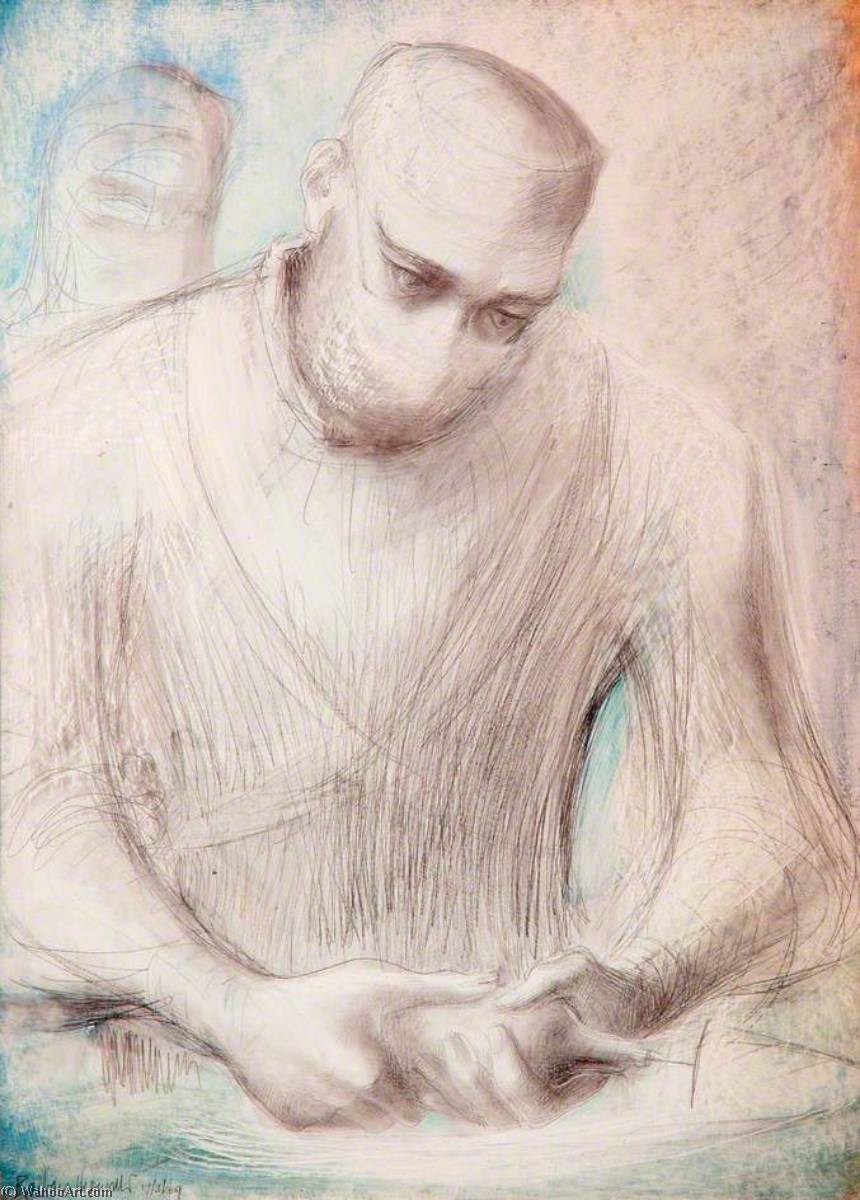
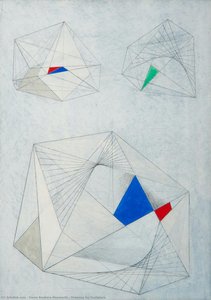
A Moment Frozen in Line: Barbara Hepworth’s “Tibia Graft”
Barbara Hepworth's 1949 drawing, "Tibia Graft," isn’t merely a depiction of a medical scene; it’s a profound meditation on the intersection of human action, vulnerability, and artistic observation. Created during a period of intense personal reflection for the artist – following her daughter’s serious illness – the work offers a rare glimpse into Hepworth's evolving approach to drawing, moving beyond purely representational forms towards a more expressive and emotionally resonant style.
The subject itself—a solitary figure engaged in the meticulous process of observing an operation at Exeter Hospital—immediately establishes a sense of quiet intensity. The surgeon, rendered with remarkable detail through Hepworth’s precise pencil strokes, is positioned slightly off-center, drawing our eye to the central focus: the patient, partially obscured yet undeniably present. This deliberate framing invites us into the intimate space of medical observation, fostering a feeling of both empathy and detached scrutiny.
The Language of Line and Form
Hepworth’s technique is characterized by an almost obsessive attention to line. She employs a masterful use of hatching and cross-hatching—a method perfected through years of study—to build up tonal variations and create the illusion of texture and volume. The drawing isn't about photographic accuracy; instead, it’s about capturing the *essence* of form and gesture. Notice how the lines aren’t always smooth or continuous; they frequently break and intersect, mirroring the fragmented nature of observation itself.
The overall style leans heavily towards realism, yet with a distinctly expressive quality. Hepworth wasn't simply documenting a scene; she was translating it into a visual language that prioritized emotional impact over literal representation. The flattened perspective—a characteristic of modernism—further emphasizes the sculptural qualities of the forms, suggesting an underlying three-dimensionality even within the confines of the two-dimensional surface.
A Window into Modernism and Personal Reflection
“Tibia Graft” is a pivotal work in Hepworth’s artistic development. Created during her time at St Ives, Cornwall—a haven for modern artists seeking inspiration—it exemplifies the principles of abstraction-creation, a movement she co-founded with Ben Nicholson. The drawing reflects a shift away from purely decorative concerns towards a more conceptual and emotionally driven approach to art.
The context surrounding its creation is crucial. Hepworth’s personal experience – her daughter's illness and the subsequent hospital visits— profoundly shaped her artistic vision. This intimate connection with the medical world, coupled with her deep understanding of human anatomy and gesture, imbues “Tibia Graft” with a poignant sense of vulnerability and quiet contemplation. It’s a testament to the power of art to transform personal experience into universal themes.
Symbolism and Emotional Resonance
While seemingly straightforward in its depiction, "Tibia Graft" is rich in symbolic potential. The solitary figure represents both the surgeon's focused attention and the patient’s vulnerability. The act of observation itself—the careful study of form and gesture—becomes a metaphor for understanding and empathy. The drawing’s subdued palette – dominated by shades of grey, brown, and black – contributes to its melancholic mood, reflecting the gravity of the subject matter.
Ultimately, “Tibia Graft” is more than just a medical illustration; it's a deeply moving exploration of human experience. It invites us to contemplate the complexities of illness, healing, and the transformative power of art – a timeless work that continues to resonate with viewers today.
Related Artworks
Artist Biography
early life and education
dame barbara hepworth, a renowned english artist and sculptor, was born on january 10, 1903, in wakefield, yorkshire. she attended the leeds school of art from 1920 and later won a county scholarship to study at the royal college of art (rca) in london from 1921 until she was awarded the diploma in 1924.artistic career
- dame barbara hepworth's work exemplifies modernism, particularly modern sculpture. she was one of the few female artists to achieve international prominence.
- in 1933, she co-founded the unit one art movement with ben nicholson, paul nash, and others, seeking to unite surrealism and abstraction in british art.
- hepworth's early work was characterized by abstraction and her involvement with the paris-based art movement, abstraction-création.
notable works and exhibitions
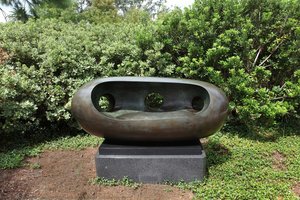
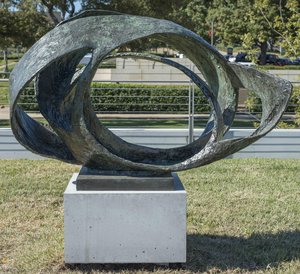
- oval form (trezion), a bronze sculpture, is part of the kimbell art museum collection in fort worth, united states. (view on ArtsDot)
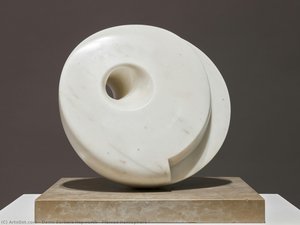
- two forms, a sculpture, is exhibited at the hepworth wakefield in wakefield, united kingdom. (view on ArtsDot)
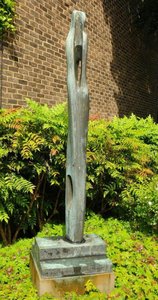
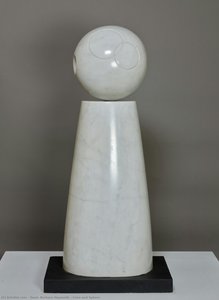
- totem, a marble sculpture, is also part of the collection at the hepworth wakefield. (view on ArtsDot)
legacy and museum collections
barbara hepworth's work is widely recognized, with her sculptures and paintings forming part of various museum collections worldwide. the hepworth wakefield, named after the artist, houses numerous masterpieces from renowned artists, including hepworth's own works. (discover more about the hepworth wakefield on ArtsDot)conclusion
dame barbara hepworth's pioneering work in modern british sculpture has left an indelible mark on the art world. her legacy continues to inspire artists and art enthusiasts alike, with her works remaining a testament to her innovative spirit and artistic genius. more about barbara hepworth on wikipedia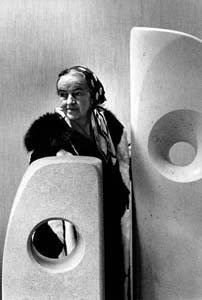
Barbara Hepworth
1903 - 1975 , United Kingdom
Quick Facts
- Artistic Movement Or Style: Modernism, Abstraction
- Artists Or Movements Influenced By This Artist:
- Abstraction-Création
- Unit One
- Artists Who Influenced This Artist:
- Henry Moore
- Ben Nicholson
- Date Of Birth: 1903-01-10
- Date Of Death: 1975-05-20
- Full Name: Barbara Hepworth
- Nationality: British
- Notable Artworks:
- Oval Form (Trezion)
- Two Forms
- Totem
- Place Of Birth: Wakefield, UK
Related Articles
The Nuances of Graphite: Exploring Emotional Depth & Technical Mastery in Pencil Drawing
Explore the captivating world of graphite drawing! Discover its rich history, master essential techniques like chiaroscuro, and learn how artists evoke emotion through this timeless medium. Expert insights for art enthusiasts.

Barbara Hepworth: A Sculptural Dialogue with Form, Space & the Human Condition
Explore the profound world of Barbara Hepworth's sculpture. Discover her artistic evolution, iconic forms, and lasting influence on modern art. A guide for collectors & enthusiasts.
Abstract Expressionism's 10 Defining Masterpieces |
Explore 10 defining Abstract Expressionism masterpieces by Pollock, Rothko & de Kooning. Discover the stories behind these iconic paintings and find museum-quality art reproductions to elevate your home decor on .

Kandinsky's Masterpieces: 25 Paintings That Define Abstract Art | ArtsDot
Journey through Wassily Kandinsky's 25 most iconic abstract paintings. Explore his revolutionary use of color, form & spiritual expressionism. Find museum-quality Kandinsky reproductions and elevate your home decor with ArtsDot.com. Discover all masterpieces on ArtsDot.com!

Geometric Abstraction's 10 Defining Masterpieces | Art for Your Home - ArtsDot
Explore 10 defining masterpieces of Geometric Abstraction! Discover Kandinsky, Mondrian & Malevich’s iconic works. Find museum-quality art reproductions and curated decor ideas to elevate your home at ArtsDot.com.