 Preview
 Send
Send Share
Share
 Details

 Download
 Similars
 X-Ray
X-Ray Diaporama
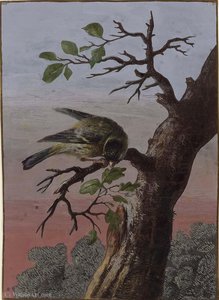
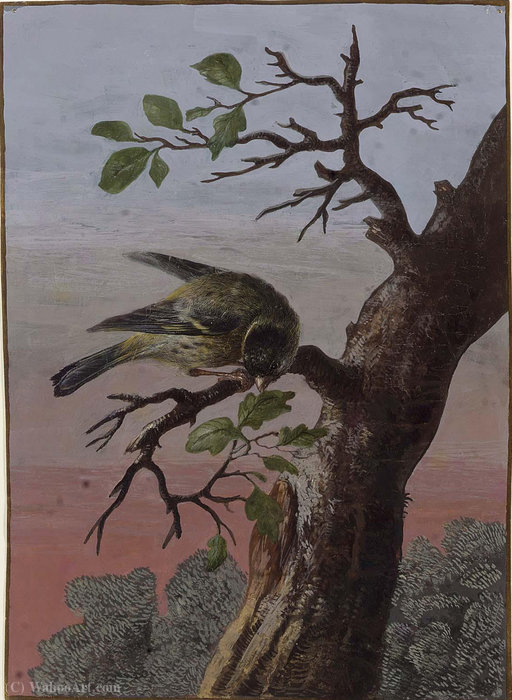
A finch on a branch
 Read More
Hand Made Oil Reproduction
Hand-painted oil on canvas in your size and frame, made to order by our artists. ( Buy Print Buy Image)




































Pick from our preset sizes that match the artwork's original proportions.

You may enter your own dimensions to fit a specific frame or space. If your selected size does not match the original image's proportions, we will either crop the artwork or extend the painting with additional hand-painted elements. A digital mockup will be sent for your approval before production begins.
Please note that the on-screen preview does not reflect the actual cropping or extension. Only the mockup will accurately show the final composition.
While custom sizes are available, we recommend selecting a dimension from the predefined list to preserve the original proportions.
After order, ArtsDot.com team will email client for instructions and provide a mockup preview
Worldwide Delivery () in 3/4 weeks instead of standard 5 weeks. (20 August). No compromise on quality.

Free Worldwide Express Shipping

High-Quality Linen Canvas

Full Shipping Insurance

Customs Tax Refund Guarantee

True Color Matching Guarantee

60-Day Return Policy (Defects Only)

100% Money-Back Guarantee

Bulk Discount Offer
 Glass option is only available in size under 110 CM

A finch on a branch
Reproduction Medium
Reproduction Size
-


Total Price
$ 263
Related Artworks
Artist Biography
Barbara Regina Dietzsch: A Quiet Revolution in Botanical Art
Barbara Regina Dietzsch, born in the vibrant heart of Nuremberg in 1706 and passing away in 1783, remains a quietly remarkable figure within the history of European art. Often overshadowed by her more flamboyant contemporaries, this Bavarian painter and engraver carved out a significant legacy through her exquisite monochromatic watercolor still lifes – depictions of flowers, animals, and shells that offer a unique window into the intellectual and artistic currents of the 18th century. Her work wasn’t merely decorative; it was imbued with a meticulous observation of nature, a subtle symbolism, and a surprisingly progressive approach to artistic practice for a woman operating within a largely patriarchal art world.A Family Affair: Training and Context
Dietzsch's artistic journey began within the fertile ground of her family’s workshop in Nuremberg. Her father, Johann Israel Dietzsch, was himself a landscape painter and engraver, providing an invaluable foundation for his children. This wasn’t simply a matter of inheriting skills; it was a deliberate cultivation of artistic talent across generations. Her siblings – including the talented Margaretha Barbara – were all involved in the family's production, creating a collaborative environment where techniques and subject matter were shared and refined. Crucially, this familial context allowed Dietzsch to develop her craft independently, bypassing the restrictive limitations imposed upon women artists by traditional guild systems and academic institutions. The workshop’s focus on naturalistic subjects – particularly flowers – reflected the burgeoning interest in botany and scientific classification during the Enlightenment, a period marked by an increasing desire to understand and categorize the natural world.Monochromatic Mastery: Technique and Style
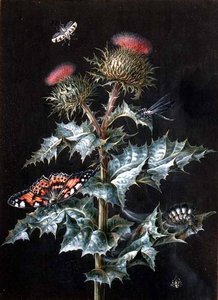
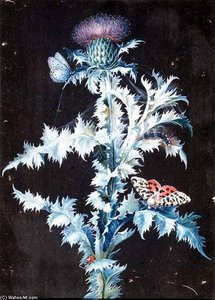
Dietzsch's distinctive style is immediately recognizable through her masterful use of monochromatic watercolor (gouache). She eschewed bright colors and elaborate backgrounds, opting instead for a carefully controlled palette of browns, grays, and blacks – often achieved through the addition of white lead to her watercolors. This deliberate choice created an atmosphere of intimacy and contemplation, drawing the viewer’s attention directly to the intricate details of each subject. Her technique was characterized by painstaking observation and meticulous rendering; she captured the delicate textures of petals, the subtle gradations of light and shadow, and the minute markings on insects with astonishing precision. The absence of identifying inscriptions suggests that these works were intended for private viewing and personal enjoyment – a testament to Dietzsch’s dedication to capturing the essence of her subjects rather than creating didactic illustrations. The influence of engraving is also evident in her work; many of her paintings were later reproduced as prints, demonstrating a sophisticated understanding of both painting and printmaking techniques.Subjects of Observation: Flowers, Animals, and Symbolism
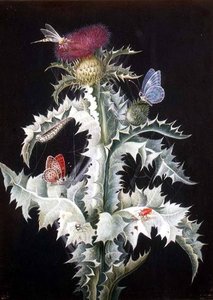
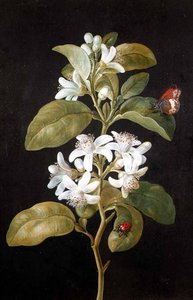
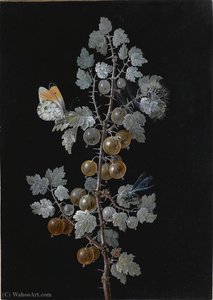
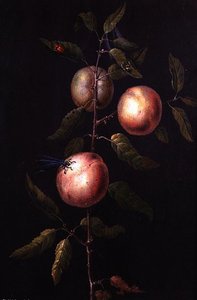
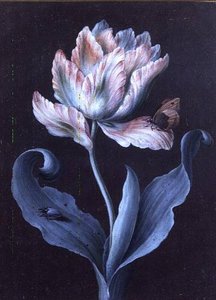
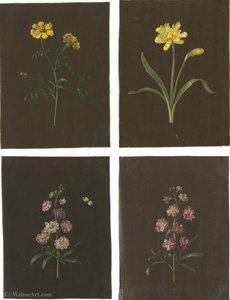
Dietzsch’s still lifes encompassed a diverse range of subjects, with flowers being the most prominent. She depicted an astonishing variety of blooms – from delicate morning glories to robust tulips – each rendered with remarkable detail and sensitivity. Alongside flowers, she also painted birds (particularly butterflies), shells, and occasionally insects, creating miniature ecosystems within her compositions. Beyond mere representation, Dietzsch’s work is rich in symbolism. Flowers were frequently associated with virtues, emotions, or allegorical meanings, reflecting the prevailing intellectual trends of the time. The careful arrangement of these elements suggests a deliberate engagement with broader philosophical and cultural themes – a quiet revolution expressed through the language of art.Legacy and Recognition
Despite her talent and success, Barbara Regina Dietzsch’s contribution to art history has often been overlooked. However, in recent years, there's been a growing recognition of her significance as a pioneering botanical artist. Her works are now housed in museums across Europe and America, including the Getty Museum, the British Museum, and the Metropolitan Museum of Art. Artists like Andaleeb Badiee Banta have shone a light on her work, highlighting its beauty, technical skill, and intellectual depth. Dietzsch’s legacy lies not only in her exquisite paintings but also in her defiance of societal expectations – a testament to the enduring power of artistic vision and the importance of recognizing the contributions of women artists throughout history. Her quiet dedication to observing and representing the natural world continues to offer us a profound connection to both art and nature.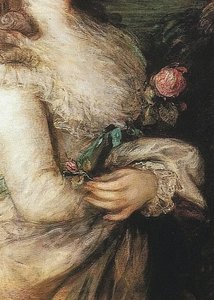
barbara regina dietzsch
1706 - 1783 , Germany
Quick Facts
- Artistic Movement Or Style: Botanical painting
- Artists Or Movements Influenced By This Artist: ['Ernst Friedrich Carl Lang']
- Artists Who Influenced This Artist: ['Johann Israel Dietzsch']
- Date Of Birth: 22 September 1706
- Date Of Death: 1 May 1783
- Full Name: Barbara Regina Dietzsch
- Nationality: German
- Notable Artworks:
- A Dandelion...
- Dandelion...
- Place Of Birth: Nuremberg, Germany