


 Preview
 Send
Send Share
Share
 Details

 Download
 Similars
 X-Ray
X-Ray Diaporama
Installation photo from the Barbican
 Read More
Purchase a high-resolution, enhanced digital image, far superior to the online preview.
Each file is meticulously prepared by our in-house specialists using advanced tools and expert manual retouching. We ensure every image has exceptional clarity, precise color accuracy, and fine detail.
The final file is delivered via email within 72 hours, optimized for immediate use in professional, editorial, and print environments. This is the same quality trusted by top-tier design studios, publishers, and galleries.
Digital Image
Download a high-resolution file for personal display, printing, and creative projects. ( Buy Print Buy Hand Made Painting)
Included in Every Digital Image Order
Expert Digital Delivery, Guaranteed
When you choose ArtsDot.com, you're not just getting an image - you're receiving a professionally enhanced digital artwork, crafted with precision and backed by a satisfaction guarantee. Here's everything that comes with your order, automatically:

Fast Email Delivery
Your high-resolution digital image file will be emailed to you within 72 hours of ordering - ready for immediate use.

AI-Enhanced Digital File
Your artwork is professionally optimized using advanced AI tools and manual editing, ensuring maximum detail, clarity, and color accuracy.

Free Lifetime Re-Delivery
Accidentally deleted or lost your file? No worries - we'll resend it to you anytime, free of charge.

No Import Fees - Ever
Enjoy your artwork instantly with zero customs, duties, or delivery fees - digital downloads are always tax-free.

Color Accuracy Guarantee
We ensure your digital image reflects the original colors as closely as possible using professional tools and color management.

60-Day Satisfaction Guarantee
If you're not satisfied with your digital image, we'll revise it or refund 100% within 60 days - no questions asked.

100% Money-Back Guarantee
Not satisfied? Get a full refund within 60 days of receiving your digital file - no questions asked.

Bulk Order Discounts
Buy 3 images, save 10% - Buy 5, save 15% - Buy 10+, save 20%. Great for creative projects, galleries, and agencies.
Related Artworks










Artist Biography
A Monument to Post-War Vision: The Barbican Centre
The Barbican Centre, rising from the heart of the City of London, is more than just a building; it’s a statement—a bold articulation of post-war ambition and a testament to the enduring power of architectural vision. Conceived as a gift to the nation by the City of London Corporation, its story began in 1965, culminating in its official opening in 1982 at a considerable cost of £161 million (a figure that translates to approximately £480 million today). The genesis of the Barbican is inextricably linked to the devastation wrought by World War II. Emerging from bomb-scarred landscapes, it was intended not merely as reconstruction but as renewal—a vibrant hub for both residential life and artistic expression within the historic City’s boundaries. It wasn't simply about replacing what had been lost; it was about forging a new identity, one that embraced modernity while acknowledging the weight of history.Brutalism and Beyond: Architectural Influences
The Barbican is instantly recognizable for its distinctive Brutalist architecture—a style characterized by massive scale, repetitive modular elements, and the unapologetic exposure of concrete surfaces. This aesthetic wasn’t born in a vacuum; it was deeply rooted in the modernist architectural movement spearheaded by Le Corbusier. His vision of functional urban living, prioritizing efficiency and communal space, profoundly influenced Chamberlin, Powell and Bon, the architects entrusted with bringing the Barbican to life. While often described as labyrinthine, this complex layout isn’t a flaw but rather an intentional design choice—a deliberate attempt to foster a sense of discovery and encourage exploration within its vast expanse. The concrete itself wasn't merely a structural material; it was sculpted, textured by hand with pickaxes to disguise joints and create a unified aesthetic, demonstrating a commitment to artistry even in the most utilitarian aspects of construction. It’s an architecture that demands attention, provoking strong reactions—admiration for its scale and ambition, or critique for its perceived austerity.A Cultural Ecosystem: Facilities and Programming
The Barbican Centre is not a singular entity but rather a complex ecosystem of cultural facilities. At its heart lies the Concert Hall, home to both the London Symphony Orchestra and the BBC Symphony Orchestra—a space renowned for its exceptional acoustics. Complementing this are two theatres hosting a diverse range of dramatic performances, three cinema screens showcasing everything from mainstream blockbusters to independent films, and art galleries presenting major exhibitions of modern and contemporary art. Beyond these core elements, the Barbican boasts a comprehensive public library with extensive collections, and perhaps most surprisingly, a stunning indoor tropical garden—the Conservatory—offering a tranquil escape amidst the urban landscape. This diverse array of facilities is united by an equally ambitious programming schedule encompassing classical and contemporary music concerts, theatre productions, dance performances, film screenings, art exhibitions, and educational workshops. The Barbican doesn’t simply present art; it cultivates it, fostering creativity and engagement across disciplines.Landmark Achievements and Enduring Legacy
Throughout its history, the Barbican Centre has achieved several significant milestones solidifying its place as a cultural cornerstone. In 2013, it proudly welcomed the Royal Shakespeare Company back to its stages, following a previous residency from 1985-2001. The centre consistently hosts world-class performances and exhibitions that garner international acclaim, attracting audiences from across the globe. Recognizing its architectural importance, the Barbican was granted Grade II listed status—a testament to its significance as a landmark of post-war British architecture. But perhaps the most enduring legacy of the Barbican lies in its role as a pioneering example of large-scale urban redevelopment and its unwavering commitment to providing access to the arts for all. It represents a bold vision for cultural enrichment within a major city, inspiring countless artists, architects, and urban planners with its innovative design and dedication to public space. The Barbican continues to be a vital cultural hub for London and a globally recognized symbol of artistic innovation—a monument not just to concrete and steel, but to the enduring power of human creativity.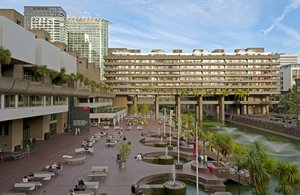
Barbican Arts Centre
1982 - , United Kingdom
Quick Facts
- Artistic Movement Or Style: Brutalism
- Artists Or Movements Influenced By This Artist:
- Contemporary artists
- Urban planners
- Artists Who Influenced This Artist: ['Le Corbusier']
- Date Of Birth: 1982
- Full Name: Barbican Arts Centre
- Nationality: British
- Notable Artworks:
- Installation photo from the Barbican
- Barbican Centre: Modern Marvel...
- Co(AI)xistence installation
- Other Names: Barbican Centre
- Place Of Birth: City of London, UK

