 Preview
 Send
Send Share
Share
 Details

 Download
 Similars
 X-Ray
X-Ray Diaporama
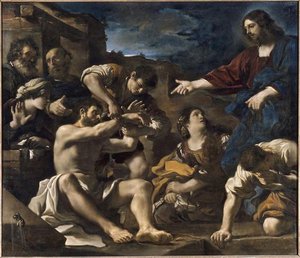
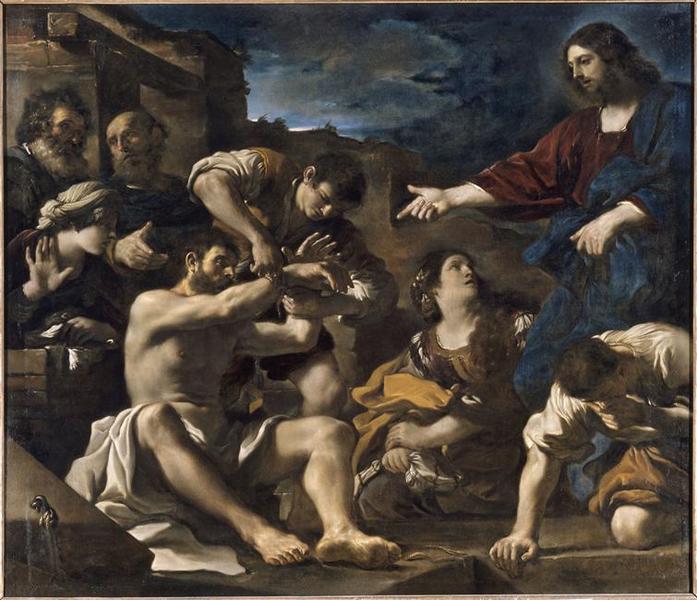
LA RESURRECTION DE LAZARE


 Read More
Hand Made Oil Reproduction
Hand-painted oil on canvas in your size and frame, made to order by our artists. ( Buy Print Buy Image)




P118B $10

P118H $10

P118W $10

P438Z $10

P508JH $12

P508YH $12

P805H $10

P805Z $10

P919BZ $10

P919G $10

P919XJ $10

P959ZH $10

P968JZ $12

W106C $8

W218G $10

W218JH $8

W218Y $10

W307PJ $10

W316G $10

W316PJ $8

W316Y $10

W398PJ $8

W4111J $10

W500HY $15

W500JH $15

W692G $12

W849H $8

W940BG $15

W953PJ $8




Pick from our preset sizes that match the artwork's original proportions.

You may enter your own dimensions to fit a specific frame or space. If your selected size does not match the original image's proportions, we will either crop the artwork or extend the painting with additional hand-painted elements. A digital mockup will be sent for your approval before production begins.
Please note that the on-screen preview does not reflect the actual cropping or extension. Only the mockup will accurately show the final composition.
While custom sizes are available, we recommend selecting a dimension from the predefined list to preserve the original proportions.
After order, ArtsDot.com team will email client for instructions and provide a mockup preview
Worldwide Delivery () in 3/4 weeks instead of standard 5 weeks. (17 August). No compromise on quality.

Free Worldwide Express Shipping

High-Quality Linen Canvas

Full Shipping Insurance

Customs Tax Refund Guarantee

True Color Matching Guarantee

60-Day Return Policy (Defects Only)

100% Money-Back Guarantee

Bulk Discount Offer
 Glass option is only available in size under 110 CM

LA RESURRECTION DE LAZARE
Reproduction Medium
Reproduction Size
-


Total Price
$ 388
Artwork Description
The Drama of Divine Intervention
To stand before La Resurrectio de Lazare is to be enveloped by a torrent of divine drama. Gian Francesco Barbieri, known to history as Guercino, captures not merely an event, but the very moment where life defies death. The composition explodes with energy; it is a quintessential Baroque spectacle. One feels the weight of the crowd, the palpable tension between despair and miraculous hope. The scene is overwhelmingly dynamic, pulling the viewer into the heart of the biblical narrative—the raising of Lazarus from his tomb. Guercino masterfully orchestrates every figure, their gestures ranging from profound grief to astonished awe, creating a visual symphony of human reaction to the sublime.
Mastery in Light and Shadow: A Baroque Spectacle
Technically, this work is a breathtaking display of Baroque prowess. The handling of light is nothing short of theatrical; it does not merely illuminate, it sculpts. Guercino employs an intense chiaroscuro, allowing the divine source—implied to be Christ’s presence—to cast brilliant highlights upon key figures while plunging surrounding areas into deep, velvety shadow. This dramatic contrast heightens the emotional stakes of the piece immeasurably. Observe the rich interplay of color: deep, somber browns anchor the scene, punctuated by vibrant reds and blues in the drapery. The texture suggested by the oil paint is palpable; one can almost feel the thick impasto where Guercino rendered the folds of cloth or the taut musculature of a responding body.
Symbolism and Emotional Resonance
Beyond its technical brilliance, the painting resonates with profound symbolism. Lazarus himself represents the triumph of spirit over mortality, while the surrounding mourners embody humanity’s deepest vulnerabilities—grief, doubt, and ultimate faith. The entire composition is a meditation on resurrection itself: not just the physical act, but the spiritual rebirth that follows confronting absolute loss. For the collector or decorator, this piece offers more than mere decoration; it serves as a powerful focal point for any space, injecting an atmosphere of profound hope and enduring belief into a room’s ambiance.
A Legacy in Canvas
Guercino's style, rooted in Bolognese naturalism yet soaring toward the dramatic heights of the Baroque, ensures that this work feels both historically significant and immediately visceral. The sense of movement is achieved through expressive lines—the sweeping curves of robes contrasting with sharp diagonals guiding the eye toward the central miracle. Reproducing such a complex interplay of anatomy, drapery, and divine light requires an expert hand, making any high-quality reproduction a worthy tribute to this master’s enduring genius.
Related Artworks
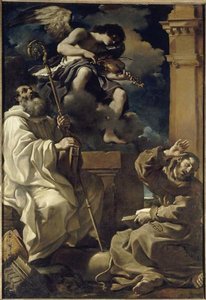
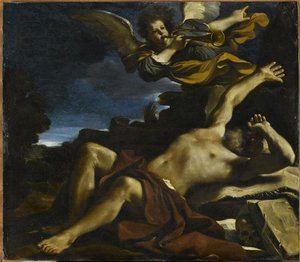
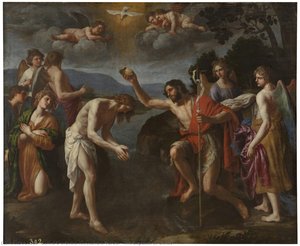
Artist Biography
The Master of Light and Shadow: The Life of Guercino
Born Giovanni Francesco Barbieri around 1591 in the serene town of Sassuolo, Italy, the artist who would become known to history as Guercino emerged as one of the most luminous figures of the Bolognese Baroque. His name, a nickname meaning "the squinting one," perhaps alludes to the intense, focused gaze with which he approached his canvas, a gaze that captured the very essence of human emotion and divine light. Growing up in the Emilia-Region, a territory rich with artistic tradition, Barbieri was destined to become a central pillar of the Italian Baroque movement, weaving together the dramatic naturalism of the era with a profound, poetic sensibility.
The foundations of his genius were laid during his early training, where he absorbed the stylistic nuances of the Bolognese school. While much of his formative years remain shrouded in the mists of history, his artistic lineage is clearly traced through his engagement with the works of masters like Alessandro Magnasco. This early exposure introduced him to the transformative power of chiaroscuro—the dramatic interplay between deep, velvety shadows and piercing highlights. As he matured, Guercino did not merely mimic existing styles; he synthesized them, creating a visual language that felt both grounded in reality and elevated by spiritual grace.
A Synthesis of Caravaggesque Drama and Bolognese Grace
The trajectory of Guercino’s career was irrevocably altered by the revolutionary influence of Caravaggio. The sheer psychological depth and uncompromising realism found in Caravaggio's work acted as a catalyst for Barbieri, prompting him to explore the more visceral aspects of the human condition. In his hands, the starkness of Caravaggism was softened by a uniquely Bolognese elegance, resulting in compositions that possessed an uncanny sense of atmosphere. He mastered the ability to use light not just as a tool for visibility, but as a narrative force capable of guiding the viewer's eye through complex biblical and mythological landscapes.
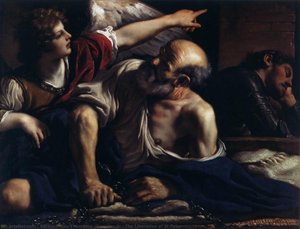
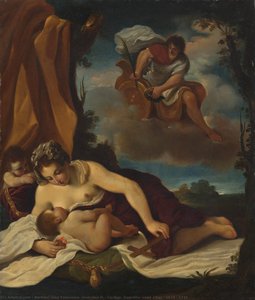
This mastery is perhaps most evident when examining his approach to religious iconography. In works such as The Liberation of St Peter, executed in 1622, one can witness the breathtaking tension between the divine and the earthly. The painting serves as a testament to his ability to capture a moment of miraculous intervention through emotive expression and dramatic lighting. Similarly, his mythological explorations, such as Venus and Cupid, demonstrate a sophisticated command of color and form, where the tenderness of the subjects is balanced by the heavy, atmospheric shadows that define his signature style.
Legacy and Artistic Significance
Guercino’s contribution to the Baroque era extends far beyond the mere depiction of scenes; he redefined the emotional landscape of seventeenth-century painting. His ability to imbue even the most tranquil landscapes with a sense of spiritual contemplation allowed him to bridge the gap between the intense drama of the early Baroque and the more lyrical, classical tendencies that would follow. His influence resonated throughout Europe, inspiring generations of painters to seek the balance between naturalistic truth and idealized beauty.
Throughout his prolific life, which concluded in 1666, Guercino remained a steadfast architect of light. His achievements can be summarized through several key artistic pillars:
- Mastery of Chiaroscuro: The use of extreme light and shadow to create depth, volume, and psychological tension.
- Emotional Naturalism: A commitment to portraying human figures with an honesty that resonates with the viewer's own empathy.
- Atmospheric Landscapes: The creation of settings that feel lived-in and spiritually charged, moving beyond mere backdrops to become active participants in the narrative.
- Stylistic Synthesis: The seamless blending of Caravaggio’s dramatic realism with the refined traditions of the Bolognese school.
Today, the works of Guercino continue to captivate audiences in museums across the globe, standing as enduring monuments to a period of unparalleled artistic innovation. He remains a definitive voice of the Baroque, reminding us that art is at its most powerful when it illuminates both the physical world and the unseen depths of the human soul.
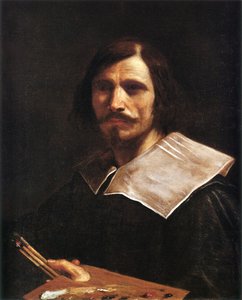
barbieri gian francesco (guercino il)
1591 - 1666
Quick Facts
- Artistic Movement Or Style: Baroque painting
- Artists Or Movements Influenced By This Artist: ['Italian Baroque']
- Artists Who Influenced This Artist:
- Caravaggio
- Annibal Rigaudi
- Date Of Birth: 1591
- Date Of Death: 1666
- Full Name: Giovanni Francesco Barbieri
- Nationality: Italian
- Notable Artworks:
- San Cesare Vespasiano Chapel Altarpiece
- The Martyrdom of Saint Cecilia
- Place Of Birth: Borgo San Lorenzo, Tuscany
Related Articles

Giclée Prints: Archival Quality & Aesthetic Nuances for the Discerning Collector
Explore the world of giclée prints with ArtsDot. Learn about archival quality, aesthetic nuances & investment potential. Expert guidance for discerning art collectors seeking museum-quality reproductions and lasting value.

Baroque Masterpieces: 10 Paintings That Defined an Era |
Journey through the drama & grandeur of Baroque art! Explore 10 masterpieces by Caravaggio, Rembrandt, Rubens & more. Discover stunning oil paintings, rich colors & timeless stories. Find museum-quality reproductions at .
Guercino: A Baroque Master Between Caravaggism & Classicism – Exploring Innovation & Emotional Depth
Explore the captivating world of Guercino, a Baroque master bridging Caravaggism & Classicism. Discover his dramatic chiaroscuro, emotional depth, and lasting influence on art history with ArtsDot.

Baroque Drama: Bringing Opulence & Emotion into Contemporary Interiors
Explore the opulent world of Baroque interior design! Discover key elements, modern applications & how to bring dramatic elegance into your home with 's authentic reproductions.
Reproducing Artistry: A Guide to Oil, Canvas & Paper Reproduction Mediums
Explore the world of art reproduction! Learn about oil, canvas & paper options with our expert guide. Discover museum-quality reproductions for your home or collection.