 Preview
 Send
Send Share
Share
 Details

 Download
 Similars
 X-Ray
X-Ray Diaporama
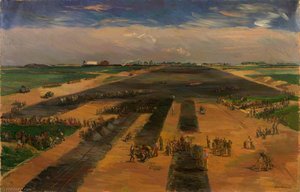
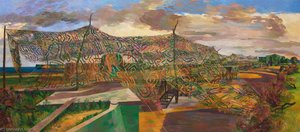
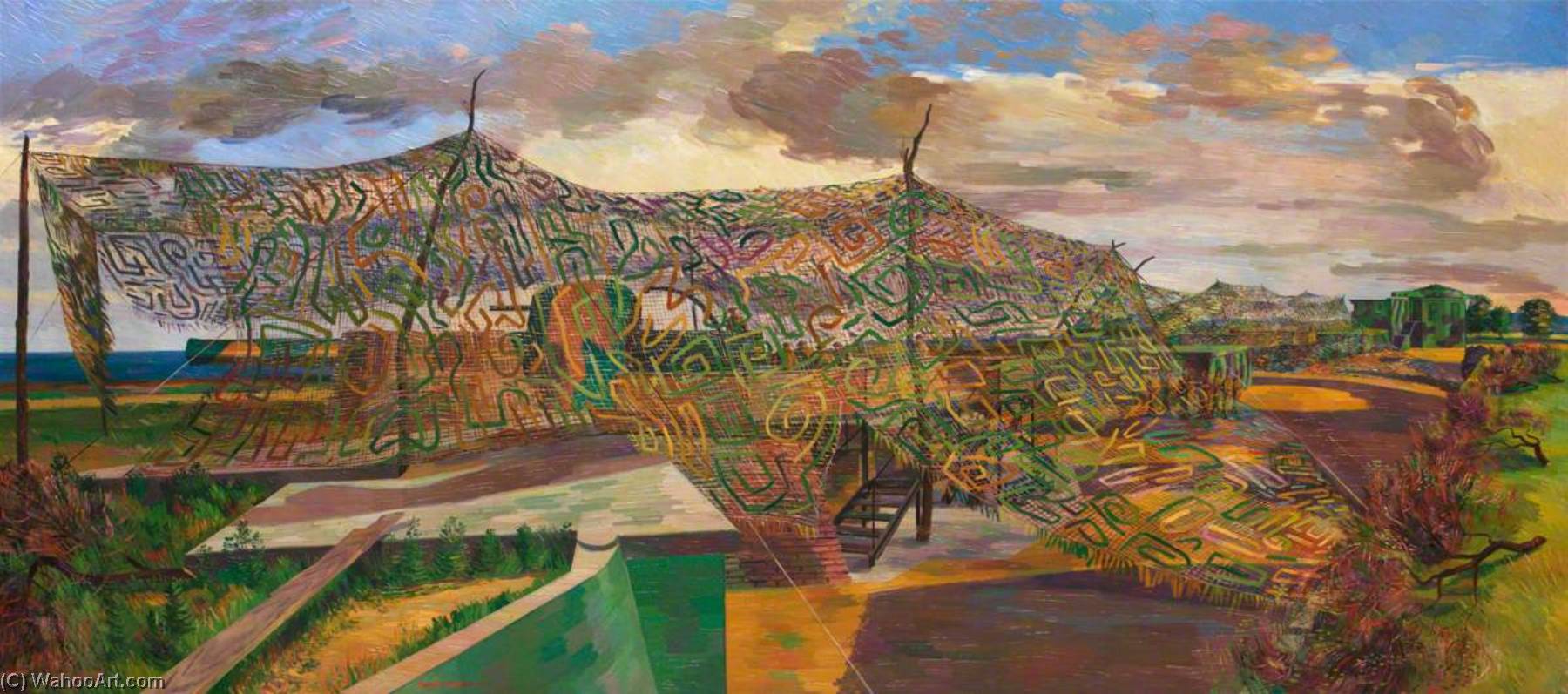
Coast Defence Battery, September 1940
 1940
1940 110.0 x 245.0 cm
 Read More
Hand Made Oil Reproduction
Hand-painted oil on canvas in your size and frame, made to order by our artists. ( Buy Print Buy Image)




































Pick from our preset sizes that match the artwork's original proportions.

You may enter your own dimensions to fit a specific frame or space. If your selected size does not match the original image's proportions, we will either crop the artwork or extend the painting with additional hand-painted elements. A digital mockup will be sent for your approval before production begins.
Please note that the on-screen preview does not reflect the actual cropping or extension. Only the mockup will accurately show the final composition.
While custom sizes are available, we recommend selecting a dimension from the predefined list to preserve the original proportions.
After order, ArtsDot.com team will email client for instructions and provide a mockup preview
Worldwide Delivery () in 3/4 weeks instead of standard 5 weeks. (23 August). No compromise on quality.

Free Worldwide Express Shipping

High-Quality Linen Canvas

Full Shipping Insurance

Customs Tax Refund Guarantee

True Color Matching Guarantee

60-Day Return Policy (Defects Only)

100% Money-Back Guarantee

Bulk Discount Offer
 Glass option is only available in size under 110 CM

Coast Defence Battery, September 1940
Reproduction Medium
Reproduction Size
-


Total Price
$ 263
Related Artworks








Artist Biography
The Resilience of a Creative Spirit
The story of Barnett Freedman is one of profound resilience, a narrative that begins not in the studios of London, but within the quiet, sterile confines of the London Hospital. Born in 1901 in Stepney, East London, to Jewish immigrants from Russia, Freedman’s early years were defined by physical hardship. Between the ages of nine and thirteen, he was a bedridden patient, yet it was during this period of convalescence that his artistic soul began to stir. In the isolation of illness, he found solace in drawing and music, learning to read, write, and master the violin. This formative struggle instilled in him a singular dedication to his craft, transforming a period of vulnerability into the foundation of a lifelong devotion to visual expression.
As he emerged from his childhood infirmity, Freedman’s path was guided by a practical necessity for work. His early professional life saw him navigating the worlds of monumental masonry and architectural draughtsmanship. These roles were far more than mere employment; they served as an apprenticeship in precision. The meticulous nature of drafting and the structural demands of architecture honed his technical eye, fostering a deep appreciation for detail and the rhythmic beauty of letterforms. This burgeoning talent eventually led him to evening classes at Saint Martin's School of Art, where his ambitions began to take a more formal shape.
A Convergence of Talent and Tradition
The trajectory of Freedman’s career was irrevocably altered by a chance encounter with greatness. Although he initially struggled to secure a scholarship through traditional channels, the keen eye of William Rothenlam, Principal of the Royal College of Art, recognized the raw potential within the young draughtsman. Under the mentorship of luminaries such as Paul Nash, Freedman entered a vibrant ecosystem of modern British art. It was during this era that he forged enduring bonds with fellow visionaries like Eric Ravilious, Edward Bawden, and Enid Marx—artists who would collectively define the aesthetic landscape of mid-20th century Britain.
Freedman’s artistic development was characterized by a seamless blending of fine art and commercial utility. He did not see a boundary between the sanctity of a canvas and the functional beauty of a book jacket. His marriage to Beatrice Claudia Guercio, a fellow creative spirit, provided a partnership of shared passion that supported his prolific output. As he moved through the 1920s and 1930s, his work began to permeate the very fabric of British literary culture. Through his long-standing relationship with publishers like Faber and Gwyer, Freedman became a master of the book jacket, utilizing auto-lithography on stone and hand-drawn lettering to create covers that were as much works of art as the poems they protected.
The Mastery of Line and Light
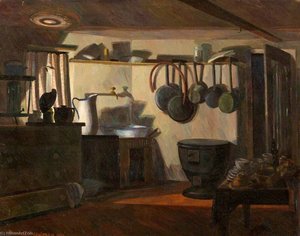
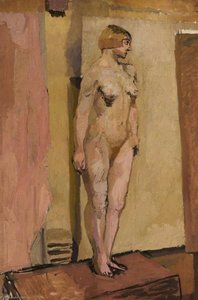
The breadth of Freedman’s oeuvre is a testament to his versatility as a painter, designer, and lithographer. His ability to shift between the intimate scale of typography and the expansive narrative of oil painting allowed him to capture the essence of British life across various dimensions. In his paintings, such as the evocative Standing Nude or the bustling A London Street Scene, one observes a remarkable command over form and atmosphere. He possessed a unique ability to imbue even the most mundane subjects—a kitchen interior or a street corner—with a sense of timelessness and emotional depth.
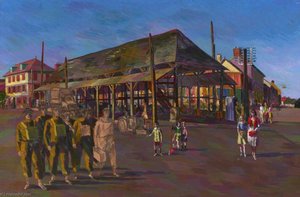
During the tumultuous years of World War II, Freedman’s work took on a more profound historical weight. His ability to document the human condition during wartime, seen in pieces like Soldiers in Town, showcased his capacity to blend observational realism with a poignant sense of the era's gravity. Whether through the delicate textures of a lithograph or the bold strokes of an oil painting, his work remained anchored in a profound respect for the subject matter.
Barnett Freedman’s legacy resides in his refusal to separate the aesthetic from the everyday. He remains a pivotal figure in the history of British design and painting, remembered for:
- Technical Versatility: His mastery across lithography, typography, book illustration, and oil painting.
- Design Innovation: The creation of iconic, hand-lettered book jackets that elevated commercial design to high art.
- Cultural Documentation: Capturing the shifting social landscapes of London and the poignant realities of wartime Britain.
- Artistic Connection: His role within the influential circle of the Royal College of Art and his lasting impact on the British modern movement.
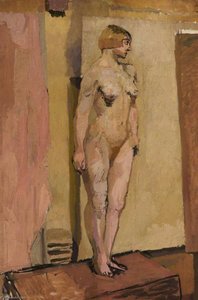
barnett freedman
1901 - 1958
Quick Facts
- Artistic Movement Or Style: Modern British Art
- Artists Or Movements Influenced By This Artist: ['Eric Ravilious']
- Artists Who Influenced This Artist: ['William Rothenstein']
- Date Of Birth: May 1901
- Date Of Death: January 4, 1958
- Full Name: Barnett Freedman
- Nationality: British
- Notable Artworks:
- Standing Nude
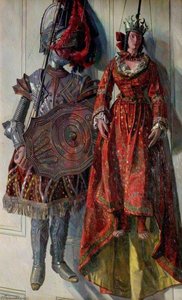
- Sicilian Puppets
- Place Of Birth: Stepney, London