 Preview
 Send
Send Share
Share
 Details

 Download
 Similars
 X-Ray
X-Ray Diaporama
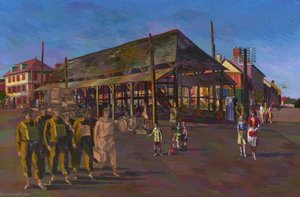
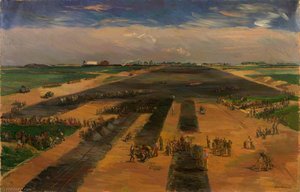
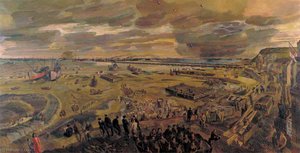
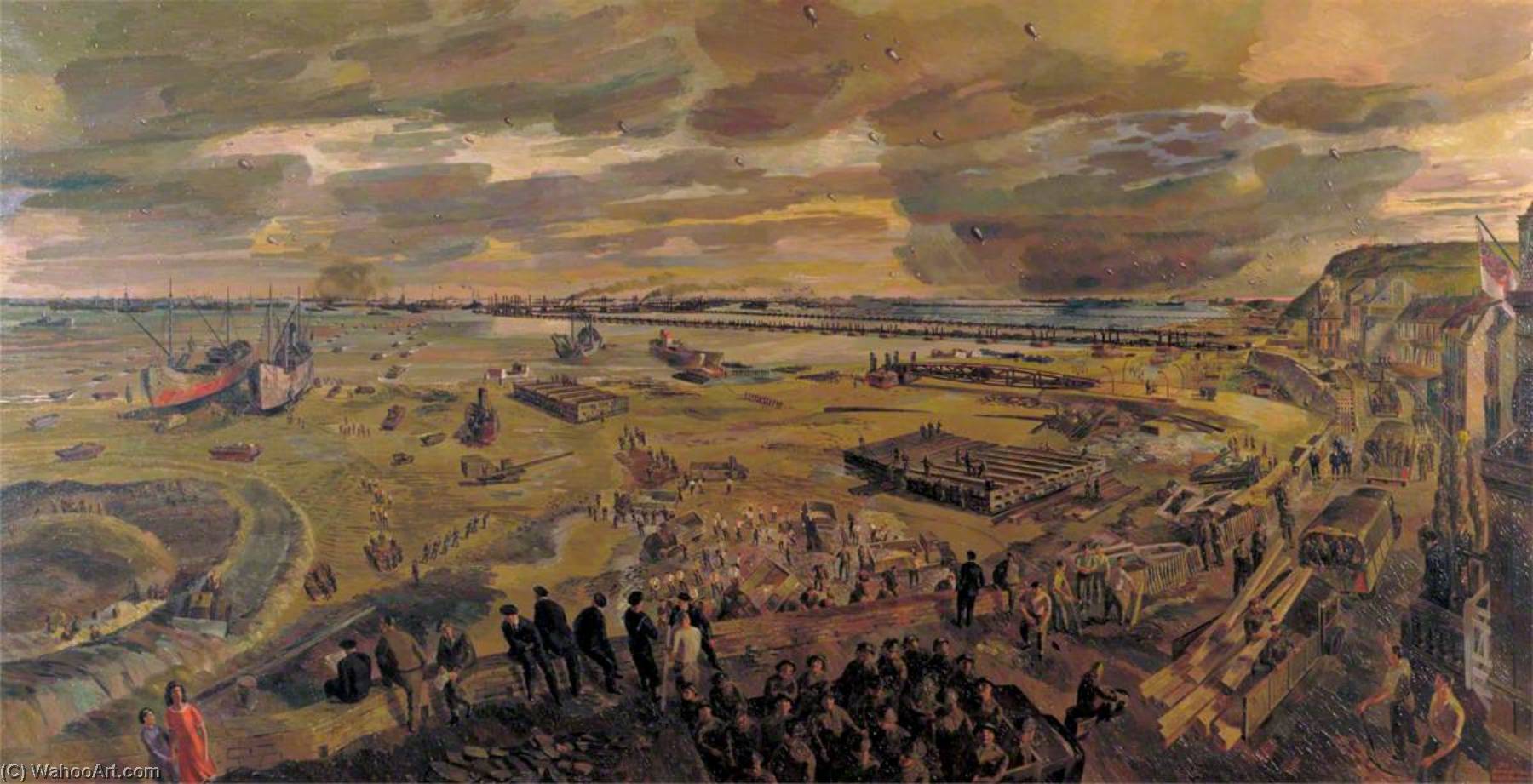
The Landing in Normandy, Arromanches D Day Plus 20, 26 June 1944
 1944
1944 155.0 x 305.0 cm
 Read More
Giclée / Art Print
Museum-quality giclée or canvas print with fast production and flexible finish options. ( Buy Hand Made Painting Buy Image)




































Pick from our preset sizes that match the artwork's original proportions.

You may enter your own dimensions to fit a specific frame or space. If your selected size does not match the original image's proportions, we will either crop the artwork or extend the image with a mirrored or solid-fill edge. A digital mockup will be sent for your approval before production begins.
Please note that the on-screen preview does not reflect the actual cropping or extension. Only the mockup will accurately show the final composition.
While custom sizes are available, we recommend selecting a dimension from the predefined list to preserve the original proportions.
Worldwide Delivery () in 2 weeks instead of standard 4/5 weeks. (20 August)

Free Worldwide Express Shipping

High-Quality Linen Canvas

Full Shipping Insurance

Customs Tax Refund Guarantee

True Color Matching Guarantee

60-Day Return Policy (Defects Only)

100% Money-Back Guarantee

Bulk Discount Offer
 Glass option is only available in size under 110 CM

The Landing in Normandy, Arromanches D Day Plus 20, 26 June 1944
Giclée / Art Print
Reproduction Size
-


Total Price
$ 63
Related Artworks
Artist Biography
Barnett Freedman (1901–1958)
Barnett Freedman was born in Stepney, East London, the son of Louis Freedman, a journeyman tailor, and Reiza Ruk, Jewish immigrants from Russia. His early life was marked by hardship; he suffered extended periods of illness as a child and received minimal formal education after age nine, spending time convalescing at the London Hospital where he developed his passion for drawing and music. This formative experience instilled in him a dedication to artistic pursuits that would define his entire career. At fifteen, Freedman secured employment as an office boy before transitioning into draughtsmanship, initially with a monumental mason and subsequently at an architect’s office—experiences that honed his technical skills and fostered his appreciation for precision and detail. Recognizing his burgeoning talent, he enrolled in evening classes at Saint Martin's School of Art, driven by the ambition to earn a London County Council scholarship, though he ultimately failed to secure it. Nevertheless, William Rothenstein, Principal of the Royal College of Art, championed Freedman’s potential, leveraging his influence to admit him to the institution—a pivotal moment that would shape his artistic trajectory. ### The Royal College of Art and Early Artistic Development Freedman's time at Saint Martin’s School of Art proved instrumental in nurturing his artistic sensibilities, fostering connections with fellow artists like Eric Ravilious, Edward Bawden, and Enid Marx—relationships that would endure throughout his life. He excelled under Paul Nash at the Royal College of Art in 1922, immersing himself in experimentation with various mediums and techniques. This period solidified his commitment to mastering artistic craft and established him as a rising talent within the British art scene. His marriage to Beatrice Claudia Guercio provided him with a supportive partner who shared his passion for creativity. ### Commercial Design and Lithography: A Dual Career Following graduation in 1925, Freedman faced financial challenges but persevered in pursuing his artistic ambitions alongside a successful career in commercial design—a rare combination that allowed him to sustain himself while furthering his artistic explorations. He gained an introduction to Faber & Gwyer, securing commissions for book illustrations and designing striking lithograph prints that showcased his distinctive style. Notably, he undertook the monumental task of illustrating Siegfried Sassoon’s *Memoirs of an Infantry Officer*, a project lauded for its emotive power and cementing Freedman's reputation as a storyteller. He collaborated extensively with publishers like Vincent Brooks, Day & Son, Curwen Press and Wedgwood, mastering the art of auto-lithography—a technique he championed and refined—resulting in breathtaking visual narratives. ### World War II Artistry and Legacy During World War II, Freedman was appointed an Official War Artist by the British Government, documenting the realities of conflict with sensitivity and artistic vision. He traveled with the British Expeditionary Force in France alongside Edward Ardizzone and Edward Bawden, capturing poignant scenes of wartime life—a testament to his unwavering dedication to serving his country through art. His work on HMS Repulse and subsequent expeditions underscored his commitment to portraying human experience amidst adversity. Freedman’s artistic output spanned decades, encompassing celebrated book designs, including *War and Peace* and *Anna Karenina*, which remain benchmarks of twentieth-century literary illustration—a legacy that continues to inspire artists today. He died in Cornwall Gardens, off Gloucester Road, London, in 1958, leaving behind a rich body of work characterized by meticulous detail, evocative color palettes, and an enduring fascination with the human condition.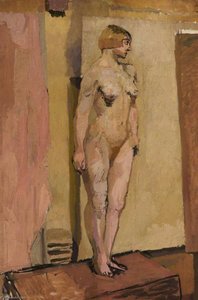
barnett freedman
1901 - 1958
Quick Facts
- Artistic Movement Or Style: Modern British Art
- Artists Or Movements Influenced By This Artist: ['Eric Ravilious']
- Artists Who Influenced This Artist: ['William Rothenstein']
- Date Of Birth: May 1901
- Date Of Death: January 4, 1958
- Full Name: Barnett Freedman
- Nationality: British
- Notable Artworks:
- Standing Nude
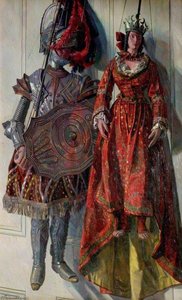
- Sicilian Puppets
- Place Of Birth: Stepney, London