 Preview
 Send
Send Share
Share
 Details

 Download
 Similars
 X-Ray
X-Ray Diaporama
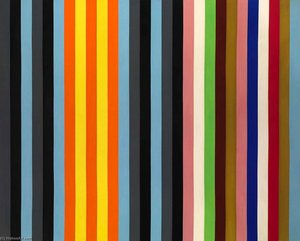
Anverse/Obverse (Diptych 1 of 2)
 Painting
- Abstract Expressionism
 2012
2012- Contemporary
 150.0 x 170.0 cm
 MACBA - Museum of Contemporary Art in Buenos Aires
 Read More
Hand Made Oil Reproduction
Hand-painted oil on canvas in your size and frame, made to order by our artists. ( Buy Print Buy Image)




P118B $10

P118H $10

P118W $10

P438Z $10

P508JH $12

P508YH $12

P805H $10

P805Z $10

P919BZ $10

P919G $10

P919XJ $10

P959ZH $10

P968JZ $12

W106C $8

W218G $10

W218JH $8

W218Y $10

W307PJ $10

W316G $10

W316PJ $8

W316Y $10

W398PJ $8

W4111J $10

W500HY $15

W500JH $15

W692G $12

W849H $8

W940BG $15

W953PJ $8




Pick from our preset sizes that match the artwork's original proportions.

You may enter your own dimensions to fit a specific frame or space. If your selected size does not match the original image's proportions, we will either crop the artwork or extend the painting with additional hand-painted elements. A digital mockup will be sent for your approval before production begins.
Please note that the on-screen preview does not reflect the actual cropping or extension. Only the mockup will accurately show the final composition.
While custom sizes are available, we recommend selecting a dimension from the predefined list to preserve the original proportions.
After order, ArtsDot.com team will email client for instructions and provide a mockup preview
Worldwide Delivery () in 3/4 weeks instead of standard 5 weeks. (22 August). No compromise on quality.

Free Worldwide Express Shipping

High-Quality Linen Canvas

Full Shipping Insurance

Customs Tax Refund Guarantee

True Color Matching Guarantee

60-Day Return Policy (Defects Only)

100% Money-Back Guarantee

Bulk Discount Offer
 Glass option is only available in size under 110 CM

Anverse/Obverse (Diptych 1 of 2)
Reproduction Medium
Reproduction Size
-


Total Price
$ 263
Artwork Description
A Symphony in Stripes: Exploring Barreda Alejandra's Anverse/Obverse
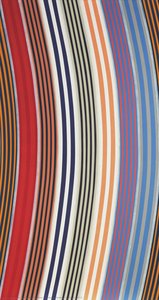
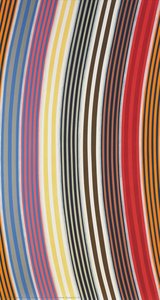
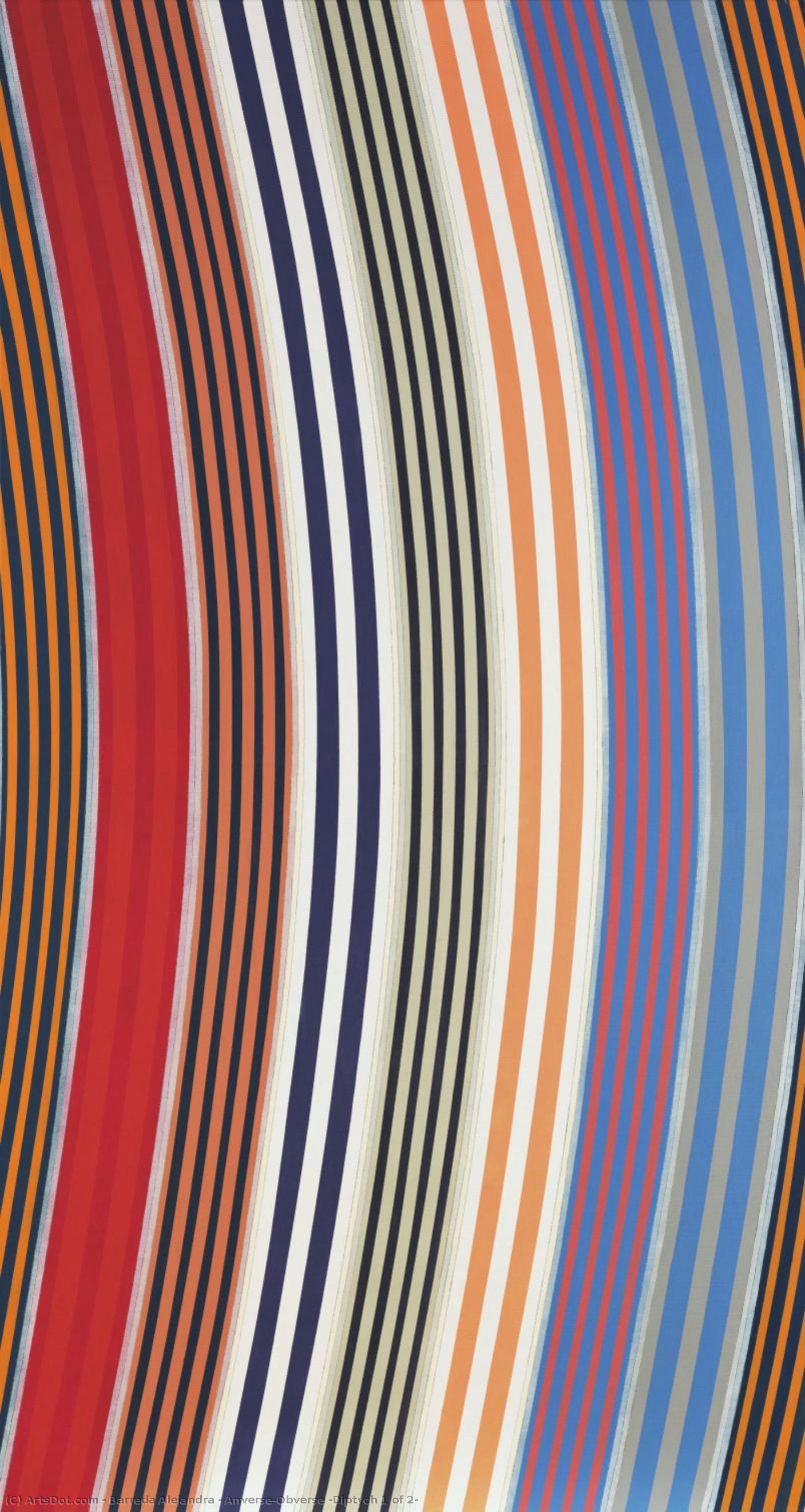
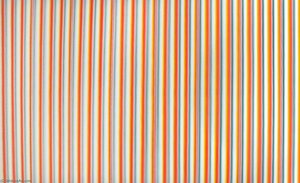
To stand before Anverse/Obverse (Diptych 1 of 2) is to encounter a visual explosion, a meticulously orchestrated dance of pure color and pattern. This piece by the Argentine artist Barreda Alejandra does not whisper its narrative; it sings it in bold, vibrant strokes. The composition immediately arrests the viewer with its striking arrangement of colorful stripes—a spectrum that seems both chaotic and utterly controlled. Red pulses alongside electric blue, while sunny yellow dances beside deep emerald green and regal purple. Interwoven throughout this chromatic tapestry are sharp, defining black lines, acting like calligraphic anchors that give structure to what might otherwise dissolve into pure abstraction.
The Language of Pattern and Color
Technically, the work presents itself as a diptych, suggesting duality—the 'Anverse' facing its counterpart. This inherent pairing invites contemplation on themes of opposition, reflection, and the two sides of any given experience. The technique employed is clearly vibrant and saturated, indicative of acrylic or oil paint applied with confidence across a substantial canvas measuring 150 x 170 cm. It possesses an immediate, almost Pop Art energy, yet it transcends mere decoration. The artist utilizes pattern not just for aesthetic pleasure, but as a vehicle for deeper symbolic resonance. These stripes are more than pigment on linen; they feel like codified bursts of emotion, like the visible spectrum of human experience laid bare.
Symbolism and Emotional Resonance
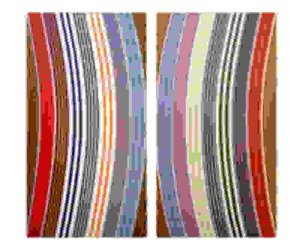
What does this riot of color speak to? In art history, pattern has always been a profound language. Here, Barreda Alejandra seems to be exploring rhythm itself. The circular arrangement within the stripes suggests cycles—the turning seasons, the ebb and flow of memory, or perhaps the cyclical nature of life itself. The juxtaposition of primary and secondary colors against the grounding black lines creates a visual tension that is exhilarating. For the collector or designer, this piece offers an unparalleled focal point; it doesn't merely hang on a wall, it activates the space around it, injecting immediate vitality into any room.
Bringing Vibrancy Home: Considerations for Reproduction
For those considering bringing the spirit of Anverse/Obverse into your personal sanctuary or design scheme, understanding its impact is key. The intensity of this original work demands a reproduction that honors its luminosity. When selecting a hand-painted replica, pay close attention to the saturation levels and the crispness of the black linework; these details are what give the piece its signature punch. This artwork speaks to those who embrace maximalism, who do not fear color, and who appreciate art that is both intellectually stimulating and viscerally joyful. It is a celebration of modern energy, making it a perfect conversation starter for any sophisticated interior setting.
Related Artworks
Artist Biography
Keith Haring: A Revolutionary Voice in Pop Art
Born on May 4, 1958, in Reading, Pennsylvania, and raised in the quiet town of Kutztown, Keith Allen Haring’s artistic journey began not with formal training but with a profound connection to the vibrant energy of New York City. From an early age, he possessed an innate ability to draw, nurtured by his father's cartooning skills and fueled by the iconic imagery of childhood favorites like Dr. Seuss and Walt Disney. This foundational talent blossomed during his teenage years as he explored counter-culture movements and developed a keen interest in art, ultimately leading him to enroll at the School of Visual Arts in New York City.
Haring’s formative years in the city were pivotal. He immersed himself in the burgeoning alternative art scene that thrived outside the traditional gallery system – in the downtown streets, subway stations, and vibrant clubs. This environment exposed him to a diverse range of influences, including Jean Dubuffet's raw expressionism, Pierre Alechinsky’s gestural abstraction, and the rebellious spirit of artists like William Burroughs and Brion Gysin. Crucially, he was deeply inspired by Christo’s monumental *Running Fence*, which demonstrated art’s potential to engage a broad public, and Andy Warhol’s innovative fusion of art and popular culture. It was within this dynamic context that Haring began to develop his signature style – bold lines, simple forms, and vibrant colors—a direct response to the urban landscape and its inhabitants.
Haring's breakthrough came through his spontaneous drawings in the New York City subway system. Utilizing the blank advertising panels as a canvas, he created hundreds of images – figures dancing, dogs running, hands reaching out – rendered in stark white chalk against the black backdrop. These “subway drawings” quickly gained recognition and captivated commuters, transforming Haring into an overnight sensation. This practice wasn’t merely about creating art; it was about connecting with people directly, bypassing traditional gallery systems and bringing his work to a wider audience.
Following this initial success, Haring transitioned to larger-scale murals and public artworks. He received commissions from hospitals, daycare centers, schools, and corporations, often working pro bono to spread messages of social awareness. His art became a powerful tool for advocacy, tackling issues such as safe sex and AIDS awareness with directness and urgency. Works like “Crack is Wack” (1986) served as potent warnings against drug abuse, while “Tuttomondo” (1989), a collaborative mural in Italy, promoted unity and understanding. His art was not simply decorative; it was actively engaged in social commentary and activism.
The Rise of Pop Art and Social Commentary
Haring’s artistic style is inextricably linked to the rise of pop art in the 1980s. While he rejected the purely commercial aspects often associated with the movement, his use of bold colors, simplified forms, and imagery drawn from popular culture— cartoons, comic books, graffiti—clearly reflects its influence. However, Haring’s work transcends simple imitation; he infused it with a uniquely personal voice and a deep commitment to social justice. His art was not about replicating existing images but about creating new visual languages that could communicate complex ideas in an accessible way.
The themes explored in his work—sexuality, identity, race, AIDS, and political activism—were often controversial at the time. Haring’s willingness to address these sensitive subjects head-on challenged conventional artistic norms and sparked dialogue about important social issues. His art became a visual shorthand for expressing dissent and promoting positive change.
Major Exhibitions and Institutional Recognition
Haring's popularity exploded throughout the 1980s, leading to numerous solo exhibitions in galleries across the United States and internationally. He participated in prestigious events such as the Documenta (1977), the Whitney Biennial (1982, 1989), the São Paulo Biennial (1988), and the Venice Biennale (1989). These engagements not only showcased his work to a global audience but also solidified his position as a leading figure in contemporary art.
The Whitney Museum held a retrospective of his art in 1997, cementing his legacy as an important American artist. His work was consistently sought after by collectors and institutions, demonstrating the enduring appeal of his distinctive style and powerful messages.
Legacy and The Keith Haring Foundation
Keith Haring’s untimely death from AIDS-related complications on February 16, 1990, at the age of 31, left a profound void in the art world. However, his legacy continues to thrive through the Keith Haring Foundation, established shortly before his death. The foundation carries out his mission by supporting organizations dedicated to children’s health and well-being, AIDS education, and social justice initiatives.
In 2014, Haring was honored as one of the inaugural honorees in the Rainbow Honor Walk in San Francisco, a testament to his contributions to LGBTQ+ communities. His work remains deeply relevant today, continuing to inspire artists, activists, and audiences around the world with its vibrant energy, social consciousness, and unwavering belief in the power of art to make a difference.
Key Characteristics & Artistic Style
Haring’s distinctive style is immediately recognizable: bold black outlines against white backgrounds, often featuring simple, stylized figures—dancing stickmen, radiant babies, dogs, hands—arranged in dynamic compositions. He frequently incorporated text and symbols, such as peace signs, hearts, and arrows, to amplify his messages. His work eschews traditional perspective and realism, favoring a flattened, graphic style that prioritizes communication over meticulous detail. The use of bright colors – reds, yellows, blues, greens—further enhances the visual impact of his pieces.
barreda alejandra
1958 - , Argentina
Quick Facts
- Artistic Movement Or Style: Pop art, graffiti
- Artists Or Movements Influenced By This Artist:
- Kenny Scharf
- Jean-Michel Basquiat
- Artists Who Influenced This Artist:
- Jean Dubuffet
- Andy Warhol
- Date Of Birth: May 4, 1958
- Date Of Death: Feb 16, 1990
- Full Name: Keith Allen Haring
- Nationality: American
- Notable Artworks:
- Crack Is Wack
- Tower
- Untitled Series
- Todos Juntos Podemos Parar el SIDA
- Place Of Birth: Reading, Pennsylvania
Related Articles

Geometric Abstraction's 10 Defining Masterpieces | Art for Your Home - ArtsDot
Explore 10 defining masterpieces of Geometric Abstraction! Discover Kandinsky, Mondrian & Malevich’s iconic works. Find museum-quality art reproductions and curated decor ideas to elevate your home at ArtsDot.com.
Fernand Léger's Masterpieces: 25 Iconic Paintings & The Machine Age Aesthetic | ArtsDot
Explore 25 iconic Fernand Léger paintings that defined the Machine Age & Cubism. Discover the stories behind his bold colors, geometric forms & avant-garde style. Find museum-quality art reproductions on ArtsDot.com.

Kandinsky's Masterpieces: 25 Paintings That Define Abstract Art | ArtsDot
Journey through Wassily Kandinsky's 25 most iconic abstract paintings. Explore his revolutionary use of color, form & spiritual expressionism. Find museum-quality Kandinsky reproductions and elevate your home decor with ArtsDot.com. Discover all masterpieces on ArtsDot.com!
Beyond Form & Color: Geometric Abstraction's Evolution in 20th/21st Century Art
Explore the evolution of geometric abstraction from Cubism to contemporary art. Discover key artists like Malevich & Mondrian, investment insights, and expert collecting advice at ArtsDot.
Beyond Form & Color: Geometric Abstraction's Enduring Legacy in Art History
Explore the captivating world of geometric abstraction! Discover its origins, key artists like Malevich & Mondrian, and why this movement remains highly valued by art collectors today. Expert insights at ArtsDot.