

 Preview
 Send
Send Share
Share
 Details

 Download
 Similars
 X-Ray
X-Ray Diaporama
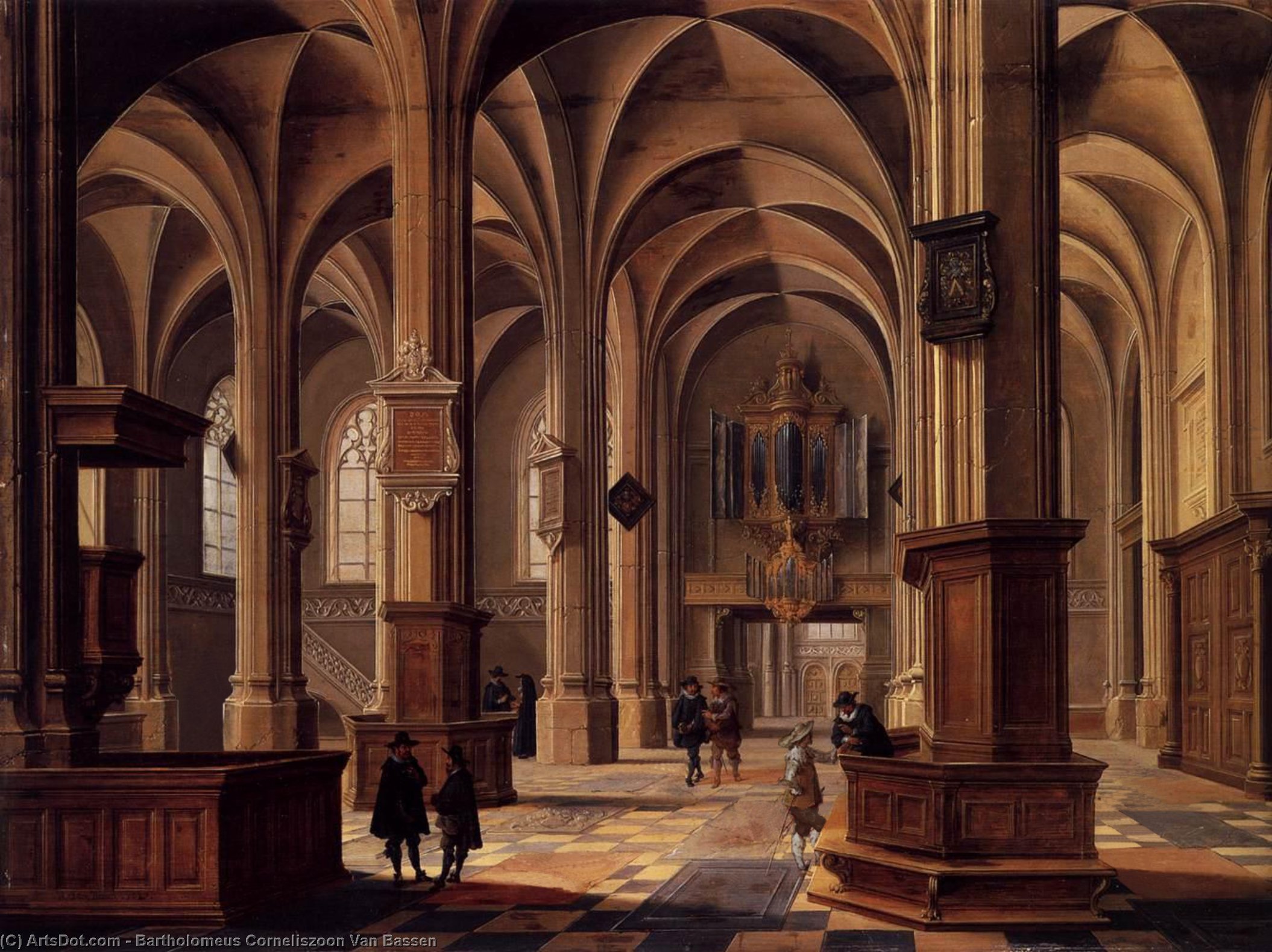
Interior of the Cunerakerk, Rhenen
 Oil On Canvas
- WallArt
- Dutch Golden Age
 1638
1638 61.0 x 81.0 cm
 National Gallery
 Read More
Purchase a high-resolution, enhanced digital image, far superior to the online preview.
Each file is meticulously prepared by our in-house specialists using advanced tools and expert manual retouching. We ensure every image has exceptional clarity, precise color accuracy, and fine detail.
The final file is delivered via email within 72 hours, optimized for immediate use in professional, editorial, and print environments. This is the same quality trusted by top-tier design studios, publishers, and galleries.
Digital Image
Download a high-resolution file for personal display, printing, and creative projects. ( Buy Print Buy Hand Made Painting)
Included in Every Digital Image Order
Expert Digital Delivery, Guaranteed
When you choose ArtsDot.com, you're not just getting an image - you're receiving a professionally enhanced digital artwork, crafted with precision and backed by a satisfaction guarantee. Here's everything that comes with your order, automatically:

Fast Email Delivery
Your high-resolution digital image file will be emailed to you within 72 hours of ordering - ready for immediate use.

AI-Enhanced Digital File
Your artwork is professionally optimized using advanced AI tools and manual editing, ensuring maximum detail, clarity, and color accuracy.

Free Lifetime Re-Delivery
Accidentally deleted or lost your file? No worries - we'll resend it to you anytime, free of charge.

No Import Fees - Ever
Enjoy your artwork instantly with zero customs, duties, or delivery fees - digital downloads are always tax-free.

Color Accuracy Guarantee
We ensure your digital image reflects the original colors as closely as possible using professional tools and color management.

60-Day Satisfaction Guarantee
If you're not satisfied with your digital image, we'll revise it or refund 100% within 60 days - no questions asked.

100% Money-Back Guarantee
Not satisfied? Get a full refund within 60 days of receiving your digital file - no questions asked.

Bulk Order Discounts
Buy 3 images, save 10% - Buy 5, save 15% - Buy 10+, save 20%. Great for creative projects, galleries, and agencies.
A Sanctuary Illuminated: Bartholomeus van Bassen’s Interior of St Cunerakerk
The Dutch Golden Age produced an astonishing wealth of artistic talent, and few painters captured the essence of their time with such meticulous detail and profound understanding as Bartholomeus van Bassen. His 1638 painting, “Interior of St Cunerakerk, Rhenen,” offers a remarkably intimate glimpse into a sacred space – not merely a depiction of architecture, but a carefully constructed tableau brimming with religious symbolism and the subtle poetry of light. Located in the small town of Rhenen, Netherlands, this church holds a significant place in local history, having housed the relics of Saint Cunera since the 8th century, imbuing the space with centuries of devotion.
The scene unfolds within a grand Gothic-inspired church, dominated by soaring columns and expansive arches that draw the eye upwards towards a distant, unseen light source. Van Bassen’s mastery is immediately evident in his rendering of the stonework – each block meticulously textured, revealing the weight and solidity of the structure. The use of linear perspective creates an illusion of immense scale, emphasizing the church's imposing grandeur and drawing the viewer into its vastness. The composition isn’t simply observational; it’s deliberately theatrical, designed to evoke a sense of awe and reverence.
A Symphony of Light and Shadow
Van Bassen was renowned for his ability to capture the nuances of light, and this painting is a testament to that skill. The illumination, originating from an unseen point above and slightly to the left, casts dramatic shadows across the walls and floor, highlighting the architectural details with exquisite precision. These shadows aren’t merely absences of light; they are active participants in the scene, adding depth, mystery, and a palpable sense of solemnity. Notice how the light catches the folds of the fabric draped over the pews, revealing their texture and form, while simultaneously obscuring certain areas to create an atmosphere of contemplative quiet.
The artist’s technique is characterized by “glazing,” a layering process where thin washes of translucent paint are applied in multiple layers. This method allows for incredible luminosity and depth, capturing the subtle variations in color and tone that define the stone, wood, and fabric. The result is an image that feels remarkably tactile – you can almost reach out and touch the cool smoothness of the marble columns or feel the worn texture of the wooden pews.
Symbolism Within a Sacred Space
Beyond its technical brilliance, “Interior of St Cunerakerk” is rich in religious symbolism. The towering architecture itself speaks to the power and majesty of God, while the figures – likely worshippers – are rendered with a degree of anonymity that invites contemplation rather than judgment. The arrangement of the pews and the placement of objects within the space suggest a carefully considered ritualistic order. The rood screen in the foreground, a masterpiece of Renaissance craftsmanship, further reinforces this sense of sacredness, its allegorical figures representing faith, hope, and love – the cornerstones of Christian belief.
Considering the history of the church itself, with its venerated relics and centuries-long association with Saint Cunera, the painting transcends a simple depiction of architecture. It becomes a visual meditation on faith, devotion, and the enduring power of tradition. The choice to depict the interior rather than an exterior view underscores the focus on the spiritual realm within the church – a space dedicated to contemplation and connection with the divine.
A Legacy of Dutch Masterpieces
Bartholomeus van Bassen was a pivotal figure in the Dutch Golden Age, collaborating with renowned artists like Palamedesz. and Jan Martszen de Jonge. His work reflects the era’s fascination with realism, detail, and the exploration of light and shadow – qualities that define much of Dutch painting during this period. “Interior of St Cunerakerk, Rhenen” stands as a prime example of his skill and artistry, offering a rare glimpse into a sacred space brought to life with remarkable precision and emotional resonance. Reproductions of this captivating artwork continue to inspire appreciation for the beauty and complexity of Dutch Golden Age painting.
Related Artworks


Artist Biography
Giuseppe Arcimboldo: The Master of Impossibility
Born in Milan in 1527, Giuseppe Arcimboldo was no mere painter; he was a visual architect of ideas, a master of illusion and symbolism who redefined portraiture during the late Renaissance. His life, though shrouded in some mystery, is inextricably linked to the vibrant courtly circles of Vienna and Prague, where his extraordinary creations captivated emperors and shaped the very definition of artistic spectacle. Arcimboldo’s legacy isn't simply about assembling objects into faces; it’s a profound exploration of perception, identity, and the relationship between man and nature – themes that continue to resonate with audiences today.
Arcimboldo’s early career unfolded within the established framework of Milanese art. He began as a stained-glass designer and fresco painter for churches, honing his technical skills and developing a deep understanding of color and composition. However, it was his appointment as court painter to Ferdinand I in 1562 that truly unleashed his singular genius. This marked a dramatic shift from traditional portraiture; instead of capturing likenesses, Arcimboldo began constructing elaborate “faces” entirely from fruits, vegetables, flowers, books, and even feathers – a technique that would become his trademark.
The Habsburg court in Vienna proved to be an ideal environment for this innovative approach. The emperors, particularly Maximilian II, were known for their intellectual curiosity and appreciation of the unusual. Arcimboldo’s creations weren't merely decorative; they served as conversation pieces, allegories, and even subtle political statements. His portraits, often commissioned for special occasions or to entertain visiting dignitaries, became legendary for their intricate detail and layered meanings. He wasn’t simply arranging objects; he was crafting narratives, weaving together symbols of power, knowledge, and the natural world.
Arcimboldo's style is firmly rooted in the Mannerist movement, a period characterized by elongated forms, dramatic contrasts, and an emphasis on artificiality. However, unlike many Mannerists who prioritized elegance and refinement, Arcimboldo embraced a deliberately chaotic aesthetic. His compositions are often densely packed with elements, creating a sense of visual overload that demands close examination. The use of vibrant colors – reds, yellows, greens – further enhances the theatrical effect, drawing the viewer into a world of illusion.
Among his most celebrated works are “The Four Seasons” (1563), a monumental fresco depicting each season through an assemblage of seasonal produce; "Akbar's Triumphal Entry into Surat Akbarnama" (1590-1595), a complex allegorical scene celebrating the Mughal emperor Akbar’s victory; and his numerous portraits, including “Portrait of Paolo Morigia” (1592-1595) and "Bacchus" (1596). These works demonstrate Arcimboldo's remarkable versatility and his ability to seamlessly blend different artistic styles – from classical influences to the dramatic realism of Caravaggio. His influence extended beyond portraiture; he also produced religious paintings, still lifes, and even drawings of exotic animals for the imperial menagerie.
Giuseppe Arcimboldo’s legacy extends far beyond his own lifetime. His innovative approach to portraiture paved the way for later artists who sought to challenge traditional conventions. His work has been endlessly imitated and reinterpreted throughout the centuries, appearing in countless reproductions and inspiring contemporary artists. More than just a painter, Arcimboldo was a visionary artist who demonstrated that art could be both intellectually stimulating and visually captivating – a testament to his enduring genius.
The Influence of Caravaggio
Arcimboldo’s style bears a striking resemblance to that of the Italian painter Michelangelo Merisi da Caravaggio, a contemporary whose dramatic use of light and shadow profoundly impacted the course of art history. Both artists shared a fascination with realism and a willingness to experiment with unconventional techniques. However, while Caravaggio focused on capturing fleeting moments of intense emotion, Arcimboldo employed his assemblage technique to create enduring symbols and allegories.
The influence of Caravaggio is particularly evident in Arcimboldo’s use of *chiaroscuro* – the dramatic contrast between light and dark. Arcimboldo's subjects are often bathed in a warm, golden glow, while the surrounding elements are plunged into shadow, creating a sense of depth and drama. This technique not only enhances the visual impact of his compositions but also serves to draw attention to the central figure—the “face” constructed from objects.
Furthermore, both artists shared a penchant for depicting everyday scenes and ordinary people. Caravaggio frequently painted portraits of peasants and laborers, while Arcimboldo’s subjects are often composed of humble fruits and vegetables. This deliberate choice reflects a broader humanist sensibility – a belief in the inherent dignity of all human beings, regardless of their social status.
Symbolism and Allegory
Arcimboldo's portraits were far more than mere visual spectacles; they were rich with symbolism and allegory. Each element—the fruit, the flower, the book—carried a specific meaning, contributing to the overall narrative of the composition. For example, in “Akbar’s Triumphal Entry,” the abundance of fruits and vegetables symbolizes fertility, prosperity, and the bounty of nature – themes that were particularly relevant to the Mughal emperor's reign.
The use of books is another recurring motif in Arcimboldo’s work. Books often represent knowledge, wisdom, and learning—qualities that were highly valued by the Habsburg court. In some portraits, the books are arranged to form letters or words, adding an extra layer of meaning to the composition.
Arcimboldo's ability to seamlessly blend different symbolic systems – classical mythology, Christian iconography, and Renaissance philosophy – demonstrates his deep understanding of art history and his willingness to engage with complex intellectual ideas. His portraits are essentially visual puzzles, inviting viewers to decipher their hidden meanings and appreciate the artist’s subtle wit.
Legacy and Influence
Giuseppe Arcimboldo died in 1593 in Milan, leaving behind a remarkable body of work that continues to fascinate and inspire. His innovative approach to portraiture challenged traditional conventions and paved the way for later artists who sought to push the boundaries of artistic expression. His influence can be seen in the works of numerous contemporary artists, including Salvador Dalí, who famously created portraits made entirely of food.
Arcimboldo’s legacy extends beyond the realm of art history; his work has also captured the imagination of popular culture. His images have been reproduced countless times in books, magazines, and posters, becoming iconic symbols of creativity, ingenuity, and visual spectacle. The enduring appeal of Arcimboldo's portraits lies in their ability to transport viewers to a world of illusion—a world where anything is possible.
bartholomeus corneliszoon van bassen
1590 - 1652 , Belgium
Quick Facts
- Artistic Movement Or Style: Mannerism, Portraiture
- Artists Or Movements Influenced By This Artist:
- Caravaggio
- Mannerism
- Artists Who Influenced This Artist:
- Andrea Mantegna
- Giorgione
- Leonardo da Vinci
- Date Of Birth: 5 April 1527
- Date Of Death: 11 July 1593
- Full Name: Giuseppe Arcimboldo
- Nationality: Italian
- Notable Artworks:
- The Four Seasons
- Akbar's Triumphal Entry
- Bacchus
- Judith with Holophernes
- Place Of Birth: Milan, Italy

