 Preview
 Send
Send Share
Share
 Details

 Download
 Similars
 X-Ray
X-Ray Diaporama
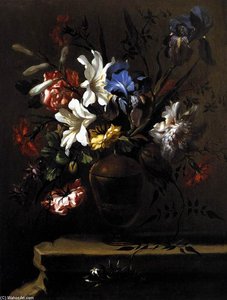
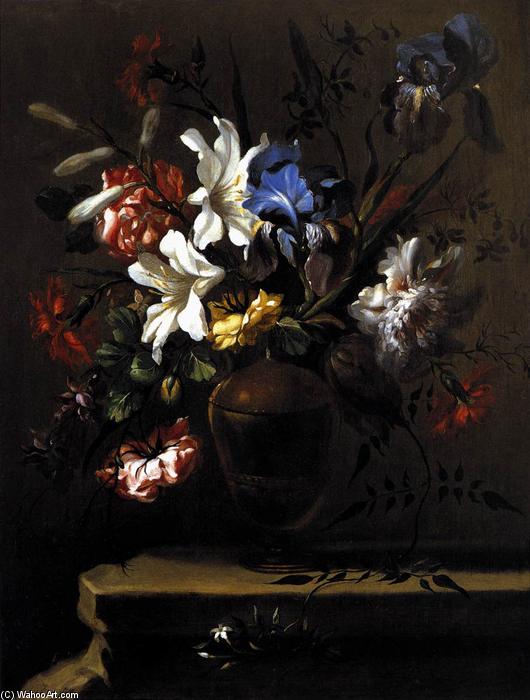
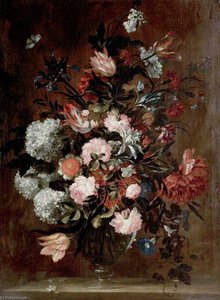
Vase of Flowers
 1690
1690 55.0 x 42.0 cm
 Read More
Hand Made Oil Reproduction
Hand-painted oil on canvas in your size and frame, made to order by our artists. ( Buy Print Buy Image)




































Pick from our preset sizes that match the artwork's original proportions.

You may enter your own dimensions to fit a specific frame or space. If your selected size does not match the original image's proportions, we will either crop the artwork or extend the painting with additional hand-painted elements. A digital mockup will be sent for your approval before production begins.
Please note that the on-screen preview does not reflect the actual cropping or extension. Only the mockup will accurately show the final composition.
While custom sizes are available, we recommend selecting a dimension from the predefined list to preserve the original proportions.
After order, ArtsDot.com team will email client for instructions and provide a mockup preview
Worldwide Delivery () in 3/4 weeks instead of standard 5 weeks. (22 August). No compromise on quality.

Free Worldwide Express Shipping

High-Quality Linen Canvas

Full Shipping Insurance

Customs Tax Refund Guarantee

True Color Matching Guarantee

60-Day Return Policy (Defects Only)

100% Money-Back Guarantee

Bulk Discount Offer
 Glass option is only available in size under 110 CM

Vase of Flowers
Reproduction Medium
Reproduction Size
-


Total Price
$ 263
Related Artworks
Artist Biography
The Luminous Legacy of Bartolomé Pérez de la Dehesa
In the golden twilight of the Spanish Baroque, few artists captured the ephemeral beauty of the natural world with as much grace and precision as Bartolomé Pérez de la Dehesa. Born in Madrid around 1634, Pérez emerged from a lineage of visual storytellers, the son of a painter who provided his earliest lessons in the language of light and shadow. However, it was his profound connection to the master Juan de Arellano that would truly define his destiny. Not only did Pérez become Arellano’s pupil, but he also entered the master's family as his son-in-law, inheriting a sophisticated aesthetic centered on the delicate textures of flora and the quiet drama of the bodegón.
His training within the vibrant intellectual atmosphere of Madrid during the reign of Philip IV allowed him to refine a technique that was both scientifically observant and deeply poetic. Pérez possessed an uncanny ability to manipulate chiaroscuro, using the dramatic interplay of light and darkness to breathe life into inanimate objects. Under his brush, a simple petal or a drop of dew became a subject of intense meditation. His work moved beyond mere decoration; it was an exploration of the tactile reality of the world, where the soft velvet of a rose petal contrasted against the cold, hard surface of a sculpted vase, all illuminated by the flickering, intimate glow of candlelight.
Mastery of the Bodegón and Royal Recognition
The heart of Pérez’s oeuvre lies in his mastery of the bodegón, a uniquely Spanish genre that finds profound meaning in the commonplace. While other artists of his era sought glory in grand historical or religious narratives, Pérez found transcendence in the arrangement of fruit, vegetables, and blossoms. His compositions often functioned as subtle memento mori, reminding the viewer of the fleeting nature of life through the depiction of wilting blooms and ripe, heavy fruits. This delicate balance between beauty and decay gave his work a soulful, humanist depth that resonated with the sensibilities of the 17th century.
His technical prowess eventually earned him prestigious recognition within the Spanish court. In January 1689, he was named a painter to the King, a title held without salary but one that signaled his immense standing in the artistic hierarchy. Beyond his celebrated still lifes, Pérez also contributed to the theatrical splendor of the era, designing scenography for performances at the Teatro del Buen Retiro. This versatility—moving from the intimate scale of a flower garland to the expansive stage of royal spectacle—demonstrates an artist capable of commanding both the microscopic detail of nature and the macroscopic grandeur of courtly life.
A Tragic End and Lasting Significance
The life of Bartolomé Pérez de la Dehesa came to a sudden and poignant conclusion, mirroring the very fragility he so often painted. He died in 1693 following a tragic fall from a scaffold while working on the ceiling of the palace of Monteleon. This accidental death, occurring amidst the pursuit of monumental art, serves as a haunting coda to a career dedicated to capturing the transient. He was laid to rest in the church of San Ildefonso, leaving behind a legacy etched in oil and light.
Today, the significance of Pérez’s work remains undiminished. His ability to elevate the humble subject matter of the bodegón into high art continues to inspire awe. His contributions can be seen through several key artistic pillars:
- Technical Innovation: The perfection of light-driven textures and the use of chiaroscuro to create three-dimensional realism in floral arrangements.
- Genre Development: The elevation of Spanish still life from simple domestic observation to a sophisticated medium for philosophical reflection.
- Cultural Impact: His role in defining the aesthetic of the Madrid Baroque, bridging the gap between private devotion and royal spectacle.
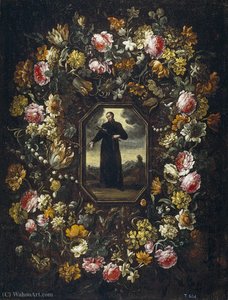
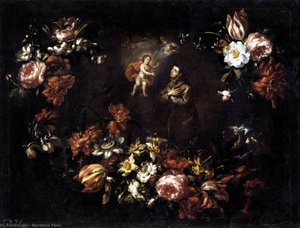
Through masterpieces such as Vase of Flowers and his intricate garlands, Pérez de la Dehesa remains a cornerstone of Spanish art history, reminding us that there is an infinite universe of beauty to be found in the smallest, most quiet corners of our existence.
bartolomé pérez
1618 - 1682 , Spain
Quick Facts
- Artistic Movement Or Style: Baroque
- Artists Or Movements Influenced By This Artist: ['Murillo']
- Artists Who Influenced This Artist: ['Juan de Arellano']
- Date Of Birth: Madrid, Spain (1634)
- Date Of Death: Madrid, Spain (1693)
- Full Name: Bartolomé Esteban Pérez de la Dehesa
- Nationality: Spanish
- Notable Artworks:
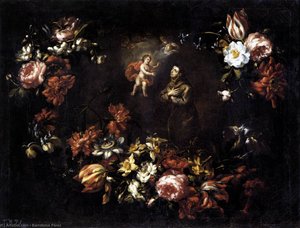
- Garland of Flowers with St Anthony of Padua
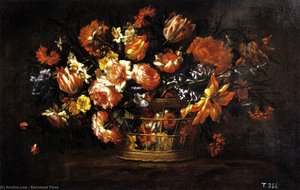
- Basket of Flowers
- Vase of Flowers
- Place Of Birth: Madrid