 Preview
 Send
Send Share
Share
 Details

 Download
 Similars
 X-Ray
X-Ray Diaporama
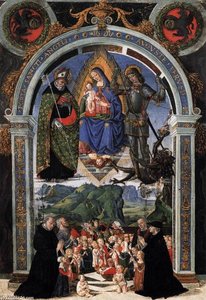
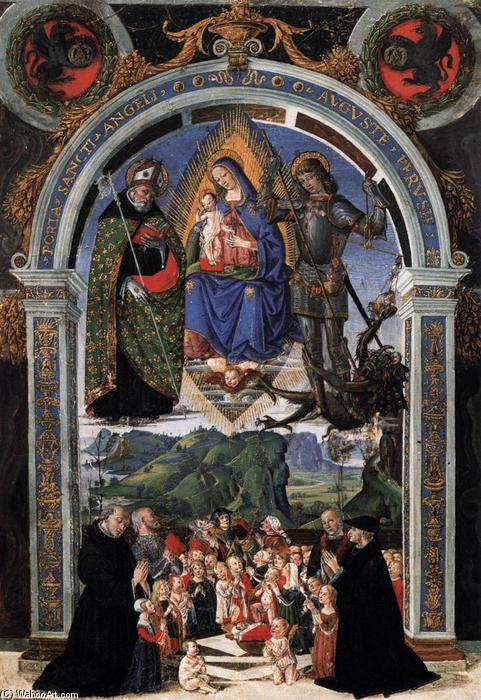
Depiction of Porta Sancti Angeli Auguste Perusie
 1486
1486 285.0 x 200.0 cm
 Academy of Fine Arts Vienna
 Read More
Giclée / Art Print
Museum-quality giclée or canvas print with fast production and flexible finish options. ( Buy Hand Made Painting Buy Image)




































Pick from our preset sizes that match the artwork's original proportions.

You may enter your own dimensions to fit a specific frame or space. If your selected size does not match the original image's proportions, we will either crop the artwork or extend the image with a mirrored or solid-fill edge. A digital mockup will be sent for your approval before production begins.
Please note that the on-screen preview does not reflect the actual cropping or extension. Only the mockup will accurately show the final composition.
While custom sizes are available, we recommend selecting a dimension from the predefined list to preserve the original proportions.
Worldwide Delivery () in 2 weeks instead of standard 4/5 weeks. (5 September)

Free Worldwide Express Shipping

High-Quality Linen Canvas

Full Shipping Insurance

Customs Tax Refund Guarantee

True Color Matching Guarantee

60-Day Return Policy (Defects Only)

100% Money-Back Guarantee

Bulk Discount Offer
 Glass option is only available in size under 110 CM

Depiction of Porta Sancti Angeli Auguste Perusie
Giclée / Art Print
Reproduction Size
-


Total Price
$ 63
The Artist and His Work
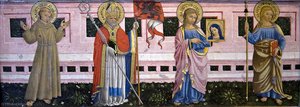
Bartolomeo Caporali was a prominent figure in the Umbrian school of painting, known for his exceptional skill in capturing intricate details and conveying deep emotions through his art. The Depiction of Porta Sancti Angeli Auguste Perusie is a testament to his mastery of illumination, a technique that involves the use of gold leaf and vivid colors to create a sense of luxury and grandeur.Key Features of the Painting
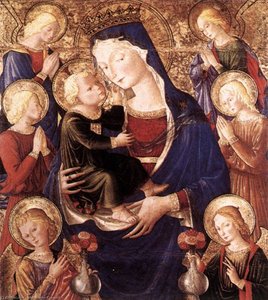
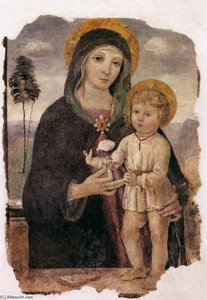
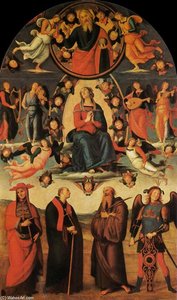
The painting features a group of figures engaged in a religious ceremony, surrounded by elaborate architectural elements and adorned with intricate patterns. The central figure is Mary, the mother of Jesus, holding the infant Christ and surrounded by angels playing musical instruments. The use of gold leaf and vibrant colors adds a sense of depth and dimension to the painting, drawing the viewer's eye to the central scene.Relevance and Significance
The Depiction of Porta Sancti Angeli Auguste Perusie is not only a masterpiece of Renaissance art but also a significant cultural artifact. It provides valuable insights into the artistic, religious, and social practices of 15th-century Italy. For art enthusiasts and historians, this painting is a treasure trove of information, offering a glimpse into the lives of the people who created and commissioned such works.- Visit /art/list/?Filter=8XZBR8-Bartolomeo-Caporali-Depiction-of-Porta-Sancti-Angeli-Auguste-Perusie to learn more about the painting and its artist.
- Explore the Academy of Fine Arts Vienna collection on Wikipedia: https://en.wikipedia.org/wiki/Academy_of_Fine_Arts_Vienna
The Depiction of Porta Sancti Angeli Auguste Perusie is a remarkable example of Renaissance art, showcasing the skill and craftsmanship of Bartolomeo Caporali. As a handmade oil painting reproduction, it can be a stunning addition to any art collection, offering a glimpse into the rich cultural heritage of Italy.
Related Artworks






Artist Biography
The Radiant Legacy of Bartolomeo Caporali
In the heart of the Umbrian Renaissance, where the rolling hills of Italy met a profound spiritual awakening, the name Bartolomeo Caporali emerged as a beacon of meticulous beauty and devotion. Born in Perugia around 1420, Caporali was not merely a painter but a true master of the decorative arts, whose life’s work wove together the sacred and the ornamental. His lineage in Perugia was one of craftsmanship; with a brother, Giapeco, serving as a skilled armorer, Bartolomeo grew up in an environment where precision and visual storytelling were paramount. This early exposure to the fine details of metalwork and heraldry likely informed his later mastery of gilding and the delicate embellishments that define his most celebrated panels.
The evolution of Caporali’s style is a fascinating journey through the shifting tides of the Quattrocento. His formative years were shaped by the vibrant, rhythmic influences of Gozzoli and Boccati, mentors who instilled in him a love for luminous color palettes and dynamic compositions. As he matured, his brushwork began to absorb the sophisticated nuances of his contemporaries, including the monumental presence of Piero della Francesca and the ethereal grace of Pinturicchio. This synthesis of styles allowed him to bridge the gap between the late Gothic tradition and the burgeoning Renaissance interest in perspective and anatomical realism, making him a pivotal figure in the Umbrian school.
A Versatile Master of Light and Ornament
What truly distinguishes Caporali from his peers was the remarkable breadth of his artistic output. While many artists focused solely on the canvas, Caporali’s genius extended into the very fabric of liturgical life. He was a virtuoso of various mediums, moving seamlessly between the grand scale of monumental frescoes and the intimate precision of miniature painting. His hands were skilled in the creation of:
- Sacred Altarpieces: Large-scale works such as his Madonna and Saints for the church of Santa Maria Maddalena, which showcase a breathtaking command of color.
- Liturgical Treasures: The delicate execution of missals and illuminated manuscripts that brought divine light to the page.
- Decorative Artistry: The intricate work of gilding, armorials, and celebratory banners that adorned the civic and religious ceremonies of Perugia.
- Civic Contributions: His role as a leader in the Arte dei Pittori (Artists’ Guild) and his service as a civic prior, reflecting his deep integration into the social fabric of his home city.
His ability to manipulate gold leaf and tempera allowed him to create surfaces that seemed to glow from within, a quality essential for the devotional purposes of his era. Whether he was gilding the ceiling of San Marco in Rome or painting a tender Adoration of the Shepherds, Caporali sought to evoke a sense of the divine through material splendor.
Historical Significance and Enduring Spirit
As the fifteenth century progressed, Caporali’s workshop became a cornerstone of the Perugian art scene. He is often regarded as the coordinator of the influential Workshop of 1473, a collective that produced vital religious panels depicting the miracles of Saint Bernardino of Siena. This leadership role underscores his importance not just as an individual creator, but as a mentor and architect of a regional artistic movement. His influence flowed through generations, impacting younger masters like Perugino and Fiorenzo di Lorenzo, ensuring that the meticulous Umbrian tradition would endure.
Though he passed away around 1505, the legacy of Bartolomeo Caporali remains etched in the silent beauty of the churches and galleries of Italy. His work stands as a testament to an era when art was a bridge between the earthly and the eternal—a period where every stroke of gold and every layer of pigment served to celebrate the profound mysteries of faith. To look upon a Caporali masterpiece is to witness the heartbeat of the Renaissance: a perfect harmony of technical precision, decorative elegance, and unshakeable spiritual devotion.
Bartolomeo Caporali
1420 - 1505 , Italy
Quick Facts
- Artistic Movement Or Style: Umbrian Renaissance
- Artists Or Movements Influenced By This Artist:
- Fiorenzo di Lorenzo
- Perugino
- Pinturicchio
- Artists Who Influenced This Artist:
- Gozzoli
- Boccati
- Date Of Birth: c. 1420
- Date Of Death: c. 1505
- Full Name: Bartolomeo Caporali
- Nationality: Italian
- Notable Artworks:
- Madonna and Saints
- Virgin and Child between two praying angels
- Adoration of the Shepherds
- Place Of Birth: Perugia, Italy