 Preview
 Send
Send Share
Share
 Details

 Download
 Similars
 X-Ray
X-Ray Diaporama
 Stats
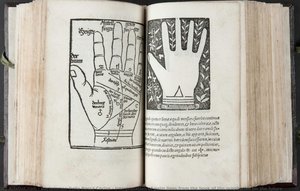
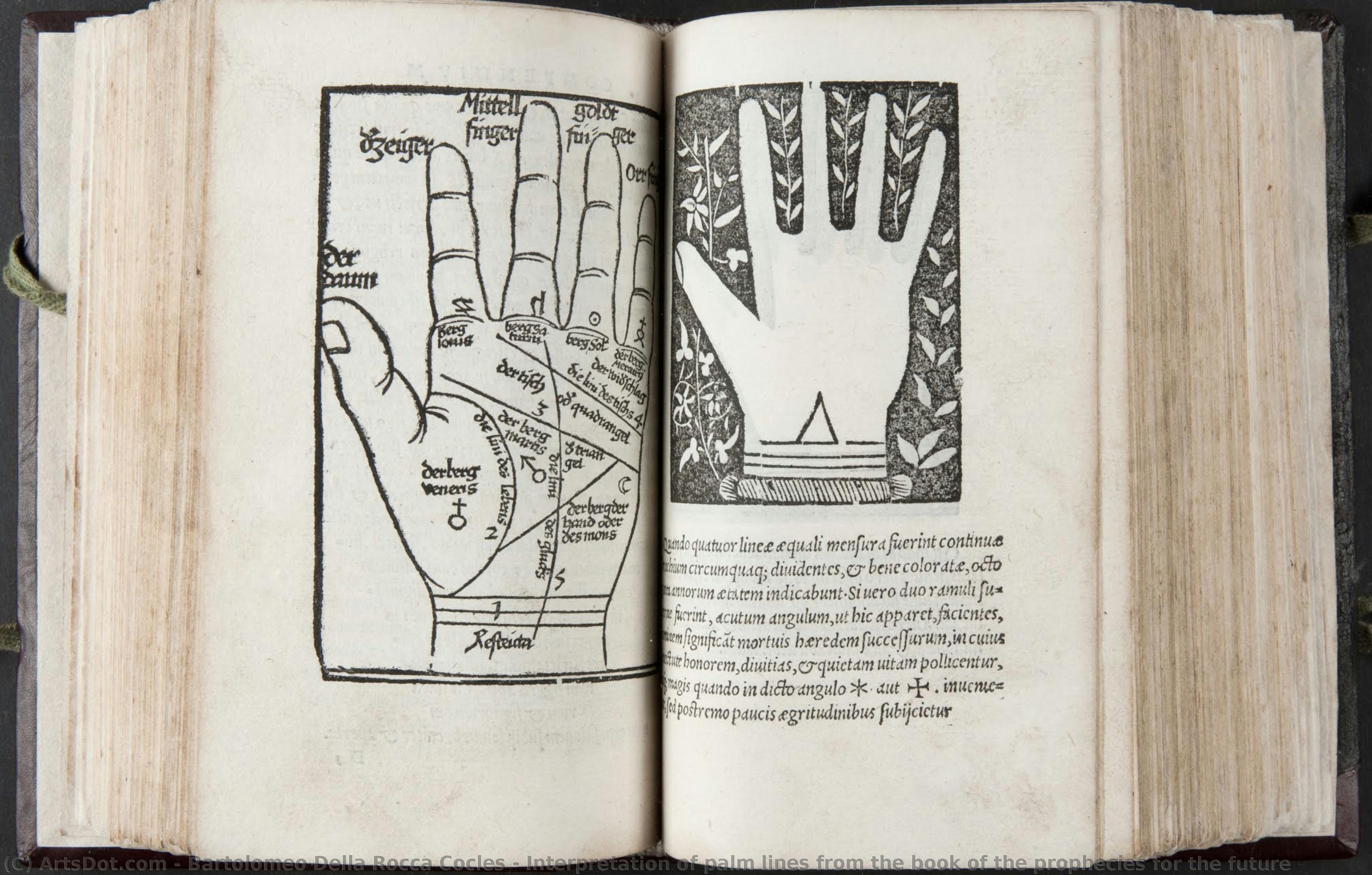
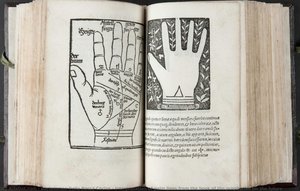
StatsInterpretation of palm lines from the book of the prophecies for the future


 Read More
Hand Made Oil Reproduction
Hand-painted oil on canvas in your size and frame, made to order by our artists. ( Switch to Print Switch to Digital Image)




































Pick from our preset sizes that match the artwork's original proportions.

You may enter your own dimensions to fit a specific frame or space. If your selected size does not match the original image's proportions, we will either crop the artwork or extend the painting with additional hand-painted elements. A digital mockup will be sent for your approval before production begins.
Please note that the on-screen preview does not reflect the actual cropping or extension. Only the mockup will accurately show the final composition.
While custom sizes are available, we recommend selecting a dimension from the predefined list to preserve the original proportions.
After order, ArtsDot.com team will email client for instructions and provide a mockup preview
Worldwide Delivery () in 3/4 weeks instead of standard 5 weeks. (8 September). No compromise on quality.

Free Worldwide Express Shipping

High-Quality Linen Canvas

Full Shipping Insurance

Customs Tax Refund Guarantee

True Color Matching Guarantee

100-Day Return Policy (Defects Only)

100% Money-Back Guarantee

Bulk Discount Offer
 Glass option is only available in size under 110 CM

Interpretation of palm lines from the book of the prophecies for the future
Reproduction Medium
Reproduction Size
-


Total Price
$ 263
Related Artworks






Artist Biography
The Prophet of Bologna: The Enigmatic Life of Bartolomeo della Rocca Cocles
In the vibrant, intellectually charged atmosphere of late fifteenth-century Bologna, few figures captured the intersection of scientific observation and mystical foresight as profoundly as Bartolomeo della Rocca. Known to history by his evocative moniker, Cocles, this Italian scholar was far more than a mere practitioner of the occult; he was a meticulous chronicler of the human form and a bridge between the classical wisdom of antiquity and the burgeoning empirical spirit of the Renaissance. Born in 1467, Cocles emerged from an era where the boundaries between mathematics, philosophy, and astrology were fluid, allowing him to cultivate a unique discipline that sought to decode the very fabric of destiny through the physical manifestations of the human body.
His intellectual journey was deeply rooted in the humanist traditions of his birthplace. Immersed in the rigorous academic environment of Padua University, Cocles mastered the complexities of mathematics and philosophy—tools that would later serve as the foundation for his esoteric investigations. He did not view astrology or palmistry as superstitions, but rather as extensions of a natural order that could be mapped through careful study. This commitment to observation placed him in the company of great thinkers like Pico della Mirandola, fostering a worldview where the celestial movements and the lines upon a palm were part of a singular, interconnected cosmic language.
The Art of Physiognomy and the Bentivoglio Legacy
Cocles’s historical significance is inextricably linked to his role as a confidant and seer for the House of Bentivoglio, the powerful ruling family of Bologna. His most celebrated—and perhaps most dangerous—endeavor involved a collaborative effort to predict the future trajectories of the dynasty's members. By synthesizing astrological charts with the principles of physiognomy, Cocles attempted to translate facial features and bodily structures into prophetic insights regarding longevity and political success. This work was not merely an exercise in divination but a sophisticated application of what he believed to be a science of character, where the external visage served as a mirror to the internal soul.
This period of intense study culminated in his magnum opus, Chiromantie ac physionomie anastasis, published in 1504. In this landmark treatise, Cocles meticulously documented the intricacies of chiromancy—the art of reading palms—and integrated them with a comprehensive system of physiognomic analysis. He drew heavily upon the lost or fragmented wisdom of Greek and Roman texts, breathing new life into ancient traditions through his own empirical observations. His writing suggested that by studying the geometry of the hand and the nuances of the face, one could uncover the hidden patterns governing human fate, making him a pioneer in the Renaissance effort to categorize and understand the natural world.
A Tragic End and Lasting Intellectual Shadow
The very brilliance and perceived accuracy of Cocles’s predictions ultimately led to his untimely demise. History records a dramatic and violent conclusion to his life; he was assassinated by the Italian condottiero Ermes Bentivoglio. The motive was as much about politics as it was about fate, stemming from Cocles's grim prophecy that Ermes would meet his end on the battlefield. Such an end underscores the profound impact his words held within the halls of power, where the line between scholarly insight and political upheaval was razor-thin.
Despite his sudden death in 1504, the intellectual legacy of Bartolomeo della Rocca Cocles endured long after his passing. His influence can be seen in the subsequent publication of works like the Compendio of Fisiognomica in 1553, which continued to circulate the principles he had so carefully codified. Today, he is remembered not just as an astrologer, but as a vital figure of the Renaissance who sought to find order in the chaos of existence, using the human body as his primary canvas for understanding the divine and the temporal alike.
bartolomeo della rocca cocles
1467 - 1504 , Italy
Quick Facts
- Artistic Movement Or Style: Renaissance astrology
- Artists Or Movements Influenced By This Artist: ['Astrology']
- Artists Who Influenced This Artist: ['Johannes Trithemius']
- Date Of Birth: 1467
- Full Name: Bartolomeo della Rocca Cocles
- Nationality: Italian
- Notable Artworks: ['Chiromantie ac physionomie anastasis']
- Place Of Birth: Bologna, Italy