 Preview
 Send
Send Share
Share
 Details

 Download
 Similars
 X-Ray
X-Ray Diaporama
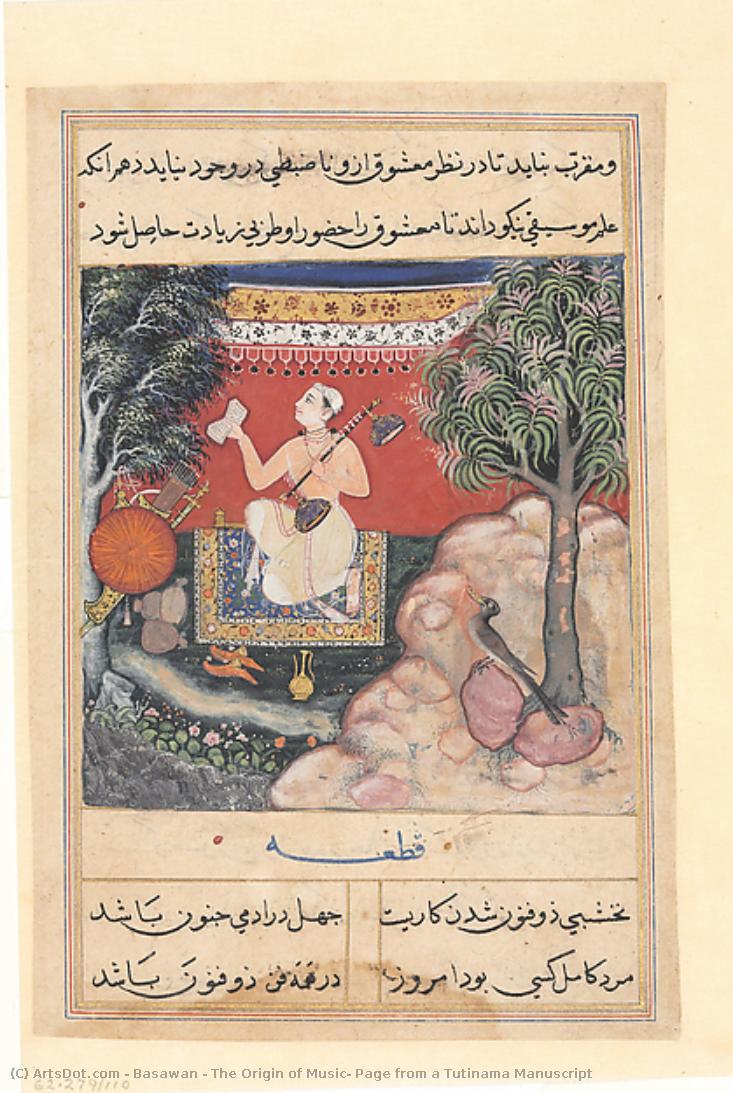
The Origin of Music: Page from a Tutinama Manuscript
 1565
1565 10.0 x 10.0 cm
 Read More
Hand Made Oil Reproduction
Hand-painted oil on canvas in your size and frame, made to order by our artists. ( Buy Print Buy Image)




































Pick from our preset sizes that match the artwork's original proportions.

You may enter your own dimensions to fit a specific frame or space. If your selected size does not match the original image's proportions, we will either crop the artwork or extend the painting with additional hand-painted elements. A digital mockup will be sent for your approval before production begins.
Please note that the on-screen preview does not reflect the actual cropping or extension. Only the mockup will accurately show the final composition.
While custom sizes are available, we recommend selecting a dimension from the predefined list to preserve the original proportions.
After order, ArtsDot.com team will email client for instructions and provide a mockup preview
Worldwide Delivery () in 3/4 weeks instead of standard 5 weeks. (27 August). No compromise on quality.

Free Worldwide Express Shipping

High-Quality Linen Canvas

Full Shipping Insurance

Customs Tax Refund Guarantee

True Color Matching Guarantee

60-Day Return Policy (Defects Only)

100% Money-Back Guarantee

Bulk Discount Offer
 Glass option is only available in size under 110 CM

The Origin of Music: Page from a Tutinama Manuscript
Reproduction Medium
Reproduction Size
-


Total Price
$ 263
Related Artworks









Artist Biography
Basawan: The Pioneer of Mughal Portraiture
Basawan (flourished 1580–1600), a name whispered with reverence in Indian art history, stands as one of the foremost figures of the Mughal miniature tradition. Though shrouded in obscurity—details about his life remain scant—his legacy endures through his breathtaking depictions of human subjects within the monumental Akbarnama, cementing his place as an innovator who elevated portraiture to unprecedented heights. Born in New Delhi during a period of significant cultural exchange between Persia and India, Basawan’s artistic journey began amidst the opulent courts of Akbar the Great. His formative years were spent under the tutelage of Abd al-Samad, a renowned artist whose influence profoundly shaped Basawan's stylistic sensibilities. This mentorship instilled within him a meticulous observation of human anatomy and expression—a hallmark that distinguishes his work from contemporaries.- Akbarnama Influence: Basawan’s contribution to the Akbarnama is arguably his most celebrated achievement. Unlike previous chronicles, Akbar commissioned a series of portraits capturing not merely royal figures but also individuals representing diverse social strata – scholars, musicians, and artisans. This bold decision signaled a departure from conventional artistic practices and established Basawan as a trailblazer in portraying human character with remarkable realism.
- Color Palette & Technique: Basawan’s mastery lay primarily in his exceptional color palette and technique. Utilizing opaque watercolor pigments combined with gold leaf—a practice considered revolutionary at the time—he achieved luminous hues and textural depth that captivated viewers. His meticulous layering of colors created an illusionistic effect, mirroring the subtleties of light and shadow and conveying a profound sense of atmosphere.
- Family Legacy: Basawan’s artistic lineage continued through his son Manohar Das, who carried on the family tradition as a court painter. Today, the Das family maintains a thriving manufacturing business specializing in handcrafted carpets—a tangible connection to their ancestral heritage and a testament to the enduring influence of Basawan's artistic vision.
Exploring His Artistic Output: Beyond Akbarnama Illustrations
While the Akbarnama undoubtedly represents Basawan’s magnum opus, evidence suggests he engaged in diverse artistic endeavors extending beyond royal commissions. Fragments of manuscripts depicting scenes from Hindu mythology—particularly those featuring Tara Kalan—offer glimpses into his versatility and willingness to explore different thematic concerns. These works demonstrate a keen understanding of symbolism and narrative complexity, reflecting the broader intellectual currents of the Mughal era.- Notable Works: Among Basawan’s surviving paintings are depictions of angels (Peri) riding composite camels—a striking visual representation of Islamic cosmology—and portraits capturing the dignity and solemnity of royal figures.
Connections to Western Artistic Traditions
Basawan's artistic development coincided with the arrival of Jesuit missionaries in India, bringing with them European paintings that profoundly impacted Mughal artists. This exposure fostered a dialogue between Eastern and Western aesthetics—a pivotal moment in Indian art history—and Basawan’s oeuvre bears subtle traces of this influence. His meticulous attention to detail and his masterful use of perspective foreshadowed developments occurring across the ocean, marking him as an artist attuned to global artistic trends.Historical Significance: A Reflection of Mughal Patronage
Basawan's success is inextricably linked to Akbar’s enlightened patronage—a royal commitment to fostering artistic excellence and promoting cultural enrichment. Akbar recognized Basawan’s talent and entrusted him with monumental commissions, securing his place as one of the most influential artists of his time. His work serves as a poignant reminder of the transformative power of royal support in shaping artistic innovation and preserving cultural heritage for posterity.
basawan
India
Quick Facts
- Artistic Movement Or Style: Mughal miniature art
- Artists Or Movements Influenced By This Artist: ['Renaissance']
- Artists Who Influenced This Artist: ['Abd al-samad']
- Date Of Birth: New Delhi, India ()
- Date Of Death: Living
- Full Name: basawan
- Nationality: Indian
- Notable Artworks:
- The Origin of Music: Page from a Tutinama Manuscript
- Akbarnama illustrations
- Place Of Birth: India