 Preview
 Send
Send Share
Share
 Details

 Download
 Similars
 X-Ray
X-Ray Diaporama
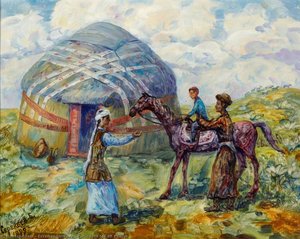
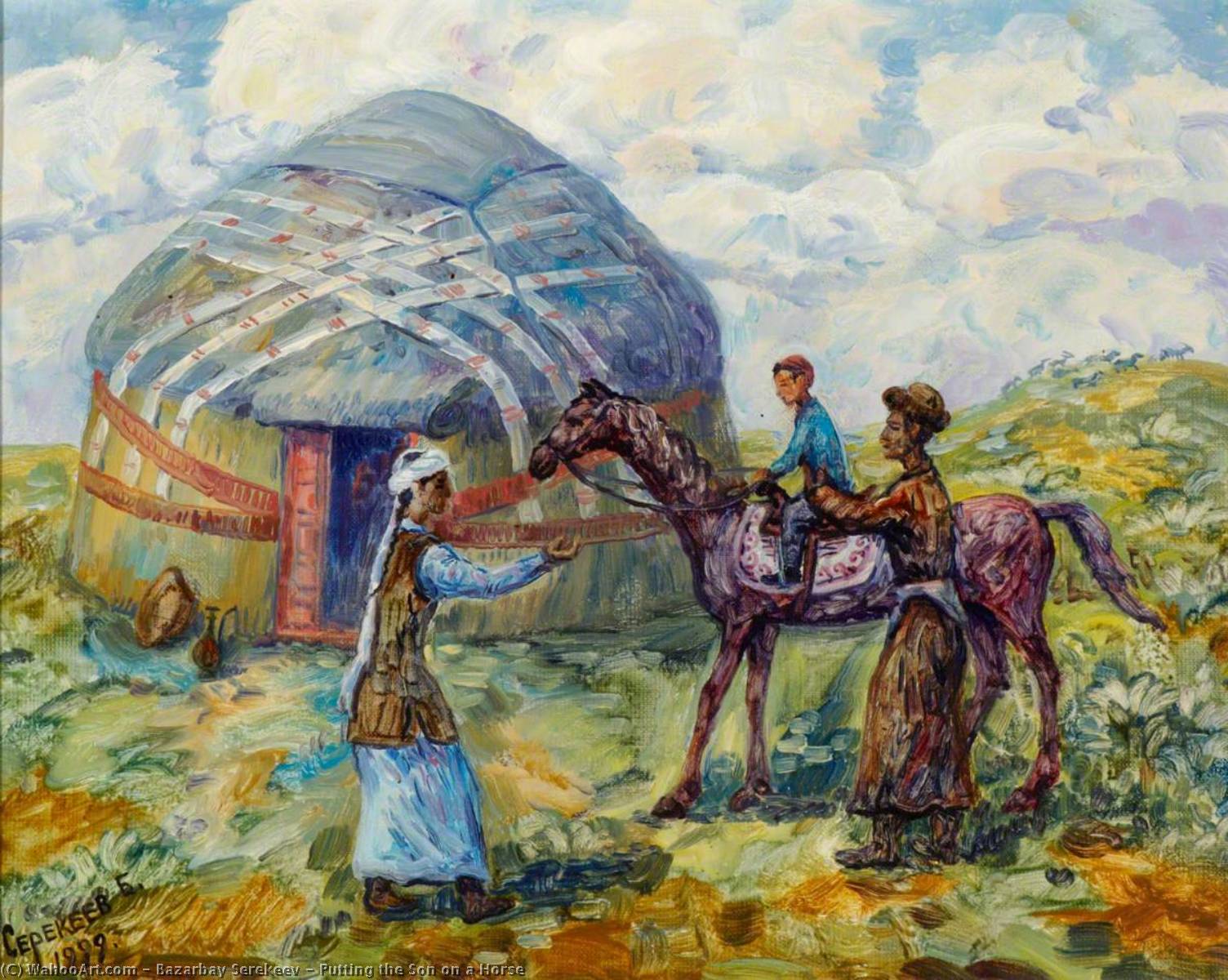
Putting the Son on a Horse
 1999
1999 40.0 x 49.0 cm
 Horniman Museum
 Read More
Hand Made Oil Reproduction
Hand-painted oil on canvas in your size and frame, made to order by our artists. ( Buy Print Buy Image)




































Pick from our preset sizes that match the artwork's original proportions.

You may enter your own dimensions to fit a specific frame or space. If your selected size does not match the original image's proportions, we will either crop the artwork or extend the painting with additional hand-painted elements. A digital mockup will be sent for your approval before production begins.
Please note that the on-screen preview does not reflect the actual cropping or extension. Only the mockup will accurately show the final composition.
While custom sizes are available, we recommend selecting a dimension from the predefined list to preserve the original proportions.
After order, ArtsDot.com team will email client for instructions and provide a mockup preview
Worldwide Delivery () in 3/4 weeks instead of standard 5 weeks. (24 August). No compromise on quality.

Free Worldwide Express Shipping

High-Quality Linen Canvas

Full Shipping Insurance

Customs Tax Refund Guarantee

True Color Matching Guarantee

60-Day Return Policy (Defects Only)

100% Money-Back Guarantee

Bulk Discount Offer
 Glass option is only available in size under 110 CM

Putting the Son on a Horse
Reproduction Medium
Reproduction Size
-


Total Price
$ 263
Related Artworks









Artist Biography
A Legacy Woven in Color: The Life and Art of Bazarbay Serekeev
Bazarbay Serekeev stands as a pivotal figure in the landscape of Kazakh art, a painter whose canvases resonate with the spirit of rural life, deeply rooted traditions, and a profound connection to his cultural heritage. While biographical details remain somewhat elusive – a testament perhaps to his focus on creation rather than self-promotion – Serekeev’s work speaks volumes, offering a compelling narrative of a nation's identity and the enduring power of artistic expression. Born in Karakalpakstan, Uzbekistan, he emerged as one of the most prolific artists of the region, leaving behind a legacy that continues to captivate audiences with its evocative depictions of Kazakh culture.
Early Influences and Artistic Development
Serekeev’s journey into art was marked by a gradual evolution. His early works reflect the artistic currents prevalent in the late 1960s and 70s, initially demonstrating a fascination with folklore and primitive styles. However, he quickly transcended mere imitation, embarking on a path to develop his own unique artistic handwriting. This pursuit led him through various compositional and scenic explorations, characterized by an originality of manner – a distinctive decorativeness and a bold use of color forms. Over time, the technical aspects of painting took precedence; rhythm, pattern design, and color saturation became central elements in his compositions. He wasn’t content to simply *represent* Kazakh life; he sought to distill its essence onto the canvas.
Themes of Rural Life and Cultural Preservation
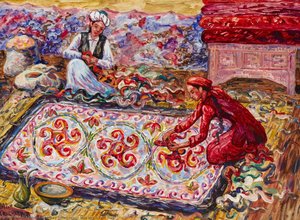
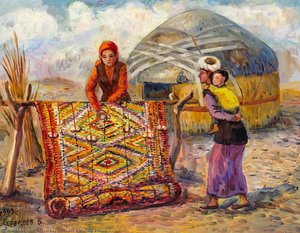
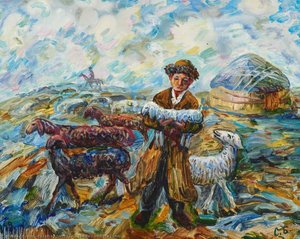
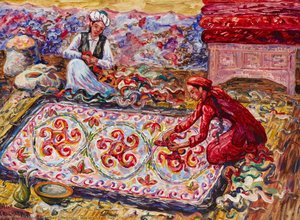
The heart of Serekeev's artistic vision lies in his unwavering dedication to portraying the rural theme and the dignity of labor. His paintings are populated by figures engaged in everyday activities, reflecting the unique character of the Karakalpak people, their customs, and the skills of artisans practicing traditional applied arts. Works like “Making a Felt Rug,” “Music of the Steppes,” and “The Boy with the Lamb” aren’t simply genre scenes; they are celebrations of a way of life, imbued with warmth, authenticity, and a deep respect for ancestral practices. Often, these depictions seamlessly blend genre art with landscape painting, creating harmonious compositions that underscore the interconnectedness between people and their environment. The artist's keen observation skills capture not just *what* people do, but *how* they live – the subtle nuances of their interactions, the textures of their surroundings, and the spirit of community.
A Studio Preserved: A Window into Serekeev’s World
Perhaps uniquely, a tangible connection to Serekeev's artistic process remains accessible today. His studio in Nukus has been meticulously preserved as a house museum following his death in 2017. This space offers an intimate glimpse into the artist’s world – a testament to his dedication and creative spirit. The museum not only showcases his paintings, including his distinctive painted gourds, but also provides a modern gallery space for contemporary exhibitions. Adding another layer of cultural immersion, a traditional yurt within the courtyard allows visitors to experience Kazakh hospitality firsthand, offering groups the opportunity to share meals in an authentic setting. This preservation is more than just a tribute; it’s a living embodiment of Serekeev's commitment to sharing his culture with the world.
Historical Significance and Enduring Impact
Bazarbay Serekeev’s contribution extends beyond the aesthetic beauty of his paintings. He played a crucial role in preserving and promoting Kazakh cultural identity through art, particularly during periods of significant social change. His work serves as a valuable historical document, offering insights into the traditions, values, and daily lives of the Karakalpak people. His influence can be seen in the works of subsequent generations of artists who continue to draw inspiration from his masterful depictions of rural life and his unwavering commitment to cultural heritage. Serekeev’s paintings are not merely images; they are stories woven in color, a testament to the enduring power of art to connect us to our past, celebrate our present, and inspire our future.
Quick Facts
- Artistic Movement Or Style: Rural Painting, Russian Icons
- Full Name: Bazarbay Serekeev
- Nationality: Kazakh
- Notable Artworks:
- Making a Felt Rug
- Music of the Steppes
- The Boy with the Lamb