

 Preview
 Send
Send Share
Share
 Details

 Download
 Similars
 X-Ray
X-Ray Diaporama
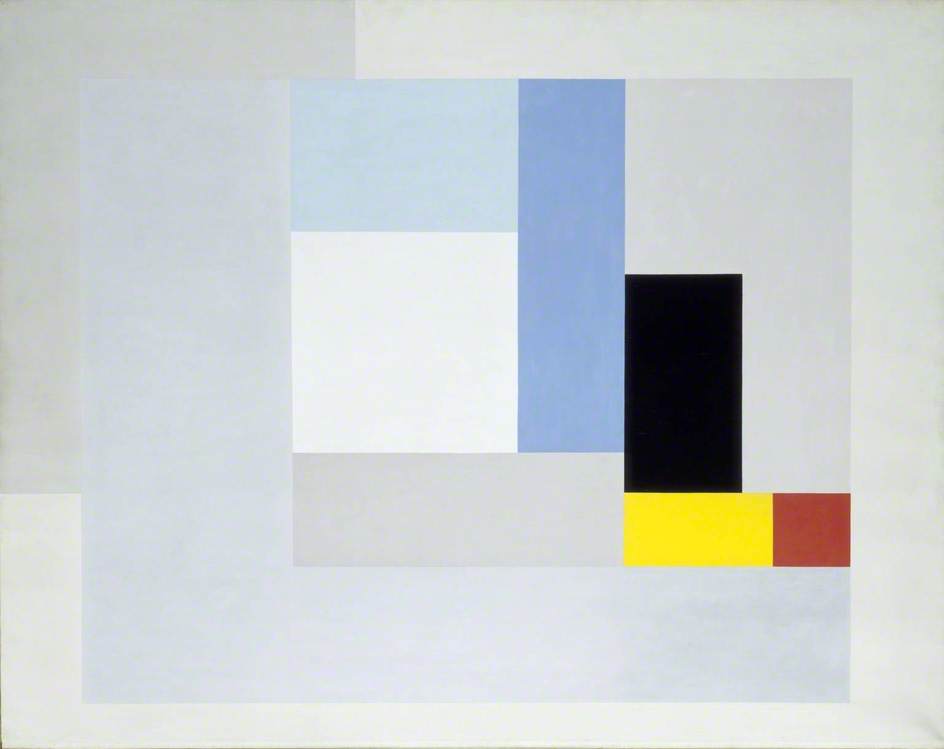
June 1937 (painting)
 Acrylic On Canvas
- WallArt
- Cubist Influences
 1937
1937- Modern
 159.0 x 201.0 cm
 Tate Liverpool
 Read More
Purchase a high-resolution, enhanced digital image, far superior to the online preview.
Each file is meticulously prepared by our in-house specialists using advanced tools and expert manual retouching. We ensure every image has exceptional clarity, precise color accuracy, and fine detail.
The final file is delivered via email within 72 hours, optimized for immediate use in professional, editorial, and print environments. This is the same quality trusted by top-tier design studios, publishers, and galleries.
Digital Image
Download a high-resolution file for personal display, printing, and creative projects. ( Buy Print Buy Hand Made Painting)
Included in Every Digital Image Order
Expert Digital Delivery, Guaranteed
When you choose ArtsDot.com, you're not just getting an image - you're receiving a professionally enhanced digital artwork, crafted with precision and backed by a satisfaction guarantee. Here's everything that comes with your order, automatically:

Fast Email Delivery
Your high-resolution digital image file will be emailed to you within 72 hours of ordering - ready for immediate use.

AI-Enhanced Digital File
Your artwork is professionally optimized using advanced AI tools and manual editing, ensuring maximum detail, clarity, and color accuracy.

Free Lifetime Re-Delivery
Accidentally deleted or lost your file? No worries - we'll resend it to you anytime, free of charge.

No Import Fees - Ever
Enjoy your artwork instantly with zero customs, duties, or delivery fees - digital downloads are always tax-free.

Color Accuracy Guarantee
We ensure your digital image reflects the original colors as closely as possible using professional tools and color management.

60-Day Satisfaction Guarantee
If you're not satisfied with your digital image, we'll revise it or refund 100% within 60 days - no questions asked.

100% Money-Back Guarantee
Not satisfied? Get a full refund within 60 days of receiving your digital file - no questions asked.

Bulk Order Discounts
Buy 3 images, save 10% - Buy 5, save 15% - Buy 10+, save 20%. Great for creative projects, galleries, and agencies.
Collectible Description
June 1937 (Painting): A Geometric Echo of Mondrian’s Vision
Ben Nicholson's “June 1937” stands as a testament to the profound influence of Piet Mondrian on British modernism. Painted in 1937, this striking oil painting embodies Nicholson’s signature approach – distilling complex visual ideas into rigorously geometric forms that prioritize clarity and balance.
Nicholson's fascination with Mondrian’s reductive aesthetic is palpable. Like Mondrian’s canvases dominated by horizontal and vertical black lines intersecting to form grids, Nicholson’s composition utilizes a square frame punctuated by a central yellow circle. This deliberate simplification isn’t merely stylistic; it reflects a broader philosophical preoccupation with distilling essence from materiality.
The painting's palette is restrained yet purposeful. The square canvas itself is rendered in muted blues and whites—colors chosen to create an understated backdrop that allows the dominant yellow circle to command attention. This color contrast isn’t accidental; it evokes a visual dialogue with Mondrian’s use of primary colors, highlighting Nicholson’s commitment to exploring fundamental artistic principles.
Technically, Nicholson employs a smooth, almost velvety brushstroke—a hallmark of his style—to achieve an ethereal quality despite the geometric precision. The surface texture subtly suggests the presence of underlying materiality without obscuring the overarching visual harmony. This meticulous attention to detail underscores Nicholson’s belief that beauty resides in careful observation and disciplined execution.
Artist Biography: Ben Nicholson OM
Born April 10, 1894, in Denham, Buckinghamshire, Ben Nicholson OM (Order of Merit) emerged from a family steeped in artistic tradition. His father, Sir William Nicholson, was a celebrated landscape painter, and his mother, Mabel Pryde, possessed considerable talent herself. This upbringing instilled in Nicholson an early appreciation for visual art and profoundly shaped his artistic trajectory.
He pursued formal education at Tyttenhangar Lodge Preparatory School, Seaford, Heddon Court, Hampstead, and Gresham’s School in Holt, Norfolk, honing his skills before enrolling at the Slade School of Fine Art (1910-1911). During this period, he befriended fellow artists like Paul Nash, Stanley Spencer, Mark Gertler, and Edward Wadsworth—artists who shared Nicholson's ambition to forge a new path in British art.
Anecdotally, Nicholson’s fascination with billiards provided him with an unexpected source of inspiration. He recognized the game’s geometric patterns and movements as embodying aesthetic principles akin to those explored in painting. This intellectual curiosity fueled his artistic experimentation and contributed to his distinctive visual language.
Style & Technique: Geometric Abstraction
Nicholson's artistic style is firmly rooted in geometric abstraction—a movement that sought to liberate art from representational constraints. Influenced by Cubism, he embraced the fragmentation of form and perspective, prioritizing spatial relationships over literal depiction.
He meticulously constructed his compositions using orthogonal lines—horizontal and vertical lines intersecting at right angles—creating grids that convey a sense of order and stability. This technique reflects Nicholson’s belief in the power of abstraction to communicate universal truths about perception and experience.
The artist's brushwork is characterized by its deliberate softness, resulting in surfaces that appear luminous and subtly textured. Nicholson skillfully blends pigments to achieve tonal gradations—creating nuanced variations in color that enhance the painting’s visual depth and atmosphere. This meticulous attention to surface qualities underscores his commitment to capturing the essence of materiality without resorting to illusionistic representation.
Historical Context & Significance
“June 1937” was created during a pivotal moment in British art history—the ascendancy of Modernism following the devastation of World War I. Nicholson’s embrace of geometric abstraction aligned with broader trends toward simplification and intellectual rigor, reflecting a desire to grapple with existential questions about humanity's place in the cosmos.
The painting exemplifies Nicholson’s engagement with philosophical ideas—particularly those championed by thinkers like Henri Bergson—who argued that consciousness transcends spatial boundaries. Nicholson sought to express these concepts through visual language—creating artworks that resonate with profound emotional and intellectual depth.
Its enduring appeal lies in its ability to convey a sense of serene contemplation—a reflection of Nicholson’s own contemplative spirit. “June 1937” remains an iconic example of British abstract art, demonstrating the transformative potential of artistic experimentation and the pursuit of aesthetic ideals.
Related Artworks

Artist Biography
Ben Nicholson OM: A Life in Abstract Art
- Born: April 10, 1894, Denham, Buckinghamshire, United Kingdom
- Died: February 6, 1982, London, United Kingdom
Early Life and Artistic Training
- Ben Nicholson was born into an artistic family; his father, Sir William Nicholson, and mother, Mabel Pryde, were both accomplished painters. This environment fostered a deep appreciation for art from a young age.
- He received early education at Tyttenhangar Lodge Preparatory School, Seaford, Heddon Court, Hampstead, and Gresham's School in Holt, Norfolk.
- Nicholson formally studied at the Slade School of Fine Art (1910-1911), where he was a contemporary of notable artists like Paul Nash, Stanley Spencer, Mark Gertler, and Edward Wadsworth. Anecdotally, he spent considerable time playing billiards during this period, finding aesthetic appeal in the game's geometry and movement.
Artistic Development and Influences
- Early Works: Nicholson’s initial artistic endeavors involved naturalistic still lifes, influenced by his father’s style.
- Cubist Influence: Around 1926, he began to explore abstraction, heavily influenced by Synthetic Cubism and the work of Pablo Picasso.
- Neoplasticism & Primitive Style: A meeting with Piet Mondrian introduced him to Neoplasticism, while his encounter with Henri Rousseau sparked an interest in a primitive style. These influences significantly shaped his artistic direction.
- Key Movements: Nicholson became involved with several important art movements of the time, including the Seven and Five Society (of which he was chair), Unit One, and Abstraction-Création.
Major Works and Artistic Style
- Reliefs: Nicholson is particularly renowned for his abstract reliefs, beginning in 1933. These works combined painting with sculptural elements, creating a unique visual experience. The white reliefs of the mid-1930s are considered among his most significant achievements.
- Still Lifes and Landscapes: While known for abstraction, Nicholson also produced compelling still lifes and landscapes, often incorporating geometric forms and muted colors.
- The Nicholson Wall: A notable public work is the "Nicholson Wall," a mural created for the garden of Sutton Place in Guildford, Surrey, demonstrating his belief that abstract art should be accessible to a wider audience.
- Materials & Techniques: He experimented with various materials and techniques, including oil paint, pencil, gravel, and masonite, often combining them in innovative ways.
Legacy and Historical Significance
- Modern British Art: Ben Nicholson is recognized as a pivotal figure in modern British art, contributing significantly to the development of abstraction and relief sculpture.
- International Recognition: His work garnered international acclaim, with exhibitions at prestigious venues like the Venice Biennale and retrospectives at major museums worldwide. He received numerous awards, including the Order of Merit in 1968.
- Auction Records: Nicholson’s paintings command high prices at auction, reflecting their artistic merit and historical importance. For example, "Sept 53 (Balearic)" sold for $1,650,500 at Christie's New York in 2011, and “Fiddle and Spanish Guitar” fetched €3,313,000 at Christie’s Paris in 2012.
- Influence on Subsequent Artists: Nicholson’s innovative approach to abstraction and his exploration of form and space have influenced generations of artists.
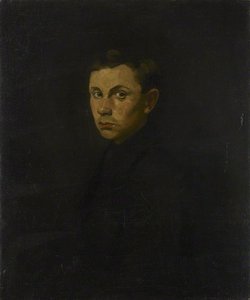
Ben Nicholson OM
1894 - 1982 , United Kingdom
Quick Facts
- Artistic Movement Or Style:
- Abstract art
- Cubism
- Constructivism
- Artists Who Influenced This Artist:
- Henri Rousseau
- Piet Mondrian
- Pablo Picasso
- Cezanne
- Date Of Birth: April 10, 1894
- Date Of Death: 1982
- Full Name: Ben Nicholson OM
- Nationality: British
- Notable Artworks:
- Sept 53 (Balearic)
- Fiddle and Spanish guitar
- 1946 (still life)
- Place Of Birth: London, United Kingdom

