 Preview
 Send
Send Share
Share
 Details

 Download
 Similars
 X-Ray
X-Ray Diaporama
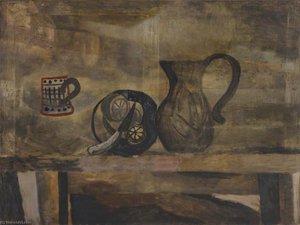
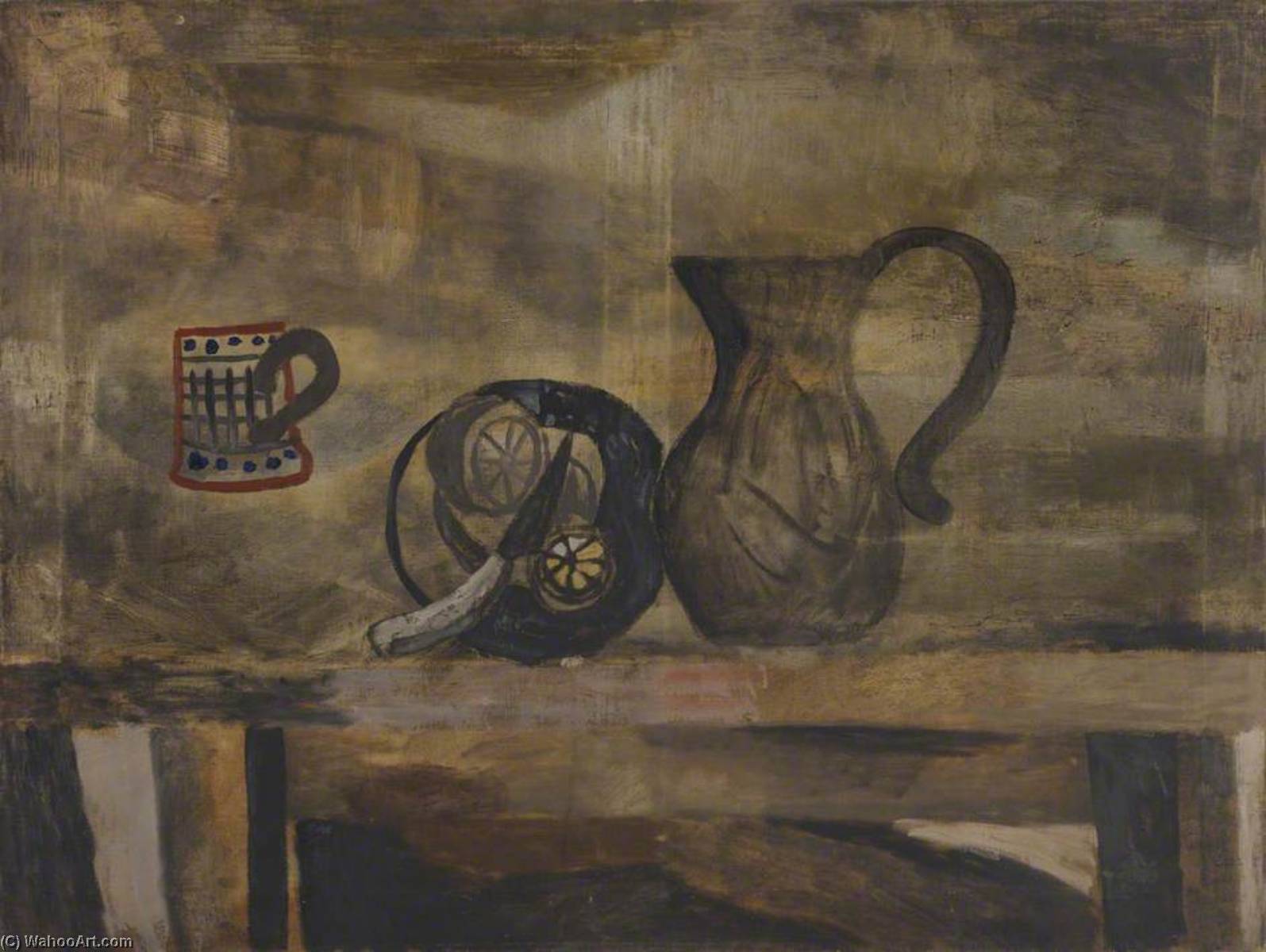
May 1927 (still life with knife and lemon)
 Oil On Canvas
- WallArt
- Cubism
 1927
1927 92.0 x 122.0 cm
 Kettle's Yard
 Read More
Hand Made Oil Reproduction
Hand-painted oil on canvas in your size and frame, made to order by our artists. ( Buy Print Buy Image)




P118B $10

P118H $10

P118W $10

P438Z $10

P508JH $12

P508YH $12

P805H $10

P805Z $10

P919BZ $10

P919G $10

P919XJ $10

P959ZH $10

P968JZ $12

W106C $8

W218G $10

W218JH $8

W218Y $10

W307PJ $10

W316G $10

W316PJ $8

W316Y $10

W398PJ $8

W4111J $10

W500HY $15

W500JH $15

W692G $12

W849H $8

W940BG $15

W953PJ $8




Pick from our preset sizes that match the artwork's original proportions.

You may enter your own dimensions to fit a specific frame or space. If your selected size does not match the original image's proportions, we will either crop the artwork or extend the painting with additional hand-painted elements. A digital mockup will be sent for your approval before production begins.
Please note that the on-screen preview does not reflect the actual cropping or extension. Only the mockup will accurately show the final composition.
While custom sizes are available, we recommend selecting a dimension from the predefined list to preserve the original proportions.
After order, ArtsDot.com team will email client for instructions and provide a mockup preview
Worldwide Delivery () in 3/4 weeks instead of standard 5 weeks. (24 August). No compromise on quality.

Free Worldwide Express Shipping

High-Quality Linen Canvas

Full Shipping Insurance

Customs Tax Refund Guarantee

True Color Matching Guarantee

60-Day Return Policy (Defects Only)

100% Money-Back Guarantee

Bulk Discount Offer
 Glass option is only available in size under 110 CM

May 1927 (still life with knife and lemon)
Reproduction Medium
Reproduction Size
-


Total Price
$ 263
Artwork Description
A Moment Frozen in Time: Exploring Ben Nicholson’s ‘May 1927’
Ben Nicholson's “May 1927” isn’t merely a still life; it’s a carefully constructed meditation on labor, craft, and the quiet beauty of everyday objects. Painted in 1927, this work represents a pivotal moment in Nicholson’s artistic journey, bridging his early explorations of naturalism with the burgeoning world of abstract composition that would define his legacy. The canvas presents a deceptively simple arrangement: a worn ceramic pitcher, a weathered wheel – likely from a cart or wagon – and an imposing amphora-shaped vessel dominate the scene, all bathed in a muted palette of greys, browns, and ochres. Yet, within this apparent stillness lies a profound sense of observation and considered design.
The painting’s genesis is deeply intertwined with Nicholson's own life and artistic influences. Born into an artistic family – his father, Sir William Nicholson, was a celebrated painter – Ben absorbed the visual language of art from a young age. His early years were marked by a fascination with geometry and movement, evident in his playful engagement with billiards, a pursuit that arguably informed his later approach to abstract form. The influence of Cubism is palpable, particularly in the fragmented planes and multiple perspectives presented within the objects themselves. However, Nicholson transcends mere replication; he doesn’t simply depict these tools but rather imbues them with a sense of history and purpose.
The Language of Texture: Technique and Materiality
Nicholson's masterful technique is immediately apparent in the painting’s rich textural surface. He employs a dry brushstroke method, layering thin washes of oil paint to build up a complex topography of ridges and valleys. This deliberate roughness isn’t accidental; it actively engages the viewer, inviting tactile exploration through the image. The artist meticulously renders the imperfections – the chipped glaze of the pitcher, the worn texture of the wheel – emphasizing the passage of time and the evidence of use. The subtle variations in color and tone create a sense of depth and volume, drawing the eye across the canvas and highlighting the inherent beauty within these utilitarian objects.
- Oil Paint on Canvas: The primary medium is oil paint, applied with a controlled yet expressive hand.
- Dry Brush Technique: This technique creates visible brushstrokes that build up layers of texture and depth.
- Muted Palette: The restrained color scheme contributes to the painting’s contemplative mood.
Symbolism and Emotional Resonance
“May 1927” is more than just a depiction of objects; it's a subtle commentary on labor, craftsmanship, and perhaps even melancholy. The tools themselves – the pitcher, the wheel, the amphora – evoke images of agricultural work, trade, and the rhythms of daily life. The muted colors and somber background contribute to a sense of quiet contemplation, suggesting a moment suspended in time. Nicholson’s deliberate choice of subject matter invites viewers to consider the value of these seemingly ordinary objects, prompting reflection on their history and significance.
Furthermore, the painting's composition—the carefully arranged yet slightly unbalanced arrangement—creates a feeling of unease or introspection. The strong vertical lines of the amphora contrast with the more horizontal forms of the wheel, generating visual tension. This subtle discordance mirrors the emotional complexity of the work, hinting at a deeper narrative beyond the surface appearance.
A Legacy in Abstraction: Nicholson’s Enduring Influence
Ben Nicholson's “May 1927” stands as a crucial bridge between his early figurative works and his later explorations of abstract composition. It exemplifies his ability to imbue everyday objects with artistic significance, transforming the mundane into the profound. Reproductions of this captivating painting offer a window into Nicholson’s unique vision—a testament to the power of observation, technique, and emotional resonance. Its quiet beauty continues to inspire artists and collectors alike, solidifying its place as a cornerstone of 20th-century British art.
Related Artworks
Artist Biography
Ben Nicholson OM: A Life in Abstract Art
- Born: April 10, 1894, Denham, Buckinghamshire, United Kingdom
- Died: February 6, 1982, London, United Kingdom
Early Life and Artistic Training
- Ben Nicholson was born into an artistic family; his father, Sir William Nicholson, and mother, Mabel Pryde, were both accomplished painters. This environment fostered a deep appreciation for art from a young age.
- He received early education at Tyttenhangar Lodge Preparatory School, Seaford, Heddon Court, Hampstead, and Gresham's School in Holt, Norfolk.
- Nicholson formally studied at the Slade School of Fine Art (1910-1911), where he was a contemporary of notable artists like Paul Nash, Stanley Spencer, Mark Gertler, and Edward Wadsworth. Anecdotally, he spent considerable time playing billiards during this period, finding aesthetic appeal in the game's geometry and movement.
Artistic Development and Influences
- Early Works: Nicholson’s initial artistic endeavors involved naturalistic still lifes, influenced by his father’s style.
- Cubist Influence: Around 1926, he began to explore abstraction, heavily influenced by Synthetic Cubism and the work of Pablo Picasso.
- Neoplasticism & Primitive Style: A meeting with Piet Mondrian introduced him to Neoplasticism, while his encounter with Henri Rousseau sparked an interest in a primitive style. These influences significantly shaped his artistic direction.
- Key Movements: Nicholson became involved with several important art movements of the time, including the Seven and Five Society (of which he was chair), Unit One, and Abstraction-Création.
Major Works and Artistic Style
- Reliefs: Nicholson is particularly renowned for his abstract reliefs, beginning in 1933. These works combined painting with sculptural elements, creating a unique visual experience. The white reliefs of the mid-1930s are considered among his most significant achievements.
- Still Lifes and Landscapes: While known for abstraction, Nicholson also produced compelling still lifes and landscapes, often incorporating geometric forms and muted colors.
- The Nicholson Wall: A notable public work is the "Nicholson Wall," a mural created for the garden of Sutton Place in Guildford, Surrey, demonstrating his belief that abstract art should be accessible to a wider audience.
- Materials & Techniques: He experimented with various materials and techniques, including oil paint, pencil, gravel, and masonite, often combining them in innovative ways.
Legacy and Historical Significance
- Modern British Art: Ben Nicholson is recognized as a pivotal figure in modern British art, contributing significantly to the development of abstraction and relief sculpture.
- International Recognition: His work garnered international acclaim, with exhibitions at prestigious venues like the Venice Biennale and retrospectives at major museums worldwide. He received numerous awards, including the Order of Merit in 1968.
- Auction Records: Nicholson’s paintings command high prices at auction, reflecting their artistic merit and historical importance. For example, "Sept 53 (Balearic)" sold for $1,650,500 at Christie's New York in 2011, and “Fiddle and Spanish Guitar” fetched €3,313,000 at Christie’s Paris in 2012.
- Influence on Subsequent Artists: Nicholson’s innovative approach to abstraction and his exploration of form and space have influenced generations of artists.
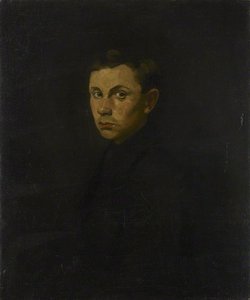
Ben Nicholson OM
1894 - 1982 , United Kingdom
Quick Facts
- Artistic Movement Or Style:
- Abstract art
- Cubism
- Constructivism
- Artists Who Influenced This Artist:
- Henri Rousseau
- Piet Mondrian
- Pablo Picasso
- Cezanne
- Date Of Birth: April 10, 1894
- Date Of Death: 1982
- Full Name: Ben Nicholson OM
- Nationality: British
- Notable Artworks:
- Sept 53 (Balearic)
- Fiddle and Spanish guitar
- 1946 (still life)
- Place Of Birth: London, United Kingdom
Related Articles
Ben Nicholson OM: Modernism's Abstract Pioneer & the Poetics of Relief
Explore the revolutionary abstract art of Ben Nicholson OM. Discover his geometric masterpieces, collaborations with Barbara Hepworth & investment potential. Expert insights for collectors.
Abstract Expressionism's 10 Defining Masterpieces |
Explore 10 defining Abstract Expressionism masterpieces by Pollock, Rothko & de Kooning. Discover the stories behind these iconic paintings and find museum-quality art reproductions to elevate your home decor on .
Clyfford Still's Abstract Expressionism: A Study of Color, Form & the Existential Landscape
Explore the profound world of Clyfford Still's Abstract Expressionism with ArtsDot. Discover his unique style, existential themes & investment potential. Expert analysis for discerning collectors.

Geometric Abstraction's 10 Defining Masterpieces | Art for Your Home - ArtsDot
Explore 10 defining masterpieces of Geometric Abstraction! Discover Kandinsky, Mondrian & Malevich’s iconic works. Find museum-quality art reproductions and curated decor ideas to elevate your home at ArtsDot.com.
Kandinsky's Masterpieces: 25 Paintings That Define Abstract Art | ArtsDot
Journey through Wassily Kandinsky's 25 most iconic abstract paintings. Explore his revolutionary use of color, form & spiritual expressionism. Find museum-quality Kandinsky reproductions and elevate your home decor with ArtsDot.com. Discover all masterpieces on ArtsDot.com!