 Preview
 Send
Send Share
Share
 Details

 Download
 Similars
 X-Ray
X-Ray Diaporama
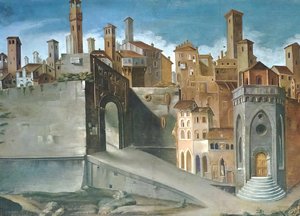
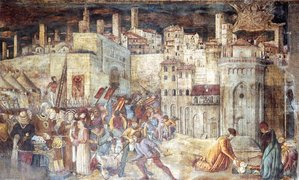
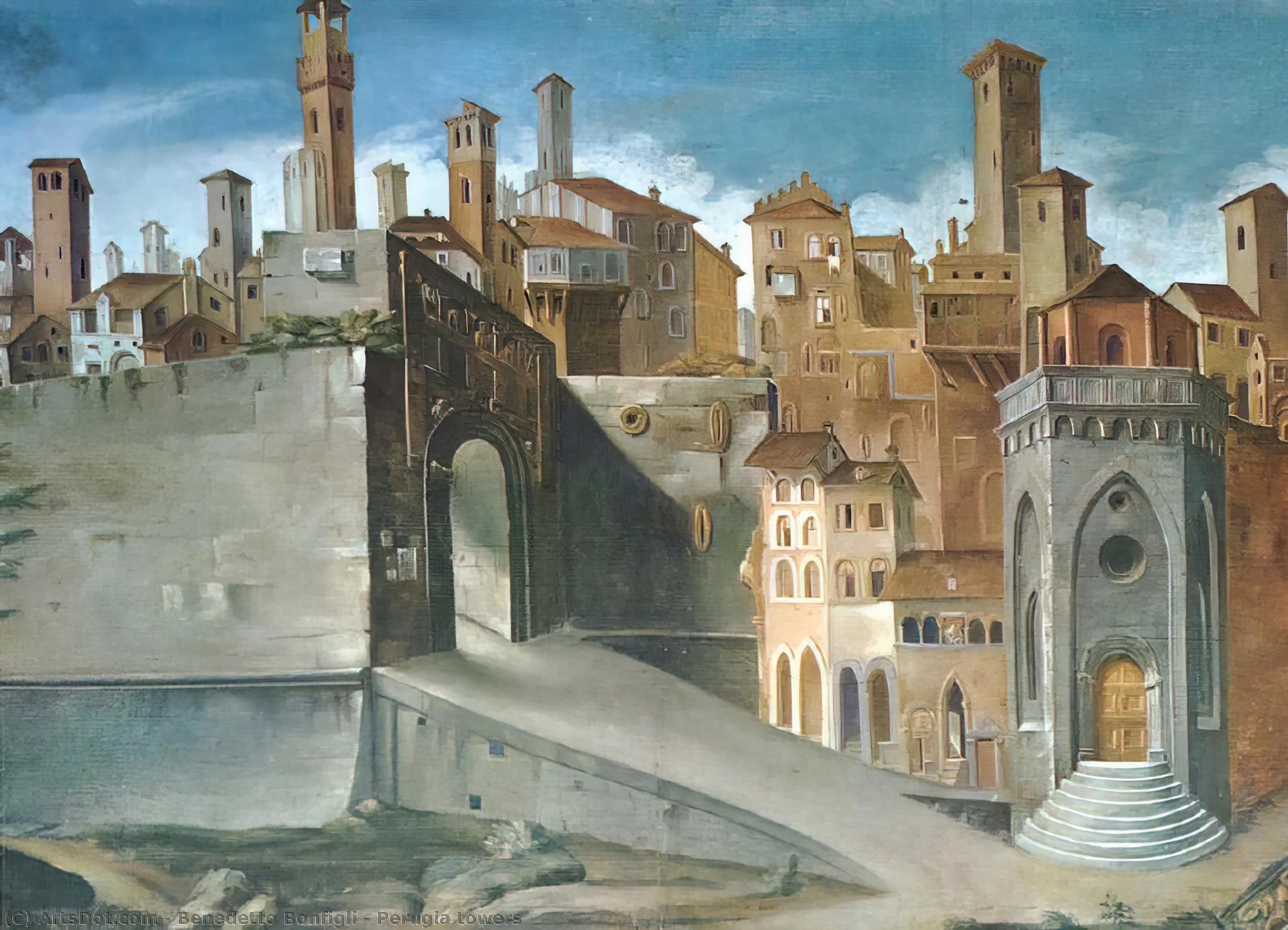
Perugia towers
 Read More
Hand Made Oil Reproduction
Hand-painted oil on canvas in your size and frame, made to order by our artists. ( Buy Print Buy Image)




































Pick from our preset sizes that match the artwork's original proportions.

You may enter your own dimensions to fit a specific frame or space. If your selected size does not match the original image's proportions, we will either crop the artwork or extend the painting with additional hand-painted elements. A digital mockup will be sent for your approval before production begins.
Please note that the on-screen preview does not reflect the actual cropping or extension. Only the mockup will accurately show the final composition.
While custom sizes are available, we recommend selecting a dimension from the predefined list to preserve the original proportions.
After order, ArtsDot.com team will email client for instructions and provide a mockup preview
Worldwide Delivery () in 3/4 weeks instead of standard 5 weeks. (17 August). No compromise on quality.

Free Worldwide Express Shipping

High-Quality Linen Canvas

Full Shipping Insurance

Customs Tax Refund Guarantee

True Color Matching Guarantee

60-Day Return Policy (Defects Only)

100% Money-Back Guarantee

Bulk Discount Offer
 Glass option is only available in size under 110 CM

Perugia towers
Reproduction Medium
Reproduction Size
-


Total Price
$ 263
Related Artworks
Artist Biography
The Radiant Legacy of Benedetto Bonfigli
In the heart of the Umbrian Renaissance, a period defined by spiritual luminosity and the dawn of humanistic perspective, the name Benedetto Bonfigli emerges as a vital architect of visual devotion. Born in Perugia around 1420, Bonfigli operated within a landscape where the lingering elegance of the Late Gothic tradition began to merge with the burgeoning intellectual rigor of the Florentine masters. While much of his personal biography remains shrouded in the mists of the fifteenth century, his artistic presence is undeniably monumental. His life’s work served as a bridge, connecting the symbolic, gilded richness of the medieval past with the profound spatial realism that would come to define the Italian Renaissance.
The essence of Bonfigli’s genius lies in his ability to synthesize disparate artistic currents into a singular, cohesive vision. He did not merely imitate his predecessors; rather, he absorbed their very souls. From Fra Angelico, he inherited a profound sense of spiritual serenity and a mastery of color that could evoke the divine through light alone. From Domenico Veneziano, he learned the transformative power of atmospheric perspective, allowing him to breathe depth and air into the flat surfaces of his frescoes. This fusion created a style that was simultaneously ethereal and grounded, capable of transporting the viewer to a celestial realm while maintaining a palpable connection to the physical world.
Mastery of Form and Symbolism
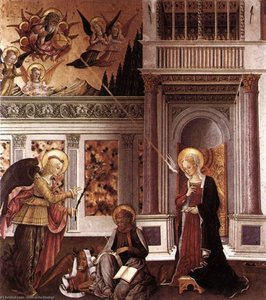
To gaze upon a Bonfigli masterpiece is to enter a world where every pigment and gesture carries theological weight. His technique was characterized by an exquisite attention to detail, particularly in his use of vibrant palettes—most notably the deep, commanding blues used to signify divine majesty. In works such as his Annunciation, one can witness the delicate balance between human emotion and sacred event. The artist utilized light not just as a tool for visibility, but as a narrative force, guiding the eye through meticulously composed scenes that capture pivotal moments of Christian history with unparalleled grace.
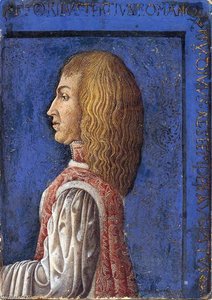
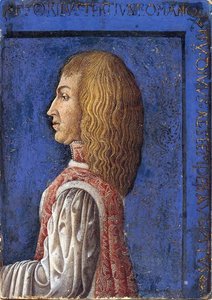
Beyond his religious commissions, Bonfigli demonstrated a remarkable capacity for portraiture and secular grandeur. His ability to render texture and character is perhaps most evident in works like Frederick III. In this tempera painting, housed within the prestigious Uffizi Gallery, the Holy Roman Emperor is presented with a level of symbolic complexity and physical detail that speaks to the artist's command over the medium. Through his brush, the sitter becomes more than a mere likeness; he becomes an icon of power and permanence, draped in the intricate textures of his era.
A Lasting Impression on the Umbrian School
The historical significance of Benedetto Bonfigli extends far beyond the walls of the Perugian churches he adorned. He was instrumental in establishing a distinct Umbrian identity that could stand alongside the innovations occurring in Florence. His contributions can be summarized through several key artistic milestones:
- Integration of Perspectives: His successful adoption of sfumato-like atmospheric depth helped transition regional art from two-dimensional storytelling to immersive, three-dimensional environments.
- Theological Color Theory: The use of luminous, symbolic color palettes became a hallmark of the Umbrian school, influencing generations of painters in the region.
- Civic and Sacred Synthesis: By decorating both religious frescoes and civic spaces like the Palazzo dei Priori, he helped elevate the visual culture of Perugia, making art an inseparable part of the city's political and spiritual identity.
Though his life concluded in 1496, the echoes of Bonfigli’s artistry continue to resonate. His ability to marry the devotional intensity of the Middle Ages with the rational clarity of the Renaissance ensures his place as a cornerstone of Italian art history. Through his frescoes and temperas, he remains a master of the light that illuminates the human spirit.
Benedetto Bonfigli
1420 - 1496 , Italy
Quick Facts
- Artistic Movement Or Style: Umbrian Renaissance
- Artists Or Movements Influenced By This Artist: ['Luca Signorelli']
- Artists Who Influenced This Artist:
- Fra Angelico
- Domenico Veneziano
- Benozzo Gozzoli
- Date Of Birth: c. 1420
- Date Of Death: July 8, 1496
- Full Name: Benedetto Bonfigli
- Nationality: Italian
- Notable Artworks:
- Annunciation
- Adoration of the Magi
- The Last Judgment
- Madonna with the Thumb
- Oratory of San Bernardino
- Place Of Birth: Perugia, Italy