 Preview
 Send
Send Share
Share
 Details

 Download
 Similars
 X-Ray
X-Ray Diaporama
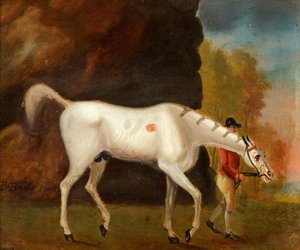
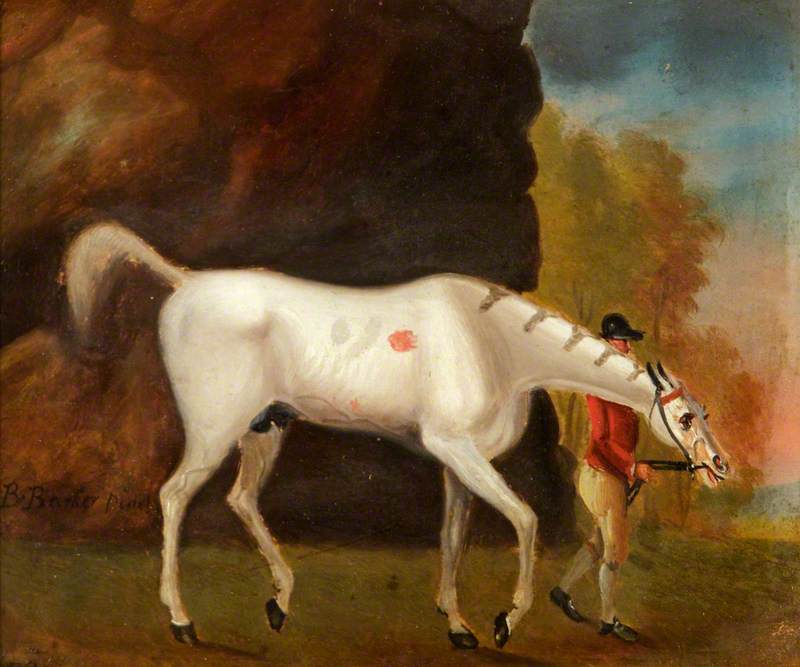
A Jockey in a Red Jacket Leading a Grey Horse
 1760
1760 18.0 x 21.0 cm
 Read More
Hand Made Oil Reproduction
Hand-painted oil on canvas in your size and frame, made to order by our artists. ( Buy Print Buy Image)




































Pick from our preset sizes that match the artwork's original proportions.

You may enter your own dimensions to fit a specific frame or space. If your selected size does not match the original image's proportions, we will either crop the artwork or extend the painting with additional hand-painted elements. A digital mockup will be sent for your approval before production begins.
Please note that the on-screen preview does not reflect the actual cropping or extension. Only the mockup will accurately show the final composition.
While custom sizes are available, we recommend selecting a dimension from the predefined list to preserve the original proportions.
After order, ArtsDot.com team will email client for instructions and provide a mockup preview
Worldwide Delivery () in 3/4 weeks instead of standard 5 weeks. (30 August). No compromise on quality.

Free Worldwide Express Shipping

High-Quality Linen Canvas

Full Shipping Insurance

Customs Tax Refund Guarantee

True Color Matching Guarantee

60-Day Return Policy (Defects Only)

100% Money-Back Guarantee

Bulk Discount Offer
 Glass option is only available in size under 110 CM

A Jockey in a Red Jacket Leading a Grey Horse
Reproduction Medium
Reproduction Size
-


Total Price
$ 263
Related Artworks









Artist Biography
The Soul of the Welsh Wild: The Life and Art of Benjamin Barker I
In the soft, shifting light of the early nineteenth century, a period defined by the profound emotional depth of the Romantic movement, the works of Benjamin Barker I emerged as a quiet yet powerful tribute to the British landscape. Born in 1776, Barker was not merely an observer of nature but a participant in a burgeoning artistic dynasty that would leave an indelible mark on the English school of painting. While history often remembers the grand, sweeping dramas of Turner, Barker offered something more intimate and poignant—a window into the serene, pastoral heart of Wales and the rugged, salt-sprayed beauty of the British coast.
Barker’s artistic identity was deeply intertwined with his familial roots. Growing up within a lineage of creators, he was surrounded by the textures of paint and the precision of sculpture. His brother, the celebrated Thomas Barker, provided a backdrop of professional excellence that likely shaped Benjamin's early sensibilities. Though much of his early life remains shrouded in the mists of time, his apprenticeship under the respected watercolorist Thomas Bushell in Bath served as the crucible for his talent. Under Bushell’s guidance, Barker mastered the delicate art of capturing atmospheric effects, learning how a subtle shift in tone could evoke the damp chill of a Welsh morning or the golden warmth of a fading afternoon.
A Mastery of Light and Atmosphere
The true essence of Barker’s oeuvre lies in his ability to translate the sublime into the relatable. His technique was characterized by a meticulous approach to observation, where every layer of wash and every precise brushstroke served to build a sense of living, breathing space. He did not merely paint scenery; he painted the very air that moved through it. Influenced by the classical compositions of Claude Lorrain and the portraiture-driven landscapes of Joshua Reynolds, Barker sought to elevate the rural landscape to a subject of profound contemplation.
His canvases often feature a captivating interplay between light and shadow, a technique that lends his works an almost illusionistic depth. One might find themselves lost in the following elements of his signature style:
- Luminous Skies: The use of soft, diffused light to suggest the vastness of the heavens over the Welsh hills.
- Textural Realism: A keen eye for the rugged textures of coastal cliffs and the gentle softness of grazing sheep.
- Atmospheric Perspective: The skillful layering of tones to create a sense of receding distance, drawing the viewer deeper into the landscape.
- Tonal Harmony: A balanced palette that reflects the natural, muted colors of the British countryside, avoiding garishness in favor of tranquility.
Legacy of the Romantic Landscape
As the Victorian era began to dawn, Barker’s work stood as a bridge between the classical traditions of the past and the more emotive, realistic explorations of the future. His depictions of coastal vistas overlooking the turbulent Atlantic and the serene lakes reflecting misty mountainsides captured a specific moment in British history—a time when the landscape was viewed with both reverence and a sense of national identity. He possessed a rare ability to find the extraordinary within the ordinary, turning a simple watermill or a quiet pasture into a scene of epic stillness.
Though he passed away in 1838, leaving behind a legacy that continues to resonate with collectors and historians alike, Benjamin Barker I remains a vital figure in the study of English landscape painting. His work serves as a testament to the enduring power of the natural world and the artist's ability to capture its fleeting, most beautiful moments. To look upon a Barker landscape is to experience a brush with tranquility, a momentary escape into an idyllic world where the beauty of Wales remains eternally preserved in paint.
benjamin barker i
1776 - 1838
Quick Facts
- Artistic Movement Or Style: Romanticism
- Artists Or Movements Influenced By This Artist: ['British Landscape Art']
- Artists Who Influenced This Artist: ['Thomas Barker']
- Date Of Death: 1838
- Full Name: Benjamin Barker I
- Nationality: English
- Notable Artworks: ['Alpine Scene']
- Place Of Birth: Bath, England