

 Preview
 Send
Send Share
Share
 Details

 Download
 Similars
 X-Ray
X-Ray Diaporama
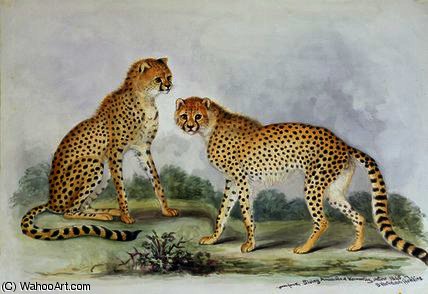
Cheetahs, from 'The Knowsley Menagerie'
 Read More
Purchase a high-resolution, enhanced digital image, far superior to the online preview.
Each file is meticulously prepared by our in-house specialists using advanced tools and expert manual retouching. We ensure every image has exceptional clarity, precise color accuracy, and fine detail.
The final file is delivered via email within 72 hours, optimized for immediate use in professional, editorial, and print environments. This is the same quality trusted by top-tier design studios, publishers, and galleries.
Digital Image
Download a high-resolution file for personal display, printing, and creative projects. ( Buy Print Buy Hand Made Painting)
Included in Every Digital Image Order
Expert Digital Delivery, Guaranteed
When you choose ArtsDot.com, you're not just getting an image - you're receiving a professionally enhanced digital artwork, crafted with precision and backed by a satisfaction guarantee. Here's everything that comes with your order, automatically:

Fast Email Delivery
Your high-resolution digital image file will be emailed to you within 72 hours of ordering - ready for immediate use.

AI-Enhanced Digital File
Your artwork is professionally optimized using advanced AI tools and manual editing, ensuring maximum detail, clarity, and color accuracy.

Free Lifetime Re-Delivery
Accidentally deleted or lost your file? No worries - we'll resend it to you anytime, free of charge.

No Import Fees - Ever
Enjoy your artwork instantly with zero customs, duties, or delivery fees - digital downloads are always tax-free.

Color Accuracy Guarantee
We ensure your digital image reflects the original colors as closely as possible using professional tools and color management.

60-Day Satisfaction Guarantee
If you're not satisfied with your digital image, we'll revise it or refund 100% within 60 days - no questions asked.

100% Money-Back Guarantee
Not satisfied? Get a full refund within 60 days of receiving your digital file - no questions asked.

Bulk Order Discounts
Buy 3 images, save 10% - Buy 5, save 15% - Buy 10+, save 20%. Great for creative projects, galleries, and agencies.
Related Artworks









Artist Biography
A Pioneer Sculpting Prehistory: The Life and Legacy of Benjamin Waterhouse Hawkins
Benjamin Waterhouse Hawkins, born in London on February 8th, 1807, occupies a unique position in the annals of both art and science. He wasn’t merely an artist who depicted dinosaurs; he *created* them for a public largely unfamiliar with such creatures, effectively birthing the field of paleoart. His story is one of meticulous observation, artistic skill, and a remarkable collaboration with the leading scientific minds of his era, all unfolding against the backdrop of Victorian England's burgeoning fascination with natural history. Hawkins’ early life hinted at the diverse passions that would define his career. The son of an artist, Thomas Hawkins, and Louisa Anne Waterhouse, from a Jamaican plantation family, he received a foundational education at St. Aloysius College before undertaking formal sculptural training under William Behnes. However, it was a burgeoning interest in natural history and geology, beginning around age twenty, that truly set his path. This inclination quickly manifested in his artistic work; early commissions included illustrations for Charles Darwin’s groundbreaking “The Zoology of the Voyage of HMS Beagle,” demonstrating an aptitude for precise scientific rendering even at this stage.From Knowsley Park to Crystal Palace: Sculpting a Lost World
The 1840s proved pivotal in Hawkins' development. His detailed studies of living animals at Knowsley Park, the expansive menagerie belonging to Edward Stanley, 13th Earl of Derby, honed his observational skills and anatomical understanding. These studies culminated in “Gleanings from the Menagerie at Knowsley,” a beautifully illustrated volume co-authored with John Edward Gray, showcasing Hawkins’ talent for capturing animal form and character. This work brought him recognition within artistic circles – he exhibited four sculptures at the Royal Academy between 1847 and 1849 – and earned him membership in prestigious societies like the Society of Arts and the Linnean Society. But it was his appointment as assistant superintendent of the Great Exhibition of 1851 that would lead to his most enduring legacy. Following the exhibition, Hawkins received a commission from the Crystal Palace Company: to create life-size sculptures of extinct animals for the park surrounding the relocated Crystal Palace in Sydenham. This wasn’t simply about artistic representation; it was an attempt to *visualize* prehistory, bringing to life creatures known only through fragmented fossil remains. The project demanded close collaboration with Sir Richard Owen, a dominant figure in Victorian paleontology. Owen provided estimations of size and form based on the limited fossil evidence available, while Hawkins translated these scientific concepts into three-dimensional reality. The resulting sculptures – including iconic representations of *Iguanodon*, *Megalosaurus*, and *Hylaeosaurus* – were revolutionary. The sheer scale of the undertaking captured the public imagination; a famous dinner party was even held inside the mold used to create the *Iguanodon*, highlighting the novelty and excitement surrounding this unprecedented artistic endeavor.Across Continents: American Ventures and Enduring Influence
Hawkins’ ambition extended beyond England. In 1868, he journeyed to the United States, where he collaborated with Joseph Leidy on the creation of a complete *Hadrosaurus foulkii* skeleton at the Academy of Natural Sciences in Philadelphia – widely considered the world's first mounted dinosaur skeleton. This achievement further cemented his reputation as a pioneer in bringing prehistoric life to public attention. A subsequent commission to create similar models for New York City’s Central Park museum, however, ended in disappointment and controversy. The project was abandoned in 1870 amidst accusations of corruption involving William “Boss” Tweed, and tragically, Hawkins' studio and the partially completed sculptures were destroyed. Despite this setback, Hawkins continued his work, finding opportunities at the Smithsonian Institution and Princeton University (then the College of New Jersey). At Princeton, he created paintings of dinosaurs that remain part of the university’s art museum collection, demonstrating a continuing dedication to visualizing prehistoric life even in the face of adversity.A Lasting Legacy: Bridging Art and Science
Benjamin Waterhouse Hawkins died in 1894, leaving behind a legacy that continues to resonate today. His Crystal Palace dinosaurs, though later revised by scientific advancements, were instrumental in popularizing paleontology and shaping public perception of prehistoric creatures for generations. He wasn’t simply an artist replicating fossils; he was interpreting scientific knowledge through the lens of artistic skill, creating compelling narratives about a world lost to time. His work represents a crucial intersection between art and science, demonstrating how visual representation can play a vital role in communicating complex ideas and fostering public engagement with scientific discovery. Hawkins’ influence extends beyond his sculptures. He established a precedent for paleoart, inspiring countless artists and scientists to explore the possibilities of visualizing prehistoric life. His meticulous approach to anatomical accuracy, combined with artistic flair, set a standard that continues to inform the field today. While modern paleontological understanding has evolved significantly since Hawkins' time, his pioneering work remains a testament to the power of imagination, observation, and collaboration in bringing the past to life.Personal Life
- Hawkins married Mary Selina Green in 1826 and had several children with her.
- He later entered into a bigamous marriage with artist Frances 'Louisa' Keenan in 1836, with whom he had two daughters. This complex personal life involved navigating multiple relationships and legal challenges throughout his later years.
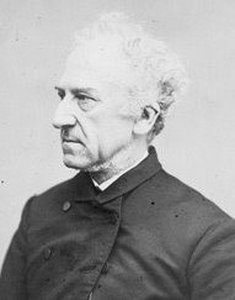
Benjamin Waterhouse Hawkins
1807 - 1894 , United Kingdom
Quick Facts
- Artistic Movement Or Style: Paleoart, Natural History Art
- Artists Or Movements Influenced By This Artist: ['Paleoart Pioneers']
- Date Of Birth: February 8, 1807
- Date Of Death: 1894
- Full Name: Benjamin Waterhouse Hawkins
- Nationality: British
- Notable Artworks:
- Long-Eared Fox
- Hylaeosaurus
- Crystal Palace Dinosaurs
- Place Of Birth: London, UK

