 Preview
 Send
Send Share
Share
 Details

 Download
 Similars
 X-Ray
X-Ray Diaporama
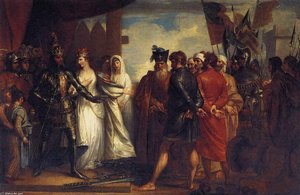
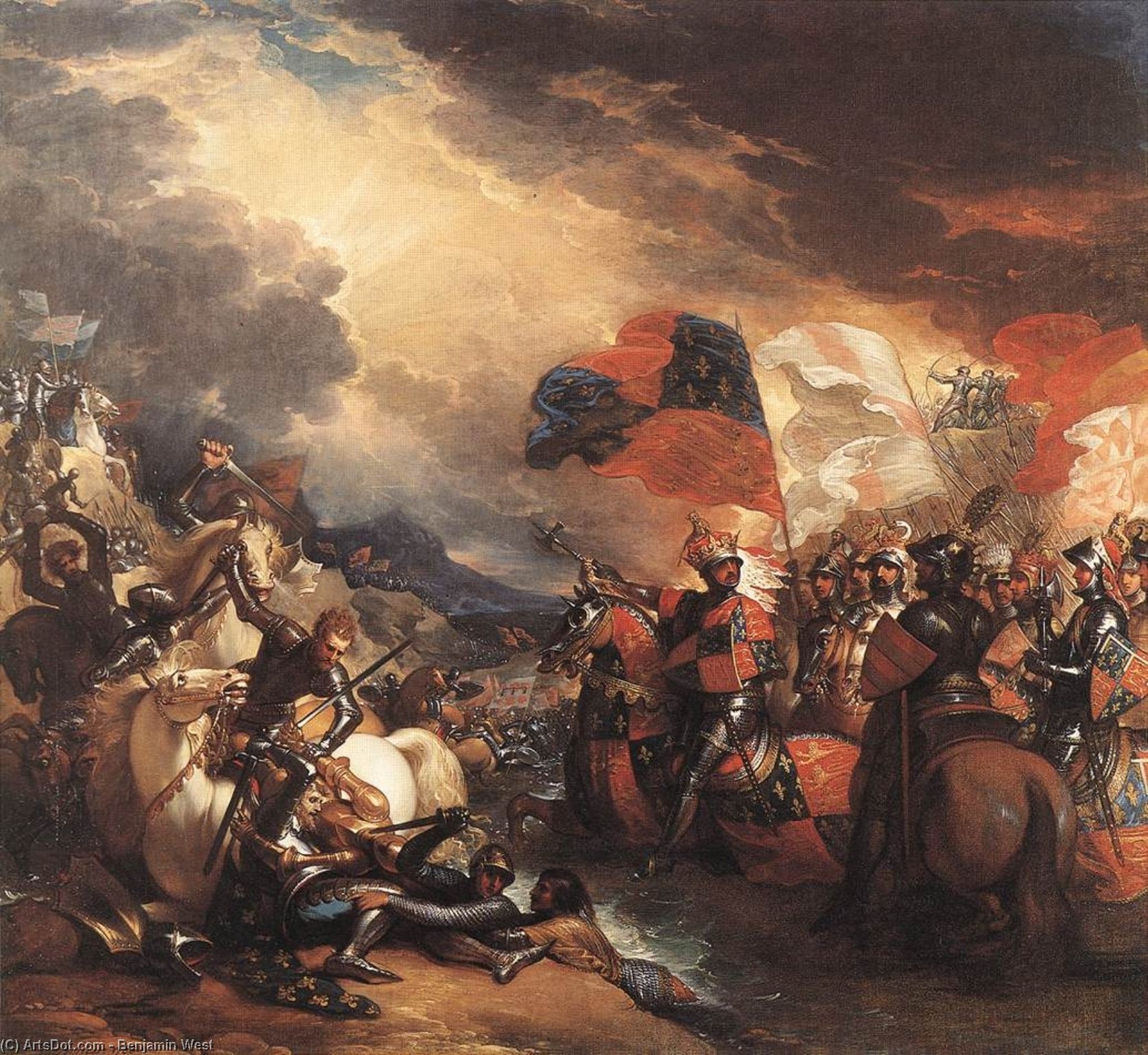
Edward III Crossing the Somme
 Acrylic
- WallArt
- Neoclassicism
 1788
1788 137.0 x 149.0 cm
 Royal Collection
 Read More
Hand Made Oil Reproduction
Hand-painted oil on canvas in your size and frame, made to order by our artists. ( Buy Print Buy Image)




P118B $10

P118H $10

P118W $10

P438Z $10

P508JH $12

P508YH $12

P805H $10

P805Z $10

P919BZ $10

P919G $10

P919XJ $10

P959ZH $10

P968JZ $12

W106C $8

W218G $10

W218JH $8

W218Y $10

W307PJ $10

W316G $10

W316PJ $8

W316Y $10

W398PJ $8

W4111J $10

W500HY $15

W500JH $15

W692G $12

W849H $8

W940BG $15

W953PJ $8




Pick from our preset sizes that match the artwork's original proportions.

You may enter your own dimensions to fit a specific frame or space. If your selected size does not match the original image's proportions, we will either crop the artwork or extend the painting with additional hand-painted elements. A digital mockup will be sent for your approval before production begins.
Please note that the on-screen preview does not reflect the actual cropping or extension. Only the mockup will accurately show the final composition.
While custom sizes are available, we recommend selecting a dimension from the predefined list to preserve the original proportions.
After order, ArtsDot.com team will email client for instructions and provide a mockup preview
Worldwide Delivery () in 3/4 weeks instead of standard 5 weeks. (16 August). No compromise on quality.

Free Worldwide Express Shipping

High-Quality Linen Canvas

Full Shipping Insurance

Customs Tax Refund Guarantee

True Color Matching Guarantee

60-Day Return Policy (Defects Only)

100% Money-Back Guarantee

Bulk Discount Offer
 Glass option is only available in size under 110 CM

Edward III Crossing the Somme
Reproduction Medium
Reproduction Size
-


Total Price
$ 263
Artwork Description
Edward III Crossing The Somme
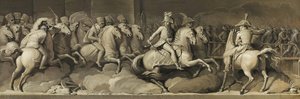
Benjamin West’s monumental depiction of Edward III leading his army across the River Somme is more than just a historical record; it's a masterful embodiment of Neoclassical idealism and a testament to the artist’s profound understanding of human drama. Completed in 1788, commissioned by George III for the audience room at Windsor Castle—a space intended to inspire regal authority—the painting transcends mere chronology, elevating itself into an emblem of courage, leadership, and the triumph of virtue over adversity.- Subject Matter: The scene captures a pivotal moment in the Hundred Years’ War – Edward III's audacious crossing of the Somme river before the Battle of Crécy (August 1346). West meticulously portrays King Edward III, flanked by his son Prince Edward and a contingent of knights, resolutely advancing towards their objective amidst a chaotic battlefield. The composition isn’t merely descriptive; it’s infused with symbolic significance.
- Style & Technique: West adhered to the tenets of Neoclassicism, prioritizing clarity, restraint, and idealized form—a stylistic choice that reflects the Enlightenment's fascination with classical antiquity as a model for moral virtue and civic responsibility. Employing oil paint on canvas, he utilized meticulous brushwork and tonal gradation to convey depth and realism while maintaining an overall sense of grandeur.
- Historical Context: The painting emerged during a period of fervent patriotic fervor in Britain, fueled by anxieties about France’s dominance on the European stage. West skillfully captured the spirit of the era, portraying Edward III as a heroic figure embodying noble ideals—a deliberate strategy to bolster royal prestige and reinforce the narrative of English ascendancy.
- Symbolism: Beyond its depiction of military prowess, the painting is laden with symbolic elements. The Royal Standard held aloft by the knights symbolizes loyalty and devotion to the crown, while Edward III’s unwavering gaze embodies determination and fortitude. Furthermore, the river Somme itself serves as a conduit for conveying the passage of time and the unfolding drama of history.
- Emotional Impact: West's masterful execution evokes a palpable sense of urgency and heroism. The artist skillfully captures the psychological intensity of leadership—the unwavering resolve to overcome obstacles—creating an image that resonates with viewers on an emotional level, inspiring admiration for courage and conviction.
Related Artworks
Artist Biography
A Pioneer Bridging Worlds: The Life and Legacy of Benjamin West
Born in 1738 amidst the burgeoning landscape of colonial Pennsylvania, Benjamin West emerged as a pivotal figure in the transatlantic art world, a painter who skillfully navigated the currents of Neoclassicism and Romanticism while forging a uniquely American artistic identity. His story is one of remarkable self-education, unwavering ambition, and an extraordinary ability to connect with both aristocratic patrons and revolutionary ideals. From humble beginnings—his father an innkeeper in Springfield—West’s innate talent was nurtured by early exposure to the arts, reportedly learning rudimentary techniques from Native Americans before receiving any formal training. This unconventional start instilled within him a spirit of innovation that would characterize his entire career. He quickly established himself as a sought-after portraitist in Philadelphia and New York, but a thirst for deeper artistic knowledge propelled him towards Europe in 1760, embarking on a journey that would irrevocably alter the course of American art.From Italy to London: Forging a Path to Recognition
West’s arrival in Italy marked a turning point. Immersing himself in the artistic heartland of Europe, he studied the masters—Titian, Raphael—and engaged with contemporary Neoclassical thinkers like Anton Rafael Mengs and Angelica Kauffman. This period was crucial in shaping his aesthetic sensibilities, instilling within him an appreciation for classical form and historical narrative. However, it was London that ultimately became his adopted home and artistic center. Arriving in 1763, West swiftly ascended the ranks of the British art scene, captivating audiences with his ambitious canvases and securing the patronage of King George III. This royal endorsement not only provided financial stability but also cemented his position as a leading figure within the establishment. A defining moment came with his election to the Royal Academy in 1769, an institution he would later preside over as President from 1792 until his death. His influence extended beyond his own artistic production; West became a champion for American artists seeking training abroad, offering guidance and support to generations of aspiring painters like Allston, Copley, and Morse.Revolutionizing Historical Painting: Technique and Controversy
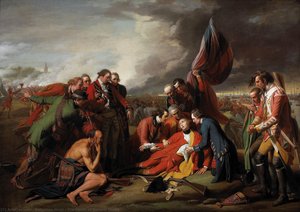
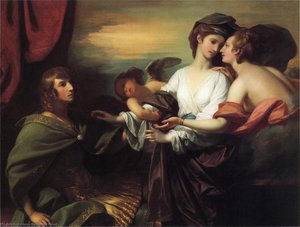
West’s impact on the art world wasn't merely about achieving technical mastery; it was about challenging conventions. He dared to reimagine historical painting, moving away from rigid adherence to classical precedent and embracing a more contemporary sensibility. The Death of General Wolfe (1770), arguably his most famous work, exemplifies this revolutionary approach. By depicting the fallen general surrounded by figures in *contemporary* military attire rather than traditional Roman garb, West sparked considerable debate. Critics questioned the historical accuracy, but audiences were captivated by the immediacy and emotional resonance of the scene. This bold move signaled a shift towards greater realism and narrative power in history painting, influencing countless artists who followed. His style evolved over time, incorporating elements of Romanticism into his later works, yet always retaining a commitment to ambitious composition and detailed execution. Other notable pieces like Thetis Bringing the Armor to Achilles, The Three Sisters, The Fright of Astyanax, and The Cave of Despair demonstrate his versatility and mastery across a range of mythological and historical themes.A Lasting Legacy: Shaping Artistic Identity
Benjamin West’s legacy extends far beyond the canvases he created. He fundamentally altered the landscape of American art, establishing history painting as a viable genre for American artists and fostering a sense of national artistic identity. His presidency of the Royal Academy solidified his influence on British art, promoting innovation and supporting emerging talent.- He championed a more accessible and emotionally engaging style of historical representation.
- His studio became a haven for American artists seeking training in Europe.
- He bridged the gap between Neoclassical ideals and the burgeoning Romantic movement.
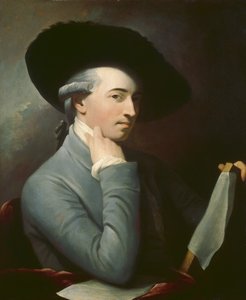
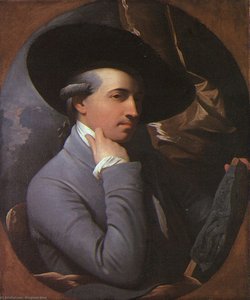
Benjamin West
1738 - 1820 , United States of America
Quick Facts
- Artistic Movement Or Style: Neoclassical, Romanticism
- Artists Or Movements Influenced By This Artist:
- Allston
- Copley
- Morse
- Artists Who Influenced This Artist:
- Titian
- Raphael
- Mengs
- Hamilton
- Kauffman
- Date Of Birth: 1738-10-10
- Date Of Death: 1820-03-11
- Full Name: Benjamin West
- Nationality: American
- Notable Artworks:
- The Death of General Wolfe
- Thetis Bringing Armor
- The Three Sisters
- Fright of Astyanax
- Place Of Birth: Springfield, USA
Related Articles
Edward Hopper's Masterpieces: 25 Iconic Paintings & Their Enduring Legacy | ArtsDot
Explore 25 iconic Edward Hopper paintings & their stories. Discover American realism, urban loneliness, and timeless beauty through his masterpieces. Find museum-quality art reproductions & curated decor ideas at ArtsDot.com.
Benjamin West: Transatlantic Ambition & Shaping American Art
Explore the life & legacy of Benjamin West, pioneering American artist and Royal Academy president. Discover his Neoclassical masterpieces, transatlantic influence, and lasting impact on art history. Learn more at ArtsDot.
British Museum Masterpieces: Explore 25 Iconic Artworks & Decor Inspiration
Journey through 25 iconic artworks at the British Museum, London! Explore masterpieces from Egyptian sculptures to Renaissance paintings & uncover their stories. Find museum-quality art reproductions and curated decor ideas on ArtsDot.com.
Edward Seago: A Life Painted in Light – Nostalgia & the British Landscape Tradition
Explore the life & art of Edward Seago, a celebrated British Impressionist painter known for evocative landscapes & seascapes. Discover his captivating works and find high-quality reproductions at ArtsDot.

Shadow Catcher: Edward S. Curtis & the Ethnographic Portraiture of a Vanishing West
Explore the life & work of Edward S. Curtis, the 'Shadow Catcher,' and his groundbreaking photographic documentation of Native American cultures. Discover iconic images from *The North American Indian* and a critical look at his lasting legacy.