 Preview
 Send
Send Share
Share
 Details

 Download
 Similars
 X-Ray
X-Ray Diaporama
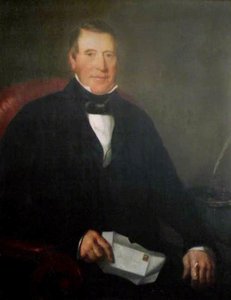
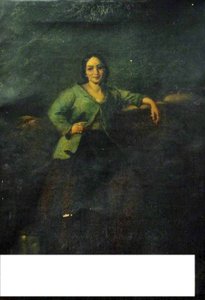
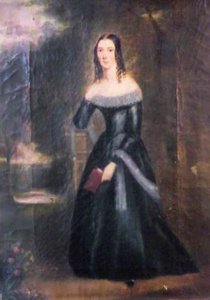
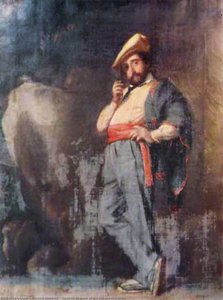
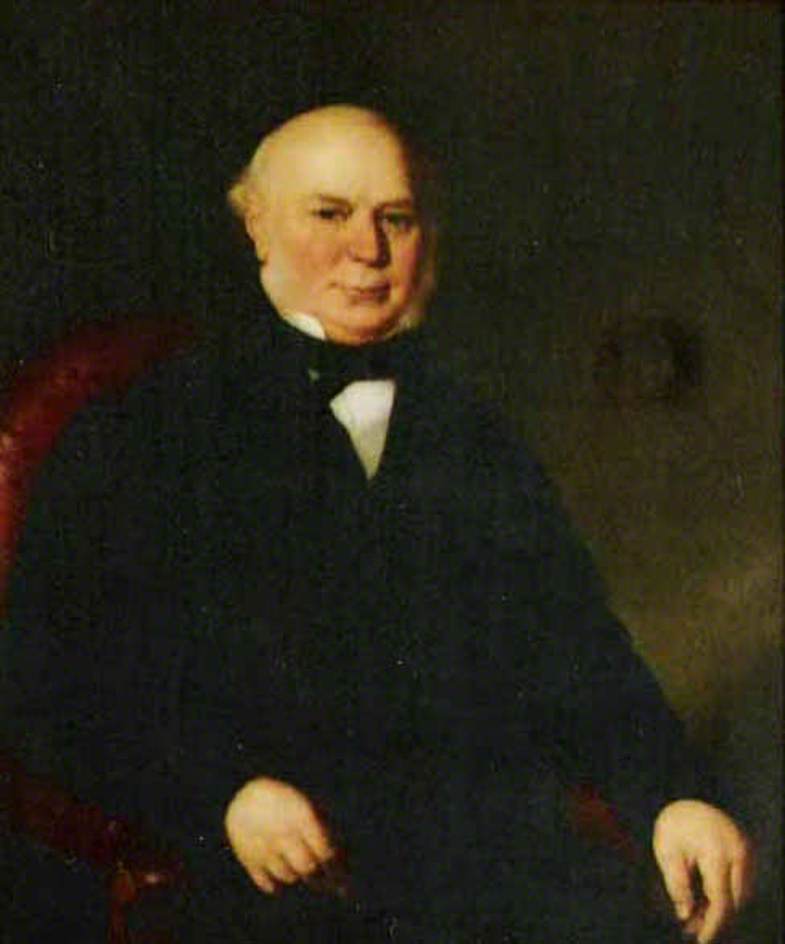
Portrait of an Unknown Man (thought to be Charles Goodwin Smith)
 1869
1869 115.0 x 94.0 cm
 Read More
Hand Made Oil Reproduction
Hand-painted oil on canvas in your size and frame, made to order by our artists. ( Buy Print Buy Image)




































Pick from our preset sizes that match the artwork's original proportions.

You may enter your own dimensions to fit a specific frame or space. If your selected size does not match the original image's proportions, we will either crop the artwork or extend the painting with additional hand-painted elements. A digital mockup will be sent for your approval before production begins.
Please note that the on-screen preview does not reflect the actual cropping or extension. Only the mockup will accurately show the final composition.
While custom sizes are available, we recommend selecting a dimension from the predefined list to preserve the original proportions.
After order, ArtsDot.com team will email client for instructions and provide a mockup preview
Worldwide Delivery () in 3/4 weeks instead of standard 5 weeks. (27 August). No compromise on quality.

Free Worldwide Express Shipping

High-Quality Linen Canvas

Full Shipping Insurance

Customs Tax Refund Guarantee

True Color Matching Guarantee

60-Day Return Policy (Defects Only)

100% Money-Back Guarantee

Bulk Discount Offer
 Glass option is only available in size under 110 CM

Portrait of an Unknown Man (thought to be Charles Goodwin Smith)
Reproduction Medium
Reproduction Size
-


Total Price
$ 263
Related Artworks








Artist Biography
The Scientific Eye and the Soul of Nature
In the grand tapestry of nineteenth-century American art, few threads are as delicately woven as those left by Bennett Hubbard. A pioneer of animal portraiture, Hubbard possessed a rare ability to bridge the gap between rigorous scientific observation and the profound emotional resonance of the natural world. Born in 1806 in the rural landscapes of Shrewsbury Township, Vermont, his early life was shaped by the quiet, disciplined rhythms of New England. The son of Silas Hubbard, a man who balanced the roles of farmer and educator, Bennett was raised in an environment where the study of the earth was inseparable from the appreciation of its beauty. This dual heritage of intellect and instinct would become the cornerstone of his artistic identity.
Hubbard’s journey toward mastery was uniquely paved by a foundation in the sciences. His studies at Yale University, where he graduated with honors in mathematics and natural philosophy in 1829, provided him with more than just academic prestige; they gifted him with an analytical lens through which to view his subjects. This mathematical precision allowed him to master the complexities of anatomy, skeletal structure, and perspective. When he turned his brush toward the animal kingdom, he did not merely paint a likeness; he rendered the very essence of life, capturing the tension in a muscle or the soft light reflecting off a coat with an accuracy that felt almost biological in its depth.
A Romantic Vision Amidst the Hudson River School
As the American landscape began to find its voice through the Hudson River School, Hubbard found himself at the heart of a burgeoning aesthetic revolution. While contemporaries like Frederic Church and Asher Durand sought to capture the sublime grandeur of the American wilderness, Hubbard applied these Romantic principles to more intimate subjects. He embraced the movement's fascination with dramatic lighting, atmospheric depth, and the spiritual significance of the natural world, yet he often found his most profound expressions in the quiet dignity of a single creature or the soulful gaze of a portrait subject.
His work serves as a beautiful intersection of several key artistic elements:
- Anatomical Precision: Utilizing his scientific training to portray animals with unparalleled structural integrity.
- Atmospheric Mastery: Incorporating the soft, luminous light characteristic of the Hudson River School to evoke mood and emotion.
- Narrative Depth: Infusing portraits of both humans and animals with a sense of history and individual character.
Through his landscapes and animal studies, Hubbard contributed to a larger national dialogue about the identity of the American wilderness. His paintings were not merely records of fauna or flora but were meditations on the interconnectedness of all living things. Even as he worked within the shadows of more famous landscape painters, his ability to elevate the "lesser" genres of animal and portrait painting into the realm of high art ensured his lasting significance in the American canon.
Legacy of a Master Observer
Though the passage of time occasionally obscured his name behind the giants of his era, the legacy of Bennett Hubbard remains vibrantly alive for those who seek the truth in nature. His ability to marry the mathematical certainty of his Yale education with the Romantic passion of the mid-1800s created a body of work that feels both timeless and deeply rooted in its historical moment. Today, collectors and scholars look to Hubbard not just as a skilled technician, but as an artist who understood that to truly see a subject, one must understand both its form and its spirit.
His contributions helped pave the way for future generations of American naturalists and animalier artists, proving that the smallest detail—the curve of a horse's neck or the light in a stranger's eye—could hold as much majesty as the most expansive mountain vista. In the annals of art history, Hubbard remains a vital figure, reminding us that the profound is often found in the meticulous observation of the world around us.
bennett hubbard
1806 - 1870
Quick Facts
- Artistic Movement Or Style: Hudson River School
- Artists Or Movements Influenced By This Artist: ['Romanticism']
- Artists Who Influenced This Artist: ['Thomas Cole']
- Date Of Birth: 1806
- Date Of Death: 1870
- Full Name: Bennett Hubbard
- Nationality: American
- Notable Artworks: ['The Catskill Mountains']
- Place Of Birth: Philadelphia, Pennsylvania