 Preview
 Send
Send Share
Share
 Details

 Download
 Similars
 X-Ray
X-Ray Diaporama
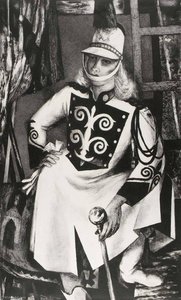
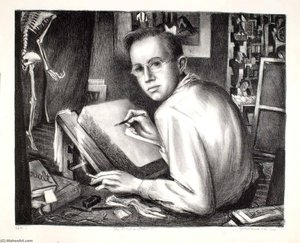
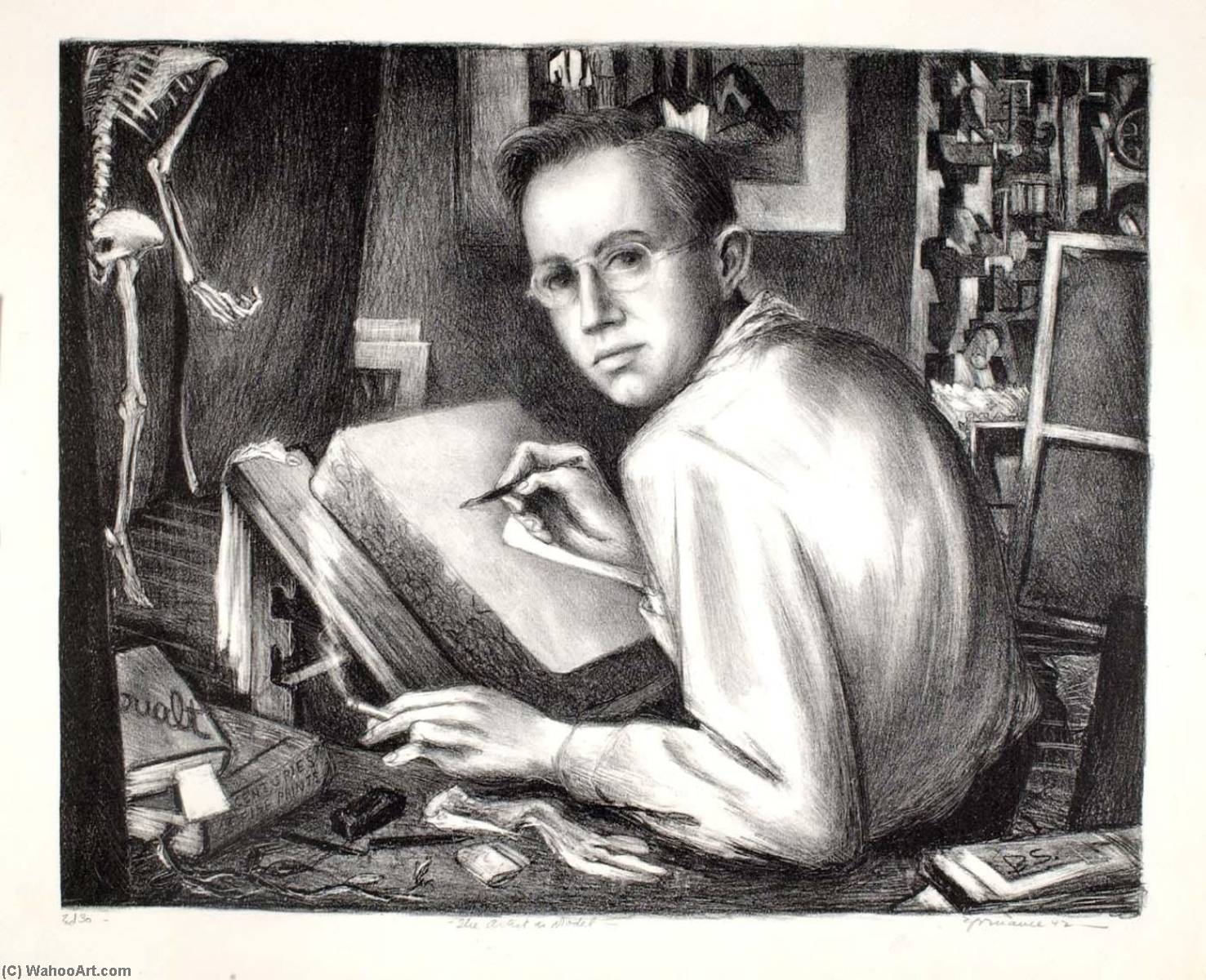
The Artist as Model (The Artist at Stone)
 1942
1942 29.0 x 36.0 cm
 Read More
Giclée / Art Print
Museum-quality giclée or canvas print with fast production and flexible finish options. ( Buy Hand Made Painting Buy Image)




































Pick from our preset sizes that match the artwork's original proportions.

You may enter your own dimensions to fit a specific frame or space. If your selected size does not match the original image's proportions, we will either crop the artwork or extend the image with a mirrored or solid-fill edge. A digital mockup will be sent for your approval before production begins.
Please note that the on-screen preview does not reflect the actual cropping or extension. Only the mockup will accurately show the final composition.
While custom sizes are available, we recommend selecting a dimension from the predefined list to preserve the original proportions.
Worldwide Delivery () in 2 weeks instead of standard 4/5 weeks. (27 August)

Free Worldwide Express Shipping

High-Quality Linen Canvas

Full Shipping Insurance

Customs Tax Refund Guarantee

True Color Matching Guarantee

60-Day Return Policy (Defects Only)

100% Money-Back Guarantee

Bulk Discount Offer
 Glass option is only available in size under 110 CM

The Artist as Model (The Artist at Stone)
Giclée / Art Print
Reproduction Size
-


Total Price
$ 63
Related Artworks






Artist Biography
The Visionary Lithographer: The Life and Legacy of Benton Spruance
Benton Murdoch Spruance (1904–1967) remains a luminous figure in the tapestry of American printmaking, a man whose artistic journey was as much about technical precision as it was about emotional resonance. Born in Philadelphia, Pennsylvania, Spruance’s early life was shaped by the architectural rigor of his studies at the University of Pennsylvania. This foundational training in structure and form would later manifest in his art as a profound mastery of composition, allowing him to balance complex geometric arrangements with a soft, lyrical sensibility. His transition from an architectural clerk to a celebrated artist marks a transformative era in mid-century American art, where the boundaries between structural design and visual storytelling began to blur. As he matured, Spruance sought deeper aesthetic truths beyond the borders of his home city. A pivotal moment occurred in 1928 during his time in Paris at the studio of Jacques and Edmond Desjobert. It was here that he first encountered the transformative power of color lithography. This encounter ignited a lifelong obsession with the interplay of light, pigment, and texture. Unlike the starkness of monochrome printmaking, color lithography offered Spruance a palette of infinite nuance, enabling him to layer tones in a way that captured the ephemeral qualities of dusk, the rhythmic energy of jazz, and the weight of mythological symbolism.A Mastery of Color and Form
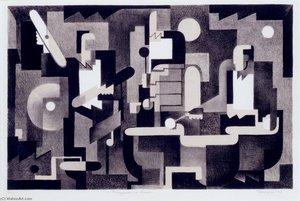
The evolution of Spruance’s technique was characterized by an experimental spirit that pushed the limits of the lithographic stone. He became known as "the dean of Philadelphia lithographers," a title earned through his meticulous research into printing methods and his ability to achieve breathtaking visual effects through complex layering. His work often bridged the gap between American Regionalism and a more universal, symbolic language. While some of his pieces captured the quiet, rhythmic pulse of local landscapes and urban streets—evoking the nostalgic beauty of the interwar period—others delved into the profound realms of mythology and the human condition. His ability to translate movement and sound into visual form is perhaps most strikingly realized in works such as "Arrangement for Drums." In this piece, Spruance utilizes nearly abstract geometric shapes and varying textures to create a staccato rhythm that mirrors the very percussion it depicts. This capacity to marry the physical properties of printmaking with the intangible essence of music or myth demonstrates his unique position in the American art canon. His compositions were never merely decorative; they were intellectual exercises in capturing the essence of a subject, whether through the haunting stillness of a city street at twilight or the bold, expressive lines of a memorial.Legacy and Educational Impact
Beyond the printed page, Spruance’s contribution to the American art landscape was deeply rooted in his commitment to the next generation of creators. His influence extended far beyond his own studio through his significant roles in academia. As a long-term faculty member and eventually the chair of the Arts Department at Beaver College, and later as the chair of the Printmaking Department at the Philadelphia College of Art, he helped shape the pedagogical foundations of printmaking in the region. He did not merely teach technique; he fostered an environment where technical proficiency met intellectual curiosity. The historical significance of Benton Spruance lies in his ability to navigate the tension between tradition and modernity. He drew from the classical aesthetics of the Beaux-Arts tradition while embracing the innovative, experimental possibilities of 20th-century print technology. Today, his works reside in prestigious collections, including the Smithsonian American Art Museum, serving as enduring testaments to a life dedicated to the pursuit of visual harmony. His legacy is found not only in the vibrant colors of his lithographs but in the lasting impact he left on the community of Philadelphia artists and the broader trajectory of American printmaking history.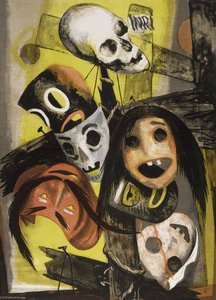
benton spruance
1904 - 1967
Quick Facts
- Artistic Movement Or Style: Regionalism
- Artists Or Movements Influenced By This Artist: ['Walter L. Wolf']
- Artists Who Influenced This Artist:
- Jacques Desjobert
- Jerome Kaplan
- Samuel Maitin
- Date Of Death: 1967
- Full Name: Benton Murdoch Spruance
- Nationality: American
- Notable Artworks:
- Prelude to Rest
- Memorial
- Arrangement for Drums
- Place Of Birth: Philadelphia, Pennsylvania