 Preview
 Send
Send Share
Share
 Details

 Download
 Similars
 X-Ray
X-Ray Diaporama
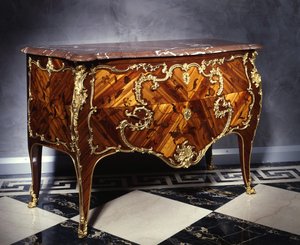
The Coventry Secrétaire
 Oil
Oil- WallArt
- Rococo
 1763
1763- Early Modern
 131.0 x 104.0 cm
 Legion of Honor
 Read More
Giclée / Art Print
Museum-quality giclée or canvas print with fast production and flexible finish options. ( Buy Hand Made Painting Buy Image)




P118B $10

P118H $10

P118W $10

P438Z $10

P508JH $12

P508YH $12

P805H $10

P805Z $10

P919BZ $10

P919G $10

P919XJ $10

P959ZH $10

P968JZ $12

W106C $8

W218G $10

W218JH $8

W218Y $10

W307PJ $10

W316G $10

W316PJ $8

W316Y $10

W398PJ $8

W4111J $10

W500HY $15

W500JH $15

W692G $12

W849H $8

W940BG $15

W953PJ $8




Pick from our preset sizes that match the artwork's original proportions.

You may enter your own dimensions to fit a specific frame or space. If your selected size does not match the original image's proportions, we will either crop the artwork or extend the image with a mirrored or solid-fill edge. A digital mockup will be sent for your approval before production begins.
Please note that the on-screen preview does not reflect the actual cropping or extension. Only the mockup will accurately show the final composition.
While custom sizes are available, we recommend selecting a dimension from the predefined list to preserve the original proportions.
Worldwide Delivery () in 2 weeks instead of standard 4/5 weeks. (23 August)

Free Worldwide Express Shipping

High-Quality Linen Canvas

Full Shipping Insurance

Customs Tax Refund Guarantee

True Color Matching Guarantee

60-Day Return Policy (Defects Only)

100% Money-Back Guarantee

Bulk Discount Offer
 Glass option is only available in size under 110 CM

The Coventry Secrétaire
Giclée / Art Print
Reproduction Size
-


Total Price
$ 63
Collectible Description
A Masterpiece of Rococo Elegance
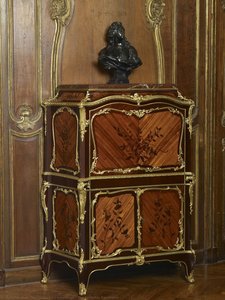
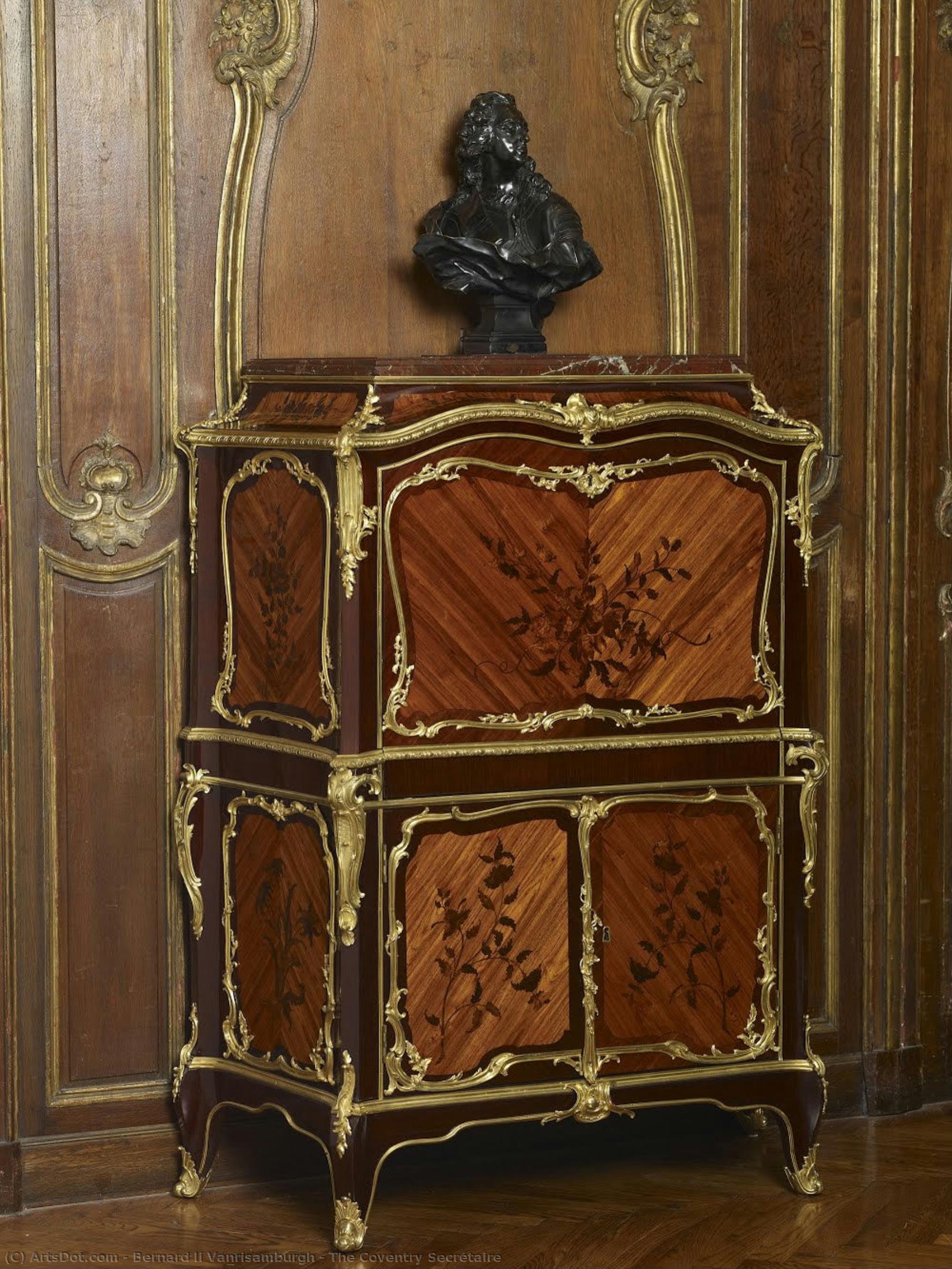
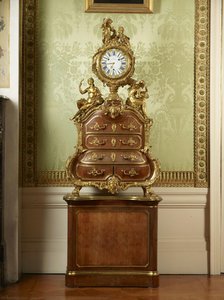
In the grand tapestry of eighteenth-century French craftsmanship, few pieces command attention with such quiet, dignified authority as The Coventry Secrétaire. Created in 1763 by the illustrious Parisian ébéniste Bernard II van Risamburgh, this work is far more than a mere piece of furniture; it is a sculptural triumph that bridges the gap between functional cabinetry and fine art. The secretaire stands as a testament to the Rococo era's obsession with movement, texture, and the seamless integration of organic forms into domestic luxury. To behold this piece is to step into the gilded salons of pre-revolutionary France, where every surface was an opportunity for storytelling through wood and ornament.
The composition of the work is anchored by a profound sense of structural complexity. The cabinet itself is a marvel of woodworking, featuring intricate carvings that dance across its wooden surfaces, catching the light in a way that suggests life within the grain. Most striking is the presence of a sculpted man's head perched atop the cabinet—a bold, theatrical element that elevates the piece from a utilitarian object to a centerpiece of high drama. This sculptural flourish serves as a focal point, drawing the eye upward and inviting the viewer to contemplate the intersection of human form and artisanal skill.
The Legacy of a Parisian Master
To understand the soul of this secretaire, one must look to the hands that shaped it. Bernard II van Risamburgh was a master of the Faubourg Saint-Antoine, a district renowned for producing the most exquisite treasures of the Rococo period. Carrying forward a lineage of Dutch cabinetmaking tradition into the heart of Paris, Van Risamburgh mastered the delicate art of marquetry and the sophisticated use of ornamentation. His work, often identified by the subtle "BVRB" stamp, represents the pinnacle of ébénisterie, where technical innovation met an almost poetic sensibility.
The technique displayed in The Coventry Secrétaire reflects a period when the mastery of wood was used to mimic the fluidity of nature. The carver's chisel and the polisher's cloth worked in harmony to create a surface that feels both tactile and ethereal. For the modern collector or interior designer, this piece offers an unparalleled sense of historical weight. It is not merely an object to be placed in a room; it is a conversation starter that brings with it the prestige of the French Enlightenment and the refined aesthetic of a bygone age of splendor.
A Vision for Modern Interiors
Integrating a high-quality reproduction of such a significant work into a contemporary space offers a unique opportunity to balance modern minimalism with historical richness. For an interior designer, The Coventry Secrétaire serves as a "statement piece" that provides texture and soul to a room. Whether placed in a sunlit library or positioned as a focal point in a sophisticated hallway, its intricate details and commanding presence can anchor an entire design scheme.
The emotional impact of the piece lies in its ability to evoke nostalgia for craftsmanship and permanence. In an era of mass production, the visible dedication to detail found in Van Risamburgh's work resonates deeply with those who value authenticity and artistry. Owning a reproduction of this caliber allows one to surround themselves with the elegance of 1763, ensuring that the spirit of French Rococo continues to inspire and enchant the modern home.
Related Artworks
Artist Biography
A Parisian Master of Rococo: Bernard II van Risamburgh
Bernard II van Risamburgh, a name whispered with reverence among connoisseurs of eighteenth-century French furniture, stands as one of the most celebrated ébénistes of the Rococo period. Though his full identity remained somewhat obscured for centuries—known primarily by the stamp “BVRB” on his exquisite creations—his work embodies the era’s spirit of refined luxury, technical innovation, and playful elegance. Born in Paris sometime after 1696 to a family with deep roots in Dutch cabinetmaking tradition, van Risamburgh inherited not only a craft but also a lineage of skilled artisans who had already established themselves within the bustling Parisian furniture-making district of the Faubourg Saint-Antoine.
His father, Bernard I van Risamburgh, arrived in Paris in 1696 and quickly integrated into the local guild system. The younger Bernard’s formal training likely occurred within his father's workshop, absorbing the techniques and aesthetic sensibilities of the time. However, it was Bernard II who truly elevated the family legacy, becoming a master craftsman by 1730. Unlike many of his contemporaries, van Risamburgh did not operate independently but relied entirely on collaborations with the powerful marchands-merciers—the sophisticated dealer-craftsmen who dictated trends and catered to the aristocratic elite.
The Art of Collaboration and Royal Patronage
This unique working relationship shaped van Risamburgh’s career. He rarely dealt directly with clients, instead fulfilling commissions channeled through figures like Lazare Duvaux and Thomas-Joachim Hébert. These marchands supplied the exotic materials—Japanese lacquer panels, precious woods, porcelain plaques—and dictated the overall designs, while van Risamburgh brought his unparalleled skill to their execution. This system allowed him to focus on the artistry of construction and embellishment, resulting in furniture that was both technically brilliant and visually stunning.
Van Risamburgh’s talent quickly attracted royal patronage. In 1737, a commode veneered with lacquer panels—supplied by Hébert—was delivered for use by Queen Marie Leszczyńska at Fontainebleau. This commission marked a turning point in his career, establishing him as a preferred artisan among the highest echelons of French society. Furniture bearing his stamp soon graced the residences of Madame de Pompadour, further solidifying his reputation and influence.
Innovation in Materials and Technique
What truly distinguished van Risamburgh’s work was his innovative approach to materials and technique. He pioneered the use of “trails of leaves and flowers” marquetry—intricate designs created from precisely cut pieces of quartered veneer, often purplewood highlighted with stained horn and ivory. His mastery of lacquer paneling, sourced primarily from Japan through Dutch traders in Amsterdam, transformed furniture into shimmering works of art. He wasn’t simply applying these materials; he was reimagining them, skillfully integrating them into harmonious compositions.
Beyond marquetry and lacquer, van Risamburgh embraced the emerging trend of porcelain plaques—delicate surfaces painted with idyllic scenes or intricate floral motifs—incorporating them into his designs with remarkable finesse. He also developed a distinctive style of gilt-bronze mounts, characterized by scrolling rocaille forms that echoed the naturalistic curves of Rococo ornamentation. These mounts were often unique to each commission, demonstrating his commitment to bespoke craftsmanship.
A Lasting Legacy
Despite his prominence, van Risamburgh’s identity remained largely unknown until the mid-twentieth century when archival research revealed the full extent of his family history and contributions. Today, his furniture is celebrated in museums worldwide—from the Getty Museum to the Metropolitan Museum of Art—as exemplars of eighteenth-century French luxury.
His influence extended beyond his own lifetime, inspiring generations of cabinetmakers with his technical skill, innovative designs, and unwavering commitment to quality. Bernard II van Risamburgh wasn’t merely a craftsman; he was an artist who transformed functional objects into symbols of status, taste, and the refined elegance of the Rococo era. His work continues to captivate and inspire, offering a glimpse into a world of unparalleled artistry and opulence.
bernard ii vanrisamburgh
France
Quick Facts
- Artistic Movement Or Style: World Goes Pop
- Artists Or Movements Influenced By This Artist: ['Influenced by pop art movement']
- Artists Who Influenced This Artist: ['Influenced by diverse artists in The World Goes Pop exhibition']
- Date Of Death: Living
- Notable Artworks: ['Various works featured in The World Goes Pop exhibition']
- Place Of Birth: WahooArt
Related Articles

Bronze Sculptures That Defined Art History | ArtsDot
Journey through art history with our Top 10 bronze sculptures! Explore masterpieces by Rodin, Michelangelo & more. Discover stories behind iconic statues and find museum-quality reproductions for your home decor at ArtsDot.com.

The Enduring Form: Exploring Themes & Techniques in Sculpture Across Historical Periods
Explore the rich history of sculpture from ancient masterpieces to contemporary innovations. Discover key techniques, influential artists & investment potential for discerning art collectors.
The Enduring Form: Sculpture Across History, Technique & Emotional Resonance
Explore the rich history of sculpture with ArtsDot. Discover key techniques, influential artists & investment potential for discerning collectors. Expert insights into valuing and collecting timeless masterpieces.

Bronze Age to Modern Masters: 10 Sculptures That Redefined Art | ArtsDot
Journey through art history with 10 legendary bronze sculptures – from Michelangelo's David to Rodin’s Thinker. Explore the stories, techniques & timeless beauty of these masterpieces. Find museum-quality reproductions & elevate your home decor on ArtsDot.com.
The Enduring Allure of Marble in Art History: From Classical Sculpture to Modern Abstraction
Explore the captivating history of marble sculpture from ancient Greece to modern art. Discover renowned artists like Canova & Michelangelo, carving techniques, and investment insights at ArtsDot.