 Preview
 Send
Send Share
Share
 Details

 Download
 Similars
 X-Ray
X-Ray Diaporama
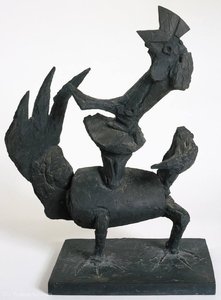
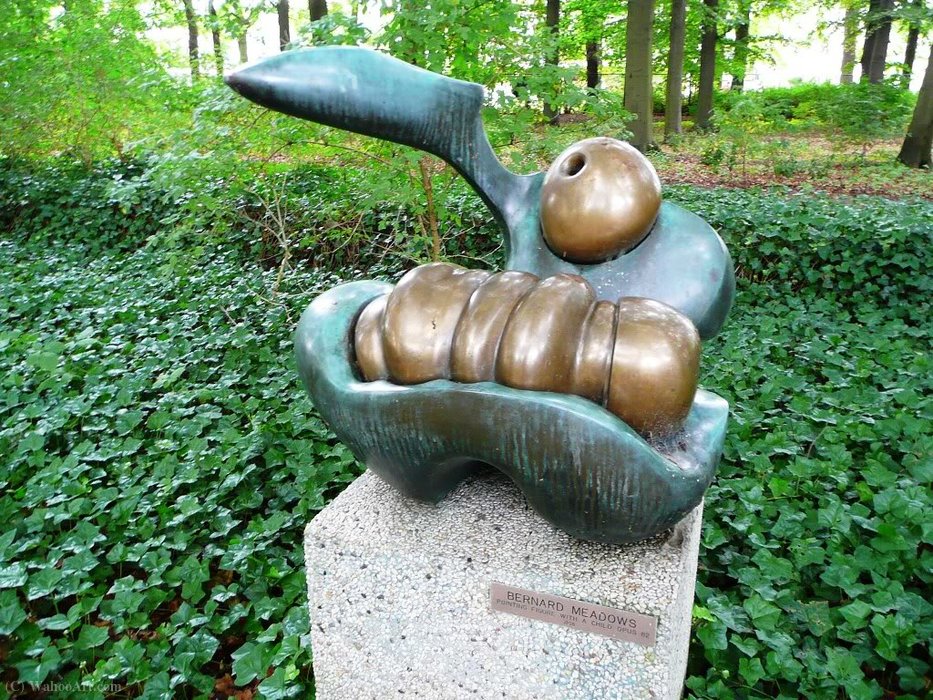
Ukazuyushchaya figura srebyon komopus - (82)
 Read More
Hand Made Oil Reproduction
Hand-painted oil on canvas in your size and frame, made to order by our artists. ( Buy Print Buy Image)




































Pick from our preset sizes that match the artwork's original proportions.

You may enter your own dimensions to fit a specific frame or space. If your selected size does not match the original image's proportions, we will either crop the artwork or extend the painting with additional hand-painted elements. A digital mockup will be sent for your approval before production begins.
Please note that the on-screen preview does not reflect the actual cropping or extension. Only the mockup will accurately show the final composition.
While custom sizes are available, we recommend selecting a dimension from the predefined list to preserve the original proportions.
After order, ArtsDot.com team will email client for instructions and provide a mockup preview
Worldwide Delivery () in 3/4 weeks instead of standard 5 weeks. (1 September). No compromise on quality.

Free Worldwide Express Shipping

High-Quality Linen Canvas

Full Shipping Insurance

Customs Tax Refund Guarantee

True Color Matching Guarantee

60-Day Return Policy (Defects Only)

100% Money-Back Guarantee

Bulk Discount Offer
 Glass option is only available in size under 110 CM

Ukazuyushchaya figura srebyon komopus - (82)
Reproduction Medium
Reproduction Size
-


Total Price
$ 263
Related Artworks


Artist Biography
The Sculptor of Angular Anxiety
Bernard Meadows (1915–2005) stands as a pivotal figure in the landscape of British modernist sculpture, an artist whose work serves as a profound visceral response to the fractured psyche of the post-war era. Born in Norwich, his creative journey was marked by an early and transformative encounter with the titan of modernism, Henry Moore. This relationship, which began when Meadows became Moore’s first assistant in 1936, was far more than a professional apprenticeship; it was a shared exploration of form, space, and the primal essence of life. While his early years were steeped in the surrealist currents flowing through London, Meadows would eventually carve out a distinct identity that moved away from the organic smoothness of his mentor toward something much more jagged, tense, and psychologically charged.
The trajectory of Meadows’s life was irrevocably altered by the tides of global conflict. Though he initially registered as a conscientious objector, the invasion of the Soviet Union in 1941 prompted a shift in duty, leading him to serve in the Royal Air Force. Stationed in the remote Cocos Islands for air-sea rescue operations, Meadows encountered a world of colossal, alien-like crabs and strange, biological geometries. This period of isolation and observation left an indelible mark on his artistic vision. The skeletal, armored, and predatory anatomy of these creatures would later manifest in his sculptures as a fascination with animalistic forms that felt both ancient and deeply unsettling, mirroring the pervasive anxieties of the Cold War.
The Geometry of Fear
As the mid-century approached, Meadows emerged as a leading voice in what art critic Herbert Read famously termed the "Geometry of Fear." This loose-knit group of sculptors—including contemporaries like Eduardo Paolozzi and Lynn Chadwick—sought to move beyond the more rounded, pastoral abstractions of the previous generation. Instead, they embraced an aesthetic of sharp angles, spindly limbs, and aggressive textures. Meadows’s work from this period captures a sense of precariousness; his figures often seem caught in moments of sudden movement or existential dread. Through the use of bronze and other resilient materials, he translated the tension of a world living under the shadow of nuclear threat into physical, tactile forms.
His technical mastery allowed him to bridge the gap between the monumental and the intimate. While he played an instrumental role in realizing some of Moore’s most ambitious projects, such as Three Standing Figures (1947) and Family Group (1949), his independent achievements were equally significant. His ability to manipulate metal and stone allowed for a unique interplay of light and shadow, where the "void" within a sculpture became just as communicative as the solid mass. This mastery was celebrated on international stages, most notably at the Venice Biennale in 1952, where his work helped define the cutting edge of British contemporary art.
Legacy and Artistic Evolution
Beyond the visceral impact of his post-war works, Meadows’s career was characterized by a lifelong commitment to the evolution of sculptural language. As a professor at the Royal College of Art for two decades, he influenced generations of sculptors, passing on a rigorous understanding of form and a respect for the material's inherent character. His later work continued to probe the complexities of the human and animal condition, often returning to themes of vulnerability and resilience.
The enduring significance of Bernard Meadows lies in his ability to capture the spirit of an age. To look upon his sculptures is to witness a dialogue between:
- Nature and Trauma: The way biological forms are reinterpreted through the lens of wartime experience.
- Abstraction and Figuration: The delicate balance between recognizable anatomy and pure, geometric expression.
- The Individual and the Era: How a single artist’s vision can encapsulate the collective psychological state of a global community.
Today, Meadows is remembered not merely as an assistant to a master, but as a formidable sculptor in his own right—an artist who dared to find beauty in the jagged, the angular, and the profoundly anxious.
bernard meadows
1915 - 2005
Quick Facts
- Artistic Movement Or Style: Modernist Sculpture
- Artists Or Movements Influenced By This Artist: Geometry of Fear
- Artists Who Influenced This Artist: Henry Moore
- Date Of Birth: 1915
- Date Of Death: 2005
- Full Name: Bernard Meadows
- Nationality: British
- Notable Artworks:
- Startled Bird
- The Lovers
- Place Of Birth: Norwich, England