

 Preview
 Send
Send Share
Share
 Details

 Download
 Similars
 X-Ray
X-Ray Diaporama
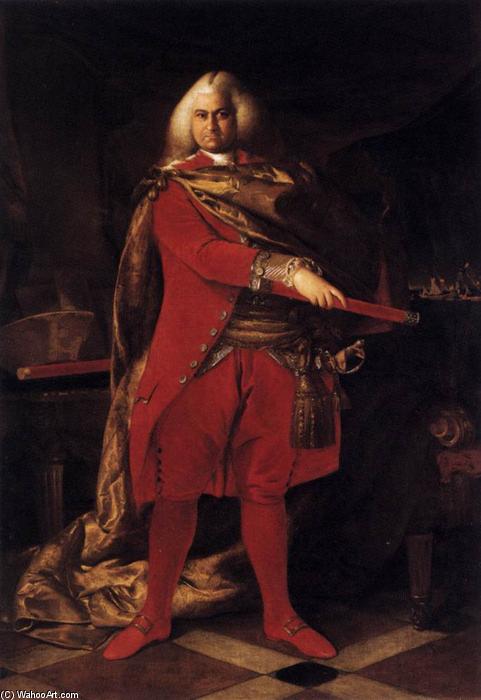
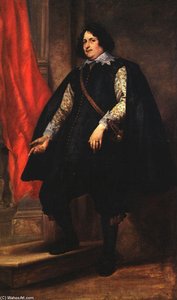
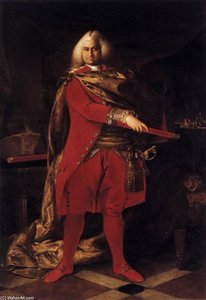
Portrait of the Nobleman Francesco Falier

 Read More
Giclée / Art Print
Museum-quality giclée or canvas print with fast production and flexible finish options. ( Buy Hand Made Painting Buy Image)




































Pick from our preset sizes that match the artwork's original proportions.

You may enter your own dimensions to fit a specific frame or space. If your selected size does not match the original image's proportions, we will either crop the artwork or extend the image with a mirrored or solid-fill edge. A digital mockup will be sent for your approval before production begins.
Please note that the on-screen preview does not reflect the actual cropping or extension. Only the mockup will accurately show the final composition.
While custom sizes are available, we recommend selecting a dimension from the predefined list to preserve the original proportions.
Worldwide Delivery () in 2 weeks instead of standard 4/5 weeks. (3 September)

Free Worldwide Express Shipping

High-Quality Linen Canvas

Full Shipping Insurance

Customs Tax Refund Guarantee

True Color Matching Guarantee

60-Day Return Policy (Defects Only)

100% Money-Back Guarantee

Bulk Discount Offer
 Glass option is only available in size under 110 CM

Portrait of the Nobleman Francesco Falier
Giclée / Art Print
Reproduction Size
-


Total Price
$ 63
Related Artworks






Artist Biography
The Soul of the Baroque: The Life and Legacy of Bernardino Castelli
In the vibrant, dramatic tapestry of the Italian Baroque period, few artists managed to weave together the intimacy of human portraiture with the profound gravity of religious devotion as seamlessly as Bernardino Castelli. Born in the rugged beauty of Valle d’Aosta in 1646, Castelli’s journey was one of constant movement and expanding horizons, leading him from the quiet corners of northern Italy to the grand artistic epicenters of Florence, Venice, and Bologna. His life was defined by a remarkable duality: he possessed the technical precision required to capture the fleeting nuances of a noble face and the spiritual depth necessary to render the divine presence in his sacred iconography.
The foundations of Castelli’s mastery were laid in Feltre, where he studied under the guidance of Giovanni Antonio. This early apprenticeship provided him with the essential vocabulary of light and shadow that would later characterize his work. A pivotal moment in his formative years occurred at the Villa Franzoia in Quero, where his contributions to the decoration of this lavish estate caught the eye of influential patrons. It was here that the trajectory of his career shifted toward the ecclesiastical sphere; through the patronage of Bishop Paolo Francesco Giustiniani, Castelli found himself thrust into the heart of religious life in Treviso. This relationship did more than provide financial stability; it offered him a window into the spiritual psyche of the era, inspiring his first major successes, including a celebrated portrait of the Bishop himself.
A Master of Likeness and Devotion
As Castelli’s reputation grew, so too did the breadth of his artistic language. He became a sought-after chronicler of the era's most prominent figures, moving through the halls of power with an ease that allowed him to capture not just the physical likeness, of bishops and nobles, but their very essence. His ability to convey character through subtle shifts in expression and texture made him a premier portraitist of his time. Yet, even as he mastered the secular art of the portrait, he remained deeply tethered to the sacred. He was often whispered about in artistic circles as the "painter of beautiful Madonnas," a testament to his ability to infuse religious figures with a tender, accessible humanity that resonated with the fervent piety of the 17th and 18th centuries.
His repertoire was vast and varied, reflecting the diverse landscapes of his career:
- Ecclesiastical Portraits: Capturing the dignity and authority of various bishops across Tuscany and the Veneto.
- Sacred Iconography: Creating emotive depictions of saints, such as Lorenzo Justiniani and Saint Joseph, which served as focal points for prayer and meditation.
- The Venetian Influence: His time in Venice saw him join the prestigious Accademia di Belle Arti, where his work caught the eyes of the highest echelons of society, including Doge Paolo Renier and even Popes Pius VI and Pius VII.
Historical Significance and Artistic Endurance
The historical significance of Bernardino Castelli lies in his role as a bridge between the rigid traditions of the past and the emotive, theatrical energy of the late Baroque. His movement through the great academic centers—from the Accademia Clementina in Bologna to the prestigious studios of Venice—allowed him to synthesize different regional styles into a cohesive, personal vision. He did not merely record history; he participated in its visual creation, decorating churches and palaces with a hand that was both technically rigorous and emotionally resonant.
Though the centuries have passed, the legacy of Castelli remains etched in the silent halls of the museums and cathedrals where his works reside. He stands as a testament to the power of the artist to navigate the complexities of patronage and piety, leaving behind a body of work that continues to invite viewers into a world of profound beauty and spiritual contemplation. His life, spanning from the mountains of Valle d’Aosta to the lagoons of Venice, remains a brilliant chapter in the enduring story of Italian art.
Bernardino Castelli
1646 - 1725 , Italy
Quick Facts
- Artistic Movement Or Style: Renaissance Art
- Artists Or Movements Influenced By This Artist: ['Venetian Painter']
- Artists Who Influenced This Artist: ['Giovanni Antonio']
- Date Of Birth: 1646
- Full Name: bernardino castelli
- Nationality: Italian
- Notable Artworks: ['Portrait of the Nobleman Francesco Falier']
- Place Of Birth: Valle d'Aosta, Italy

