 Preview
 Send
Send Share
Share
 Details

 Download
 Similars
 X-Ray
X-Ray Diaporama
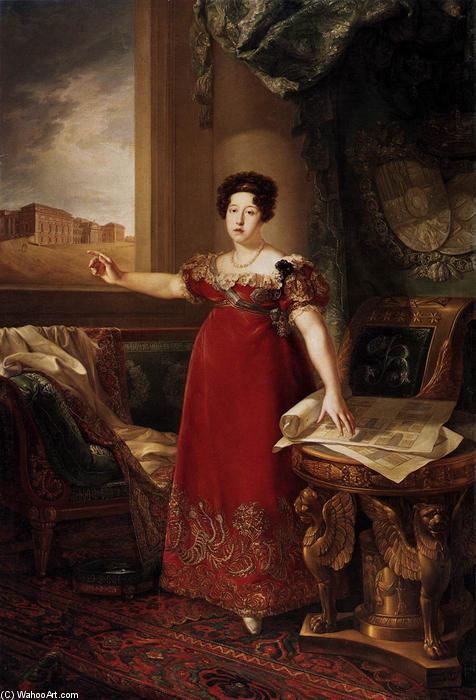
Queen Maria Isabel de Braganza
 1829
1829 254.0 x 172.0 cm
 Museo del Prado
 Read More
Hand Made Oil Reproduction
Hand-painted oil on canvas in your size and frame, made to order by our artists. ( Buy Print Buy Image)




































Pick from our preset sizes that match the artwork's original proportions.

You may enter your own dimensions to fit a specific frame or space. If your selected size does not match the original image's proportions, we will either crop the artwork or extend the painting with additional hand-painted elements. A digital mockup will be sent for your approval before production begins.
Please note that the on-screen preview does not reflect the actual cropping or extension. Only the mockup will accurately show the final composition.
While custom sizes are available, we recommend selecting a dimension from the predefined list to preserve the original proportions.
After order, ArtsDot.com team will email client for instructions and provide a mockup preview
Worldwide Delivery () in 3/4 weeks instead of standard 5 weeks. (17 August). No compromise on quality.

Free Worldwide Express Shipping

High-Quality Linen Canvas

Full Shipping Insurance

Customs Tax Refund Guarantee

True Color Matching Guarantee

60-Day Return Policy (Defects Only)

100% Money-Back Guarantee

Bulk Discount Offer
 Glass option is only available in size under 110 CM

Queen Maria Isabel de Braganza
Reproduction Medium
Reproduction Size
-


Total Price
$ 263
Artwork Description
The Artist and His Style
Bernardo López Y Piquer was a renowned Spanish painter known for his realistic and detailed style. His works often featured historical and royal figures, showcasing his ability to capture the essence of his subjects. The painting Queen Maria Isabel de Braganza is no exception, with its intricate patterns, opulent decor, and majestic portrayal of the queen.The Painting's Significance
The painting depicts Queen Maria Isabel de Braganza standing in a grand room, surrounded by lavish furnishings and ornate decorations. The queen's expression is serious, and she gazes directly at the viewer, exuding an air of confidence and authority. The attention to detail in the painting is remarkable, from the intricate patterns on the queen's dress to the reflections on the window glass.- The painting's use of warm colors creates a sense of warmth and luxury, drawing the viewer into the world of the queen.
- The artist's mastery of light and shadow adds depth and dimension to the painting, making it feel almost lifelike.
- The Museo del Prado is home to many other notable works, including paintings by Francisco De Goya and Tiziano Vecellio (Titian), making it a must-visit destination for art enthusiasts.
The Museo del Prado is also home to other notable works, including The Nude Maja (La Maja Desnuda) by Francisco De Goya, which can be found at https://ArtsDot.com.
Related Artworks

Artist Biography
A Legacy of Precision: The Life and Art of Bernardo López y Piquer
Bernardo López y Piquer (1801–1874) remains a luminous figure in the tapestry of Spanish art, a master whose brush captured the very essence of 19th-century nobility. Born into an environment where the scent of oil paint and the texture of canvas were as natural as breath, he was the son of the illustrious Vicente López y Portaña. This lineage provided more than just a name; it offered a profound apprenticeship under one of Spain's most celebrated portraitists. Growing up in Valencia, Bernardo’s early years were shaped by this familial devotion to realism, absorbing the meticulous techniques and compositional rigor that would later become his hallmark. His artistic journey was not merely an inheritance but an evolution, as he sought to expand his horizons beyond his father's shadow through rigorous studies at the Royal Academy of San Fernando in Madrid. In the halls of the Academy, López y Piquer encountered the formal academic traditions that would ground his work in classical excellence. While the era was swept by the turbulent winds of Romanticism—a movement often characterized by dramatic emotion and sweeping, visible brushstrokes—Bernardo chose a different path. He embraced a disciplined realism, a style that prioritized the faithful recording of light, texture, and character. His ability to render the subtle sheen of silk, the cold weight of royal jewels, and the profound dignity in a sitter's gaze allowed him to bridge the gap between classical precision and the expressive potential of his age.The Royal Canvas: Mastery of Portraiture
The true brilliance of López y Piquer is most vibrantly realized in his royal commissions, works that served as both historical documents and symbols of power. His talent for capturing the likeness of the Spanish elite earned him a prestigious place within the Royal Palace, where he worked alongside his father to document the era's most significant figures. One of his most enduring triumphs is the 1829 portrait of Queen Maria Isabel de Braganza. In this masterpiece, currently held in the Museo del Prado, one can witness his unparalleled command over detail. The painting is not merely a likeness but an immersive experience; the viewer is drawn into a world of opulent textures and regal authority, where every fold of fabric and every glint of light contributes to a narrative of majesty. Beyond the grand scale of oil on canvas, Bernardo was also noted for his exquisite skill with pastels, a medium that required a delicate touch and an even more profound understanding of soft transitions and light. This versatility allowed him to navigate different social spheres, from the monumental portraits of monarchs to more intimate, sensitive depictions of the Valencian aristocracy. His work often reflected the grandeur of the landscapes and churches of Valencia, yet his focus remained steadfastly on the human element—the soul captured through the lens of meticulous observation.Historical Significance and Artistic Endurance
The historical importance of Bernardo López y Piquer lies in his role as a custodian of Spanish tradition during a period of immense transition. As Spain moved through the complexities of the 19th century, his art provided a sense of continuity and stability. He did not seek to disrupt the visual language of his predecessors but rather to refine it, bringing a level of technical perfection that commanded respect across Europe. His career, which saw him hold significant academic positions including Director of Studies, ensured that his influence would extend to future generations of Spanish painters. Today, the works of López y Piquer serve as vital windows into the social hierarchy and aesthetic values of his time. To study his portraits is to engage in a silent dialogue with the past, feeling the weight of history through the very textures he so lovingly rendered. His legacy is defined by:- Technical Mastery: An unwavering commitment to realism and the precise rendering of light and material.
- Cultural Connection: A profound link between the Valencian school of painting and the prestigious Madrid academies.
- Historical Documentation: The creation of iconic imagery that preserves the likenesses of Spain's most influential royal figures.
- Artistic Versatility: Success across diverse media, from large-scale oil masterpieces to delicate pastel works.
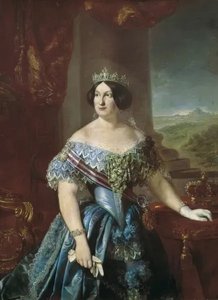
bernardo lópez y piquer
1801 - 1874 , Spain
Quick Facts
- Artistic Movement Or Style: Neoclassical Art
- Artists Or Movements Influenced By This Artist: ['Romanticism']
- Artists Who Influenced This Artist: ['Vicente López y Portaña']
- Date Of Birth: Valencia, Spain (1801)
- Date Of Death: Madrid (1874)
- Full Name: Bernardo López y Piquer
- Nationality: Spanish
- Notable Artworks: ['Queen Maria Isabel']
- Place Of Birth: Valencia