 Send
Send Share
Share
 Details

 Download
 Similars
 Diaporama
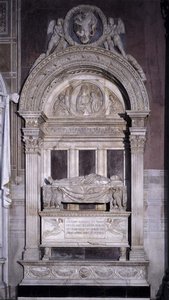
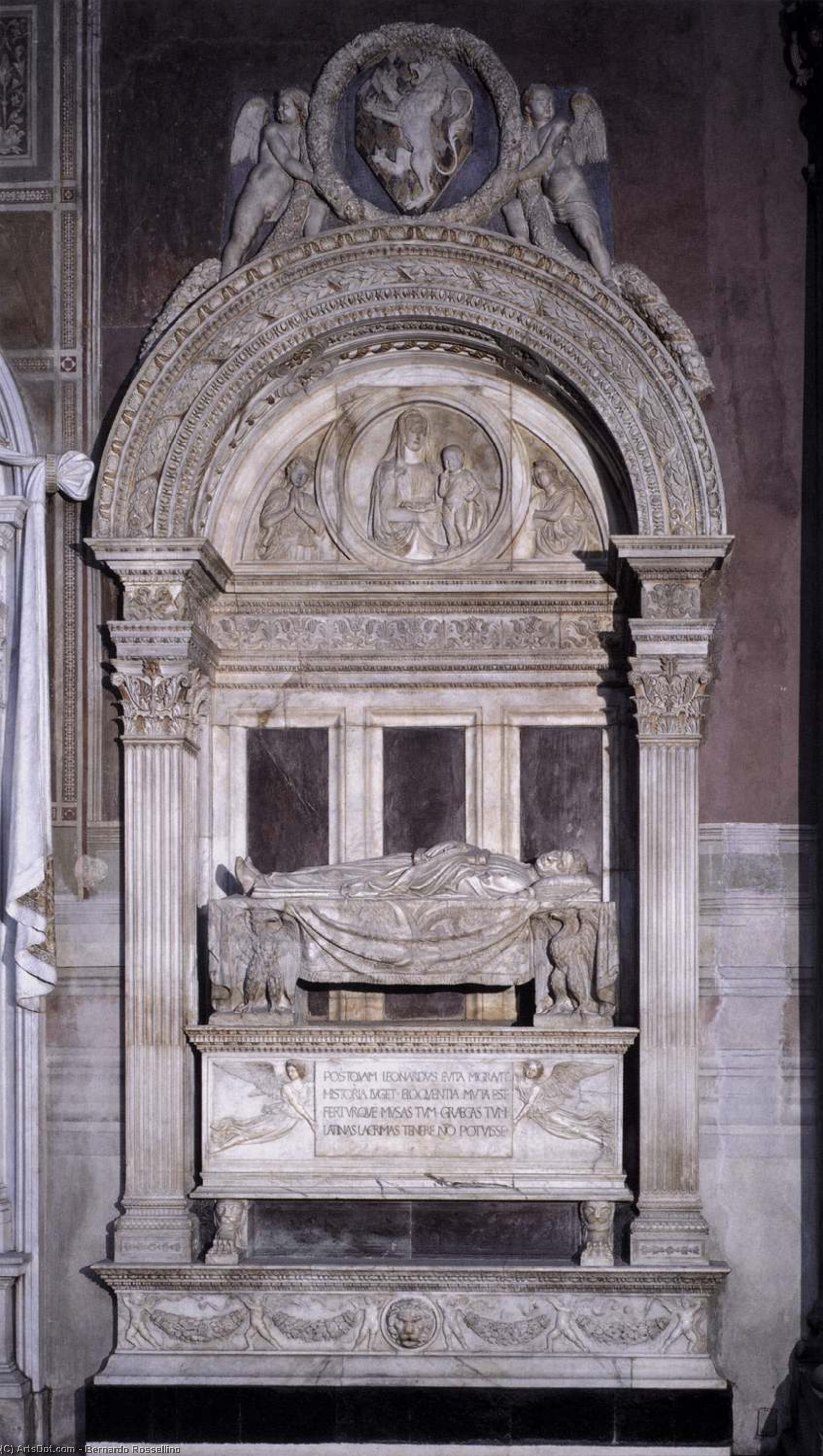
Tomb of Leonardo Bruni


 Read More
Hand Made Oil Reproduction
Hand-painted oil on canvas in your size and frame, made to order by our artists. ( Buy Print Buy Image)




































Pick from our preset sizes that match the artwork's original proportions.

You may enter your own dimensions to fit a specific frame or space. If your selected size does not match the original image's proportions, we will either crop the artwork or extend the painting with additional hand-painted elements. A digital mockup will be sent for your approval before production begins.
Please note that the on-screen preview does not reflect the actual cropping or extension. Only the mockup will accurately show the final composition.
While custom sizes are available, we recommend selecting a dimension from the predefined list to preserve the original proportions.
After order, ArtsDot.com team will email client for instructions and provide a mockup preview
Worldwide Delivery () in 3/4 weeks instead of standard 5 weeks. (21 August). No compromise on quality.

Free Worldwide Express Shipping

High-Quality Linen Canvas

Full Shipping Insurance

Customs Tax Refund Guarantee

True Color Matching Guarantee

60-Day Return Policy (Defects Only)

100% Money-Back Guarantee

Bulk Discount Offer
 Glass option is only available in size under 110 CM

Tomb of Leonardo Bruni
Reproduction Medium
Reproduction Size
-


Total Price
$ 263
Artwork Description
The Echoes of Bruni: A Tomb as Testament
Within the serene embrace of Santa Croce’s Basilica in Florence resides a monument far exceeding its initial purpose – a testament not merely to Leonardo Bruni, the celebrated humanist chancellor, but also to the burgeoning artistic spirit of early Renaissance Italy. Bernardo Rossellino's 1444 Tomb is more than just stone and marble; it’s a carefully orchestrated dialogue between classical ideals, civic pride, and the profound human desire for remembrance. The tomb itself, a circular relief known as “Tondo from the Tomb of Leonardo Bruni,” offers a captivating glimpse into this complex interplay, inviting us to contemplate its layers of meaning.
Rossellino’s genius lay in his ability to synthesize disparate influences – the Gothic traditions inherited from earlier Florentine sculpture with the burgeoning classical revival championed by Brunelleschi and Donatello. The structure is immediately arresting: a restrained, almost austere archway framed by intricate carvings that hint at the grandeur within. Above this portal, figures resembling angels or cherubs—a delicate dance of grace and solemnity— preside over a central roundel depicting Bruni’s life. This isn't a literal portrait; instead, it’s a symbolic representation, capturing the essence of his intellect and civic service. The careful positioning of these elements speaks to a deliberate attempt to elevate Bruni’s status beyond mere mortality, transforming him into a figure worthy of eternal admiration.
The Lion’s Guard: Symbolism in Stone
Dominating the corners of the tomb are pairs of lions, a motif deeply rooted in ancient symbolism. These majestic creatures represent strength, guardianship, and vigilance – qualities highly valued in a civic leader. Their presence isn't merely decorative; it serves as a protective embrace, safeguarding Bruni’s memory against the ravages of time. The choice of lions also subtly echoes Roman iconography, connecting Bruni’s legacy to the grandeur and stability of the ancient republic—a deliberate reference to the ideals he championed during his tenure as chancellor.
Below the central roundel, a prominent inscription invites interpretation. While the exact wording remains partially obscured by the tomb's design, it undoubtedly contains a eulogy celebrating Bruni’s achievements and virtues. The craftsmanship is exquisite; the smooth surfaces of the marble suggest meticulous polishing, while the precision of the figures reveals the artist’s mastery of his medium. Rossellino’s attention to detail extends beyond mere aesthetics; every element contributes to the overall narrative, reinforcing Bruni's image as a man of intellect, integrity, and civic devotion.
A Renaissance Dialogue: Style and Technique
The Tomb of Leonardo Bruni exemplifies the stylistic innovations that defined early Renaissance sculpture. Rossellino skillfully blends Gothic elements—particularly in the archway’s intricate detailing—with classical proportions and a heightened sense of naturalism. The drapery, for instance, is rendered with remarkable fluidity and realism, capturing the movement and texture of fabric with subtle grace. This approach reflects the humanist emphasis on human form and experience, moving away from the stylized representations of medieval sculpture.
Rossellino’s technique showcases a deep understanding of marble carving—a notoriously challenging medium. The intricate details, the delicate expressions, and the overall sense of monumentality are all achieved through painstaking labor and exceptional skill. The tomb is not simply carved; it's sculpted – each surface carefully shaped to evoke emotion and convey meaning. The use of light and shadow further enhances the visual impact, creating a dynamic interplay between form and space.
Echoes in Reproduction: Bringing Bruni’s Legacy to Life
Reproductions of the Tomb of Leonardo Bruni offer a remarkable opportunity to experience this masterpiece firsthand. Whether adorning a private residence or gracing a public space, these meticulously crafted reproductions capture the essence of Rossellino's original work—its symbolic richness, its stylistic elegance, and its profound emotional impact. The careful attention to detail ensures that every aspect of the tomb is faithfully reproduced, allowing viewers to appreciate the artistry and historical significance of this enduring monument.
Consider a high-quality reproduction for your study or library – a tangible connection to the intellectual heart of Florence during the Renaissance. Or perhaps envision it as a focal point in a grand hall, evoking the spirit of civic pride and humanist ideals that defined Bruni’s legacy. The Tomb of Leonardo Bruni is more than just an artwork; it's a window into the past—a reminder of the enduring power of art to capture the essence of human experience.
Related Artworks
Artist Biography
Bernardo Rossellino: The Florentine Renaissance Architect
Bernardo di Matteo del Borra Gamberelli, affectionately known as Bernardo Rossellino (1409–1464), stands as a cornerstone of Early Renaissance art and architecture in Florence. His legacy extends far beyond his prolific output; he embodies the spirit of innovation and humanist ideals that defined the era, shaping artistic sensibilities for generations to come. Born into a family rooted in Florentine stonemasonry—his uncle Jacopo di Domenico di Luca del Borra Gamberelli imparted foundational skills—Rossellino’s trajectory mirrored the burgeoning dynamism of his time.- Early Life and Training: Little is known about Rossellino's formative years beyond his familial connection to stonemasonry. However, evidence suggests he honed his craft under Nanni di Bartolo, “il Rosso,” a pivotal figure in Florentine sculpture who championed classical ideals.
- The Influence of Brunelleschi and Masaccio: Like many artists of his generation, Rossellino absorbed the revolutionary aesthetic pioneered by Filippo Brunelleschi and Masaccio. Their embrace of linear perspective and idealized human form profoundly impacted Rossellino’s artistic vision—a conviction that would permeate his subsequent endeavors.
Arezzo and the Misericordia Facade: A Bold Experiment in Synthesis
Rossellino's career gained prominence in 1433 when he accepted a commission from the Fraternita di Santa Maria della Misericordia to revitalize the façade of their headquarters in Arezzo. This project presented an extraordinary challenge—the existing Gothic structure demanded a radically different approach. Demonstrrating remarkable ingenuity, Rossellino fused Gothic elements with classical principles, mirroring Alberti’s pioneering efforts at Santa Maria Novella. The resulting design incorporated paired pilasters and aediculae derived from Roman architectural models, establishing Rossellino as a champion of stylistic eclecticism—a hallmark of the Florentine Mannerist style.The Leonardo Bruni Tomb: Defining the Humanist Monument
Perhaps Rossellino’s most celebrated achievement was the tomb he conceived for Leonardo Bruni, Florence's humanist historian and chancellor. Despite the lack of surviving documentation regarding its precise design—two sixteenth-century sources attribute authorship to Rossellino—scholars concur that it exemplifies the zenith of Renaissance sculptural artistry. The tomb’s harmonious composition—characterized by a shallow wall niche framed by pilasters and topped with an arched vault—reflected Bruni's intellectual pursuits and embodied the humanist ideal of unity—a concept championed by Alberti.Rome and Papal Patronage: Mastering Classical Revival
Rossellino’s artistic reputation soared during his tenure in Rome under Pope Nicholas V. He undertook monumental projects, including the restoration of St. Peter's Basilica and the expansion of its choir—tasks that cemented his position as a leading architect of the era. Furthermore, he collaborated with Michelangelo on the rebuilding of St. Peter's, demonstrating an unparalleled understanding of classical architectural techniques.Legacy and Influence
Bernardo Rossellino’s workshop dominated Florentine stonemasonry throughout the 1450s and 1460s, fostering a vibrant artistic environment. His influence extended beyond his own creations—he mentored younger sculptors like Desiderio da Settignano and Michelangelo—propagating his distinctive Mannerist style across Florence. Most notably, Rossellino’s tomb for Bruni served as a template for subsequent funerary monuments, establishing him as the progenitor of the humanist tomb tradition—a testament to his enduring contribution to Renaissance art history.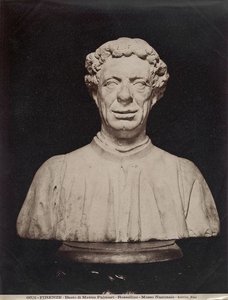
Bernardo Rossellino
1409 - 1464 , Italy
Quick Facts
- Artistic Movement Or Style: Early Renaissance
- Artists Or Movements Influenced By This Artist: ['Alberti']
- Artists Who Influenced This Artist:
- Brunelleschi
- Donatello
- Ghiberti
- Masaccio
- Date Of Birth: Florence, Italy (1409)
- Date Of Death: 1464
- Full Name: Bernardo di Matteo del Borra Gamberelli
- Nationality: Italian
- Notable Artworks:
- Leonardo Bruni Tomb
- Madonna of Mercy Relief
- Cardinal Portugal Tomb
- Place Of Birth: Florence
Related Articles
Leonardo da Vinci's Masterpieces: Explore 25 Iconic Artworks for Your Home | ArtsDot
Journey through Leonardo da Vinci's genius with our curated selection of 25 iconic artworks. Explore the stories behind Mona Lisa, The Last Supper & more Renaissance masterpieces. Find museum-quality art reproductions for your home at ArtsDot.com.

Bronze Sculptures That Defined Art History | ArtsDot
Journey through art history with our Top 10 bronze sculptures! Explore masterpieces by Rodin, Michelangelo & more. Discover stories behind iconic statues and find museum-quality reproductions for your home decor at ArtsDot.com.

The Enduring Form: Exploring Themes & Techniques in Sculpture Across Historical Periods
Explore the rich history of sculpture from ancient masterpieces to contemporary innovations. Discover key techniques, influential artists & investment potential for discerning art collectors.

Bronze Age to Modern Masters: 10 Sculptures That Redefined Art | ArtsDot
Journey through art history with 10 legendary bronze sculptures – from Michelangelo's David to Rodin’s Thinker. Explore the stories, techniques & timeless beauty of these masterpieces. Find museum-quality reproductions & elevate your home decor on ArtsDot.com.
The Enduring Form: Sculpture Across History, Technique & Emotional Resonance
Explore the rich history of sculpture with ArtsDot. Discover key techniques, influential artists & investment potential for discerning collectors. Expert insights into valuing and collecting timeless masterpieces.