

 Send
Send Share
Share
 Details

 Download
 Similars
 Diaporama
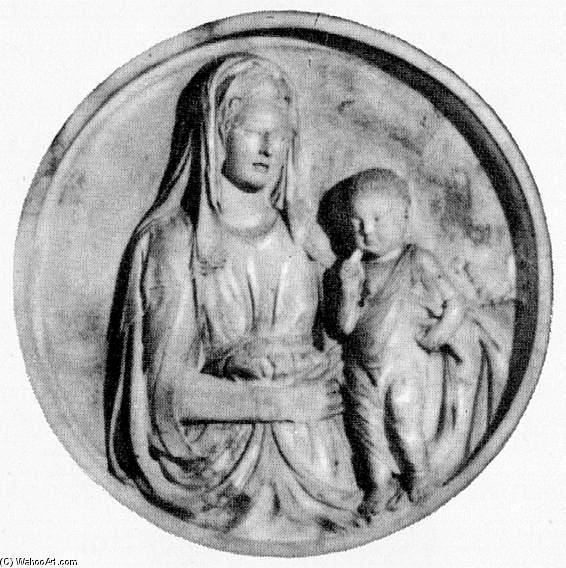
Tondo from the Tomb of Leonardo Bruni


 Read More
Purchase a high-resolution, enhanced digital image, far superior to the online preview.
Each file is meticulously prepared by our in-house specialists using advanced tools and expert manual retouching. We ensure every image has exceptional clarity, precise color accuracy, and fine detail.
The final file is delivered via email within 72 hours, optimized for immediate use in professional, editorial, and print environments. This is the same quality trusted by top-tier design studios, publishers, and galleries.
Digital Image
Download a high-resolution file for personal display, printing, and creative projects. ( Buy Print Buy Hand Made Painting)
Included in Every Digital Image Order
Expert Digital Delivery, Guaranteed
When you choose ArtsDot.com, you're not just getting an image - you're receiving a professionally enhanced digital artwork, crafted with precision and backed by a satisfaction guarantee. Here's everything that comes with your order, automatically:

Fast Email Delivery
Your high-resolution digital image file will be emailed to you within 72 hours of ordering - ready for immediate use.

AI-Enhanced Digital File
Your artwork is professionally optimized using advanced AI tools and manual editing, ensuring maximum detail, clarity, and color accuracy.

Free Lifetime Re-Delivery
Accidentally deleted or lost your file? No worries - we'll resend it to you anytime, free of charge.

No Import Fees - Ever
Enjoy your artwork instantly with zero customs, duties, or delivery fees - digital downloads are always tax-free.

Color Accuracy Guarantee
We ensure your digital image reflects the original colors as closely as possible using professional tools and color management.

60-Day Satisfaction Guarantee
If you're not satisfied with your digital image, we'll revise it or refund 100% within 60 days - no questions asked.

100% Money-Back Guarantee
Not satisfied? Get a full refund within 60 days of receiving your digital file - no questions asked.

Bulk Order Discounts
Buy 3 images, save 10% - Buy 5, save 15% - Buy 10+, save 20%. Great for creative projects, galleries, and agencies.
A Glimpse of Renaissance Devotion: The Tondo from the Tomb of Leonardo Bruni
Bernardo Rossellino’s “Tondo from the Tomb of Leonardo Bruni,” crafted in 1444, is more than just a marble relief; it's a poignant distillation of early Renaissance ideals – a testament to humanist thought, familial love, and the enduring power of faith. This circular masterpiece, originally intended to grace the tomb of Florence’s esteemed scholar, Leonardo Bruni, offers a remarkably intimate portrayal of Mary holding her child, a scene deeply resonant with iconography and emotional depth. The grayscale photograph we examine today captures not merely an image, but a moment frozen in time, revealing the subtle artistry and profound symbolism woven into its very fabric.
The composition is strikingly simple yet profoundly effective. A woman, presumably Mary, stands serenely, her gaze directed towards the youthful figure of Jesus at her side. The child’s profile view – a classic Renaissance technique – draws the viewer's eye and establishes a clear sense of connection and protection. Rossellino masterfully employs the principles of relief sculpture to create a convincing illusion of three-dimensionality; the gentle curves of drapery, the subtle modeling of flesh, all contribute to a palpable sense of presence. The circular form itself is significant, often interpreted as representing eternity or wholeness – a visual metaphor for the divine and the enduring nature of family bonds.
Craftsmanship and Technique: Echoes of Classical Ideals
Rossellino’s skill as a sculptor is immediately apparent in the meticulous detail and refined execution. Carved directly from marble, the relief showcases a mastery of technique characteristic of the early Renaissance. The smooth surfaces in areas of polished stone contrast beautifully with the subtly textured patches where the carving reveals the raw material – a deliberate choice that adds visual interest and hints at the sculpture’s age. The lines are defined by the precise cuts made into the marble, creating a network of contours that delineate the figures' forms and drapery with remarkable clarity. The use of *contrapposto*, evident in Mary’s stance, subtly echoes classical Greek ideals of balance and harmony.
The piece is firmly rooted within the artistic context of its time. Rossellino, influenced by masters like Brunelleschi and Masaccio, sought to revive the principles of classical art – particularly those relating to proportion, perspective, and realism. However, he didn’t simply replicate ancient forms; instead, he adapted them to express contemporary humanist values. The emphasis on human emotion and the portrayal of a tender maternal relationship reflect the burgeoning interest in individual experience that defined the Renaissance.
Symbolism and Emotional Resonance
Beyond its technical brilliance, the “Tondo from the Tomb of Leonardo Bruni” is rich in symbolic meaning. The depiction of Mary and Jesus as a mother and child is a deeply ingrained motif within Western art, representing not only divine grace but also the fundamental values of love, protection, and sacrifice. The circular form reinforces this theme of eternity and wholeness, suggesting that this intimate scene transcends time and space. Furthermore, the inclusion of Leonardo Bruni’s name on the tomb itself underscores the importance of human achievement and intellectual legacy – a key tenet of Renaissance humanist thought.
Looking closely, one can sense a profound serenity and piety emanating from the sculpture. The figures are depicted with an almost ethereal quality, their expressions conveying a quiet dignity and devotion. It’s a scene that invites contemplation and evokes feelings of warmth, tenderness, and spiritual connection – qualities that continue to resonate powerfully with viewers today. The “Tondo” serves as a poignant reminder of the enduring power of art to capture and communicate universal human emotions.
A Reproduction for Your Space: Bringing Renaissance Beauty Home
ArtsDot offers meticulously hand-painted reproductions of this extraordinary piece, capturing its beauty and nuance with unparalleled detail. Our skilled artists recreate Rossellino’s masterful carving, faithfully reproducing the textures, tones, and subtle nuances of the original marble relief. Whether you're an art enthusiast, a collector seeking to enrich your collection, or simply someone looking for a timeless work of art to enhance your interior space, our reproduction provides a stunning and authentic representation of this Renaissance treasure. Experience the serenity and devotion embodied in “Tondo from the Tomb of Leonardo Bruni” – a piece that will undoubtedly become a cherished focal point in your home.
Related Artworks
Artist Biography
Bernardo Rossellino: The Florentine Renaissance Architect
Bernardo di Matteo del Borra Gamberelli, affectionately known as Bernardo Rossellino (1409–1464), stands as a cornerstone of Early Renaissance art and architecture in Florence. His legacy extends far beyond his prolific output; he embodies the spirit of innovation and humanist ideals that defined the era, shaping artistic sensibilities for generations to come. Born into a family rooted in Florentine stonemasonry—his uncle Jacopo di Domenico di Luca del Borra Gamberelli imparted foundational skills—Rossellino’s trajectory mirrored the burgeoning dynamism of his time.- Early Life and Training: Little is known about Rossellino's formative years beyond his familial connection to stonemasonry. However, evidence suggests he honed his craft under Nanni di Bartolo, “il Rosso,” a pivotal figure in Florentine sculpture who championed classical ideals.
- The Influence of Brunelleschi and Masaccio: Like many artists of his generation, Rossellino absorbed the revolutionary aesthetic pioneered by Filippo Brunelleschi and Masaccio. Their embrace of linear perspective and idealized human form profoundly impacted Rossellino’s artistic vision—a conviction that would permeate his subsequent endeavors.
Arezzo and the Misericordia Facade: A Bold Experiment in Synthesis
Rossellino's career gained prominence in 1433 when he accepted a commission from the Fraternita di Santa Maria della Misericordia to revitalize the façade of their headquarters in Arezzo. This project presented an extraordinary challenge—the existing Gothic structure demanded a radically different approach. Demonstrrating remarkable ingenuity, Rossellino fused Gothic elements with classical principles, mirroring Alberti’s pioneering efforts at Santa Maria Novella. The resulting design incorporated paired pilasters and aediculae derived from Roman architectural models, establishing Rossellino as a champion of stylistic eclecticism—a hallmark of the Florentine Mannerist style.The Leonardo Bruni Tomb: Defining the Humanist Monument
Perhaps Rossellino’s most celebrated achievement was the tomb he conceived for Leonardo Bruni, Florence's humanist historian and chancellor. Despite the lack of surviving documentation regarding its precise design—two sixteenth-century sources attribute authorship to Rossellino—scholars concur that it exemplifies the zenith of Renaissance sculptural artistry. The tomb’s harmonious composition—characterized by a shallow wall niche framed by pilasters and topped with an arched vault—reflected Bruni's intellectual pursuits and embodied the humanist ideal of unity—a concept championed by Alberti.Rome and Papal Patronage: Mastering Classical Revival
Rossellino’s artistic reputation soared during his tenure in Rome under Pope Nicholas V. He undertook monumental projects, including the restoration of St. Peter's Basilica and the expansion of its choir—tasks that cemented his position as a leading architect of the era. Furthermore, he collaborated with Michelangelo on the rebuilding of St. Peter's, demonstrating an unparalleled understanding of classical architectural techniques.Legacy and Influence
Bernardo Rossellino’s workshop dominated Florentine stonemasonry throughout the 1450s and 1460s, fostering a vibrant artistic environment. His influence extended beyond his own creations—he mentored younger sculptors like Desiderio da Settignano and Michelangelo—propagating his distinctive Mannerist style across Florence. Most notably, Rossellino’s tomb for Bruni served as a template for subsequent funerary monuments, establishing him as the progenitor of the humanist tomb tradition—a testament to his enduring contribution to Renaissance art history.
Bernardo Rossellino
1409 - 1464 , Italy
Quick Facts
- Artistic Movement Or Style: Early Renaissance
- Artists Or Movements Influenced By This Artist: ['Alberti']
- Artists Who Influenced This Artist:
- Brunelleschi
- Donatello
- Ghiberti
- Masaccio
- Date Of Birth: Florence, Italy (1409)
- Date Of Death: 1464
- Full Name: Bernardo di Matteo del Borra Gamberelli
- Nationality: Italian
- Notable Artworks:
- Leonardo Bruni Tomb
- Madonna of Mercy Relief
- Cardinal Portugal Tomb
- Place Of Birth: Florence

