 Preview
 Send
Send Share
Share
 Details

 Download
 Similars
 X-Ray
X-Ray Diaporama
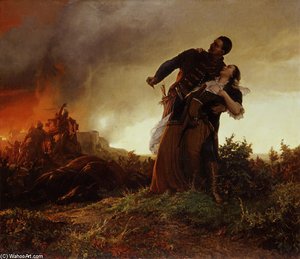
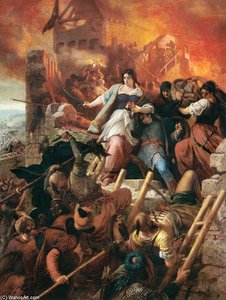
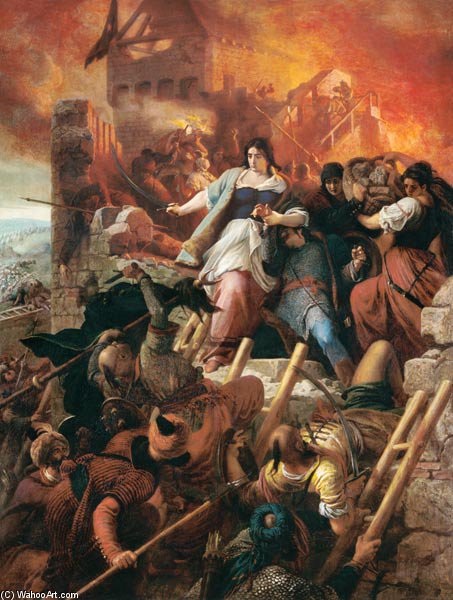
The Women Of Eger
 Read More
Giclée / Art Print
Museum-quality giclée or canvas print with fast production and flexible finish options. ( Buy Hand Made Painting Buy Image)




































Pick from our preset sizes that match the artwork's original proportions.

You may enter your own dimensions to fit a specific frame or space. If your selected size does not match the original image's proportions, we will either crop the artwork or extend the image with a mirrored or solid-fill edge. A digital mockup will be sent for your approval before production begins.
Please note that the on-screen preview does not reflect the actual cropping or extension. Only the mockup will accurately show the final composition.
While custom sizes are available, we recommend selecting a dimension from the predefined list to preserve the original proportions.
Worldwide Delivery () in 2 weeks instead of standard 4/5 weeks. (20 August)

Free Worldwide Express Shipping

High-Quality Linen Canvas

Full Shipping Insurance

Customs Tax Refund Guarantee

True Color Matching Guarantee

60-Day Return Policy (Defects Only)

100% Money-Back Guarantee

Bulk Discount Offer
 Glass option is only available in size under 110 CM

The Women Of Eger
Giclée / Art Print
Reproduction Size
-


Total Price
$ 63
Related Artworks
Artist Biography
The Soul of Hungarian Romanticism: The Life of Bertalan Székely
Bertalan Székely stands as a monumental figure in the tapestry of Hungarian art, a painter whose brush captured the very essence of a nation’s identity through the sweeping lenses of Romanticism and Academic precision. Born in 1835 in the historic city of Cluj-Napoca, within the vibrant landscape of Transylvania, Székely was destined for a life of intellectual depth. Though his noble lineage and family aspirations initially pointed him toward the structured world of engineering, his heart belonged to the ethereal realm of aesthetics. This early tension between technical discipline and artistic passion would later manifest in his work as a masterful command over composition and a profound sensitivity to human emotion. His formative years were shaped by the rigorous halls of the Academy of Fine Arts in Vienna, where between 1851 and 1855, he studied under the esteemed masters Johann Nepomuk Geiger and Carl Rahl. It was here that the foundations of his technique were laid, absorbing the grand traditions of European painting. Upon returning to his beloved Cluj-Napoca, Székely did not merely paint; he taught, nurturing the next generation of Hungarian talent and refining his own understanding of artistic principles. His early professional journey, which included a significant period working with Count Aichelburg in Marschendorf, provided him with the social and financial scaffolding necessary to pursue more ambitious, large-scale endeavors.A Journey Through Europe and the Rise of History Painting
The year 1862 marked a transformative epoch in Székely’s life as he relocated to Munich, a city then pulsing with artistic innovation. Under the mentorship of Karl von Piloty, a titan of the era, Székely’s artistic focus underwent a profound metamorphosis. He moved away from simpler subjects and embraced the grand, dramatic narrative of history painting—a genre that allowed him to weave together political significance, cultural heritage, and theatrical intensity. This period was characterized by an increasing fascination with the monumental, seeking to capture moments of historical gravity that could resonate with the Hungarian spirit. His ascent to international recognition was cemented in 1863 when he secured a prestigious prize for his breathtaking depiction, The Escape of Emperor Charles VII. This triumph was more than a personal victory; it was a gateway to the wider European art scene. With the prize money as his guide, Székely embarked on transformative expeditions to the Netherlands and Paris. Immersing himself in the works of the great masters and observing the evolving trends of the continent, he integrated a sophisticated European sensibility into his distinctly Hungarian themes. This era of travel infused his palette with new light and his compositions with a cosmopolitan elegance that would define his mature style.Legacy of Mastery: From Portraits to Landscapes
As his career progressed, Székely’s repertoire expanded with remarkable versatility. While history painting remained a cornerstone of his legacy, the decades spanning the 1860s through the 1880s saw him masterfully navigating the intimate realms of portraiture and the depiction of female figures. His portraits were noted for their dignity and psychological depth, capturing not just the likeness of his subjects but their very character. Yet, as time flowed, so too did his artistic interests; he eventually turned his gaze toward the natural world, finding profound beauty in the sweeping landscapes that mirrored the rugged and romantic spirit of his homeland. Beyond the canvas, Székely’s influence was etched into the very architecture of Hungarian culture. He served as a foundational pillar of the Hungarian Royal Drawing School—now the prestigious Hungarian University of Fine Arts—eventually leading it as Director. His decorative genius also graced some of the nation's most sacred and civic spaces, including:- The magnificent Matthias Church in Budapest, where his murals breathe life into religious history.
- The grand Budapest Opera House, contributing to its opulent atmosphere.
- The City Hall in Kecskemét, marking his role as a painter of civic pride.
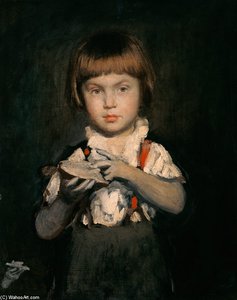
Bertalan Székely
1835 - 1910 , Hungary
Quick Facts
- Artistic Movement Or Style: Romantic & Academic
- Artists Or Movements Influenced By This Artist:
- Muybridge
- Marey
- Artists Who Influenced This Artist:
- Johann Nepomuk Geiger
- Carl Rahl
- Date Of Birth: May 8, 1835
- Date Of Death: August 21, 1910
- Full Name: Bertalan Székely
- Nationality: Hungarian
- Notable Artworks:
- The Escape of Emperor Charles VII
- Portrait of Adalbert Stifter
- Discovering the Body of King Louis II
- Thunderstorm
- Women of Eger
- Place Of Birth: Kolozsvár, Hungary