 Preview
 Send
Send Share
Share
 Details

 Download
 Similars
 X-Ray
X-Ray Diaporama
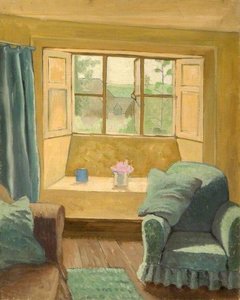
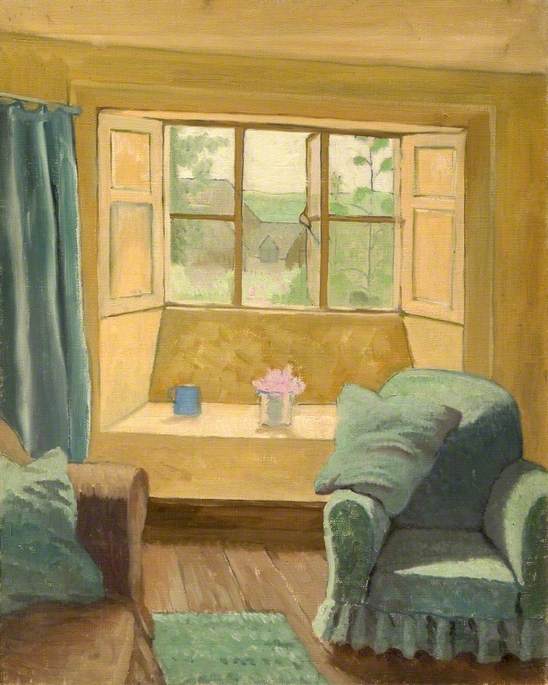
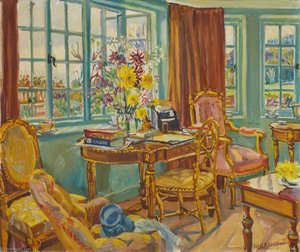
Interior of a Cottage at Brockhampton, Gloucestershire
 Impressionism
 1950
1950 51.0 x 41.0 cm
 Read More
Giclée / Art Print
Museum-quality giclée or canvas print with fast production and flexible finish options. ( Buy Hand Made Painting Buy Image)




































Pick from our preset sizes that match the artwork's original proportions.

You may enter your own dimensions to fit a specific frame or space. If your selected size does not match the original image's proportions, we will either crop the artwork or extend the image with a mirrored or solid-fill edge. A digital mockup will be sent for your approval before production begins.
Please note that the on-screen preview does not reflect the actual cropping or extension. Only the mockup will accurately show the final composition.
While custom sizes are available, we recommend selecting a dimension from the predefined list to preserve the original proportions.
Worldwide Delivery () in 2 weeks instead of standard 4/5 weeks. (24 August)

Free Worldwide Express Shipping

High-Quality Linen Canvas

Full Shipping Insurance

Customs Tax Refund Guarantee

True Color Matching Guarantee

60-Day Return Policy (Defects Only)

100% Money-Back Guarantee

Bulk Discount Offer
 Glass option is only available in size under 110 CM

Interior of a Cottage at Brockhampton, Gloucestershire
Giclée / Art Print
Reproduction Size
-


Total Price
$ 63
Related Artworks
Artist Biography
The Quiet Radiance of Bertha Ridley Bell
In the rolling, verdant landscapes of Gloucestershire, where the light shifts with a subtle, poetic grace, the work of Bertha Ridley Bell (1898–1955) finds its eternal home. To encounter her paintings is to step into a world of profound stillness, a realm where the English countryside is not merely depicted, but felt. Born in Cheltenham, Bell emerged from a period steeped in Victorian sensibilities, yet her artistic soul was deeply attuned to the burgeoning movements of her time. Her vision was never one of grand, sweeping dramas; instead, she possessed an extraordinary ability to find the monumental within the minute, translating the quiet dignity of rural life into canvases that breathe with a soft, luminous vitality.
The foundation of Bell’s mastery lay in her disciplined observation, a trait nurtured by both her upbringing and her formal training. As the daughter of a solicitor, she developed an intellect capable of great precision, yet it was her mentorship under the renowned animal painter William Strang that truly ignited her technical prowess. From Strang, she inherited the philosophy of direct painting—a method that eschewed the rigid constraints of academic sketching in favor of capturing the immediate, fleeting truth of a subject. This approach allowed her to bridge the gap between Impressionistic light and a meticulous realism, creating works that felt both spontaneous and enduringly detailed.
A Symphony of Light and Earth
Bell’s technique was a delicate dance between the ephemeral and the tactile. She spent countless hours outdoors, sketching the hedgerows, ancient trees, and weathered stone walls of the Cotswolds before ever touching her larger canvases. Her palette was an homage to the Gloucestershire landscape itself: a sophisticated arrangement of ochres, deep greens, and muted blues that mirrored the earthy textures of the fields. Yet, through the masterful use of glazes and scumbles, she achieved a luminous quality that seemed to trap sunlight within the paint. One can almost feel the rough bark of a tree or the dampness of a morning mist in her renderings.
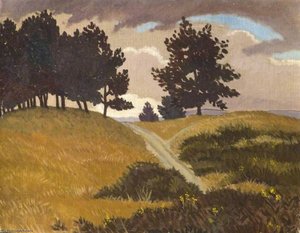
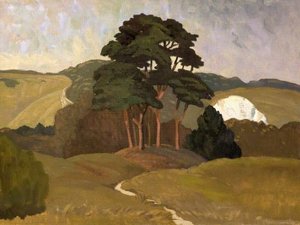
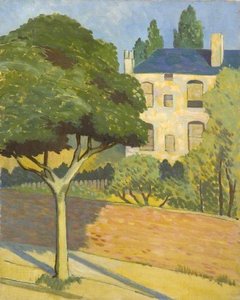
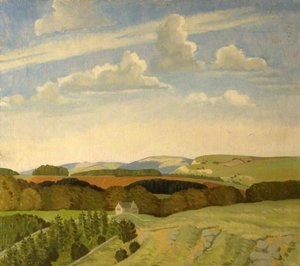
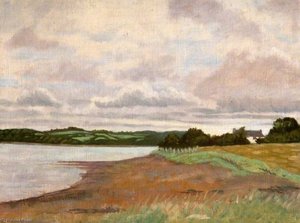
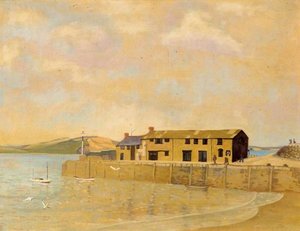
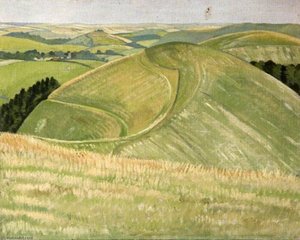
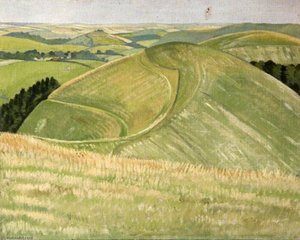
Her subject matter often focused on the rhythmic beauty of agricultural life and the architectural charm of the region. Whether capturing the golden warmth of The Round Hill or the serene, domestic intimacy of an Interior of a Cottage at Brockhampton, Bell maintained a consistent emotional frequency. Her work frequently explored:
- Atmospheric Landscapes: Capturing the way light filters through foliage and settles upon rolling hills.
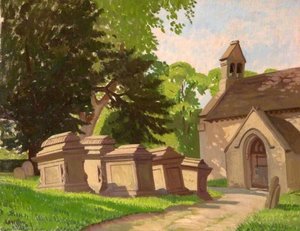
- Rural Architecture: The weathered textures of stone churches and humble cottages that define the English character.
- The Essence of Seasonality: Using color shifts to denote the transition from the vibrant growth of summer to the muted, skeletal beauty of winter.
Legacy of a Cotswold Visionary
Though her life was relatively brief, ending in 1955, Bertha Ridley Bell left behind a body of work that serves as a vital visual record of a vanishing era of English pastoral tranquility. Her significance lies not in the pursuit of fame, but in her unwavering commitment to the truth of her surroundings. She did not seek to reinvent the landscape so much as to deepen our appreciation of it, inviting the viewer to slow down and notice the subtle nuances of light on a stone wall or the way shadows lengthen across a meadow.
Today, her paintings remain cherished for their ability to evoke nostalgia and peace. In an increasingly frenetic world, Bell’s art offers a sanctuary of stillness. Her legacy is found in every brushstroke that honors the quiet beauty of the natural world, ensuring that the timeless charm of the Gloucestershire countryside continues to resonate with clarity, warmth, and an everlasting sense of grace.
bertha ridley bell
1898 - 1955
Quick Facts
- Artistic Movement Or Style: Impressionist Style
- Artists Or Movements Influenced By This Artist: ['French Impressionism']
- Artists Who Influenced This Artist: ['Claude Monet']
- Date Of Birth: 1898
- Date Of Death: 1955
- Full Name: Bertha Ridley Bell
- Nationality: British
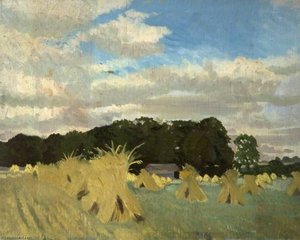
- Notable Artworks: ['Corn Stooks Painting']
- Place Of Birth: Gloucestershire
Related Articles

Sir Alfred Munnings' Masterpieces: 25 Paintings That Define Equine Art | ArtsDot
Explore 25 iconic Sir Alfred Munnings paintings! Discover the beauty of British Impressionism, equine art & rural England. Find museum-quality reproductions and elevate your home decor with ArtsDot. Explore the full collection online.

John Constable's Masterpieces: Explore 25 Iconic Landscapes for Your Home
Journey through John Constable's 25 most celebrated landscapes. Explore Romanticism, Dedham Vale & his masterful use of light in iconic paintings like 'Hay Wain'. Find museum-quality art reproductions and elevate your home decor on ArtsDot.com.
Impressionistic Realism's Finest: 10 Masterpieces for Your Home | ArtsDot
Journey through Impressionistic Realism with 10 iconic masterpieces by Monet, Renoir & Van Gogh. Explore art history, techniques & find museum-quality reproductions for your home at ArtsDot.com. Discover all masterpieces online!
Impressionist Landscapes: 10 Masterpieces for Your Home | ArtsDot
Journey through 10 iconic Impressionist landscapes by Monet, Renoir & Degas. Explore the history, techniques & emotions behind these masterpieces. Find museum-quality reproductions for your home at ArtsDot.com – where art comes to life! Discover all masterpieces on ArtsDot.com
Renoir's Masterpieces: Explore 25 Iconic Paintings & Bring Art Home | ArtsDot
Explore 25 iconic Pierre-Auguste Renoir paintings! Discover the stories behind Impressionist masterpieces like 'Dance at Le Moulin de la Galette' & 'Luncheon of the Boating Party'. Find museum-quality art reproductions and elevate your home decor with ArtsDot.com.