 Preview
 Send
Send Share
Share
 Details

 Download
 Similars
 X-Ray
X-Ray Diaporama
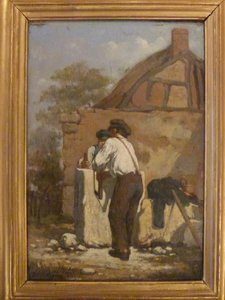
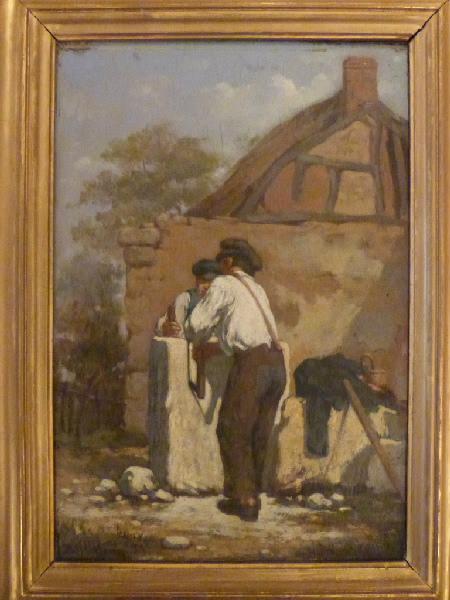
Deux scieurs de pierre
 Read More
Hand Made Oil Reproduction
Hand-painted oil on canvas in your size and frame, made to order by our artists. ( Buy Print Buy Image)




































Pick from our preset sizes that match the artwork's original proportions.

You may enter your own dimensions to fit a specific frame or space. If your selected size does not match the original image's proportions, we will either crop the artwork or extend the painting with additional hand-painted elements. A digital mockup will be sent for your approval before production begins.
Please note that the on-screen preview does not reflect the actual cropping or extension. Only the mockup will accurately show the final composition.
While custom sizes are available, we recommend selecting a dimension from the predefined list to preserve the original proportions.
After order, ArtsDot.com team will email client for instructions and provide a mockup preview
Worldwide Delivery () in 3/4 weeks instead of standard 5 weeks. (22 August). No compromise on quality.

Free Worldwide Express Shipping

High-Quality Linen Canvas

Full Shipping Insurance

Customs Tax Refund Guarantee

True Color Matching Guarantee

60-Day Return Policy (Defects Only)

100% Money-Back Guarantee

Bulk Discount Offer
 Glass option is only available in size under 110 CM

Deux scieurs de pierre
Reproduction Medium
Reproduction Size
-


Total Price
$ 288
Related Artworks










Artist Biography
A Life Painted by the Sea: Berthelemy Pierre Emile and the Soul of Brittany
Berthelemy Pierre Emile, a name perhaps less celebrated than some of his contemporaries, nevertheless occupies a vital niche in the pantheon of 19th-century French marine painters. Born in 1818, his life was inextricably linked to the rugged coastline and vibrant fishing communities of Brittany, a region that would become both his muse and his enduring subject matter. While biographical details remain somewhat sparse – a common fate for artists whose work spoke louder than their public persona – it is clear that Emile dedicated himself to capturing the essence of Breton life with remarkable sensitivity and skill. He wasn’t merely documenting scenes; he was translating the rhythm of the waves, the toil of fishermen, and the very spirit of a people into oil on canvas. His paintings offer a window into a world shaped by the relentless power of nature and the enduring traditions of maritime existence.Early Influences and Artistic Development
The artistic landscape of 19th-century France was undergoing significant transformation, moving away from Neoclassical formality towards Realism and eventually Impressionism. While Emile’s style doesn't neatly fit into any single “school,” he absorbed elements from several currents. Early influences likely included the Barbizon school painters, known for their plein air painting and focus on rural life. However, Emile distinguished himself through his unwavering commitment to maritime subjects. He wasn’t interested in idealized landscapes; instead, he sought to portray the raw beauty and often harsh realities of coastal existence. His early works demonstrate a meticulous attention to detail – the precise rendering of boats, nets, and clothing – suggesting a period of careful observation and technical training. Over time, his brushwork loosened, allowing for greater expressiveness and a more atmospheric depiction of light and weather. He developed a particular talent for capturing the subtle nuances of the sea, from the calm shimmer of a sun-drenched bay to the turbulent fury of a storm.The Breton Fishing Scenes: A Chronicle of Life at Sea
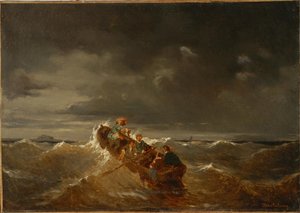
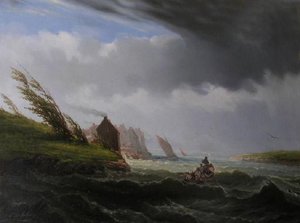
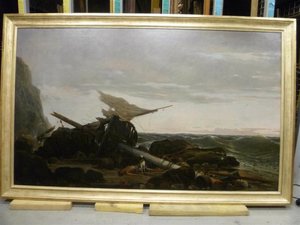
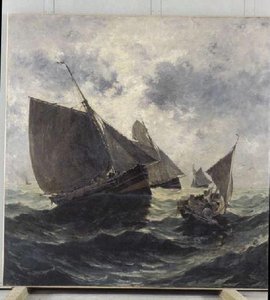
Emile’s most recognizable works are undoubtedly his depictions of Breton fishing scenes. These paintings aren't simply picturesque views; they are compelling narratives that reveal the daily lives, struggles, and triumphs of the fishermen and their families. He portrays them hauling in nets heavy with catch, mending sails against a backdrop of dramatic skies, or returning to shore after a long night at sea. His compositions often emphasize the human element, depicting figures engaged in strenuous labor, their faces etched with determination and resilience. The artist’s palette is typically subdued, dominated by blues, grays, and ochres that reflect the natural tones of the Breton coastline. However, he skillfully employs light to create focal points and evoke specific moods – a golden glow illuminating a returning fleet, or the somber hues of an impending storm. These paintings are not romanticized visions; they are honest portrayals of a demanding profession, acknowledging both its rewards and its inherent dangers.Technique and Style: Capturing the Ephemeral Beauty of the Coast
Berthelemy Pierre Emile’s technique was characterized by a blend of meticulous observation and expressive brushwork. He often worked directly from nature, capturing the fleeting effects of light and weather with remarkable accuracy. His paintings demonstrate a mastery of atmospheric perspective, creating a sense of depth and realism. While he wasn't known for experimenting with radical new techniques, his skillful use of color and composition allowed him to convey the emotional weight of his subjects. He employed a layering technique, building up tones and textures to create a rich and nuanced surface.- His brushstrokes are often visible, adding a sense of movement and energy to his compositions.
- He paid close attention to the details of maritime life – the rigging of boats, the texture of nets, the clothing of fishermen.
- Emile’s use of light is particularly noteworthy, creating focal points and evoking specific moods.
Legacy and Historical Significance
Although Berthelemy Pierre Emile may not be a household name, his work holds significant historical value. His paintings provide invaluable insights into the life and culture of 19th-century Brittany, documenting a way of life that was rapidly changing. He captured a moment in time – a world before industrialization transformed coastal communities. His art serves as a testament to the resilience and dignity of Breton fishermen, offering a poignant glimpse into their daily struggles and triumphs. Today, his paintings are appreciated for their artistic merit, historical accuracy, and evocative power. They remind us of the enduring connection between humanity and the sea, and the beauty that can be found in even the most challenging environments. His work continues to resonate with collectors and art enthusiasts alike, ensuring that the soul of Brittany lives on through his masterful depictions of its coastal life.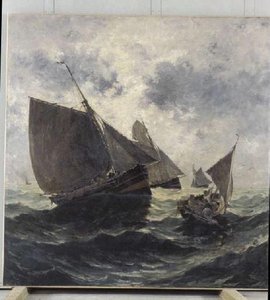
berthelemy pierre emile
1818 - 1894
Quick Facts
- Artistic Movement Or Style: Seascape painting
- Artists Or Movements Influenced By This Artist: ['Romanticism']
- Artists Who Influenced This Artist: ['Jacques-Émile Blanche']
- Date Of Birth: 1818
- Date Of Death: 1894
- Full Name: Berthelemy Pierre Emile
- Nationality: French
- Notable Artworks:
- Deux scieurs de pierre
- Barques de pêche
- Après la tempête
- Place Of Birth: France