 Preview
 Send
Send Share
Share
 Details

 Download
 Similars
 X-Ray
X-Ray Diaporama
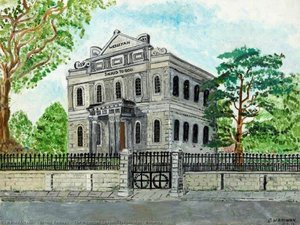
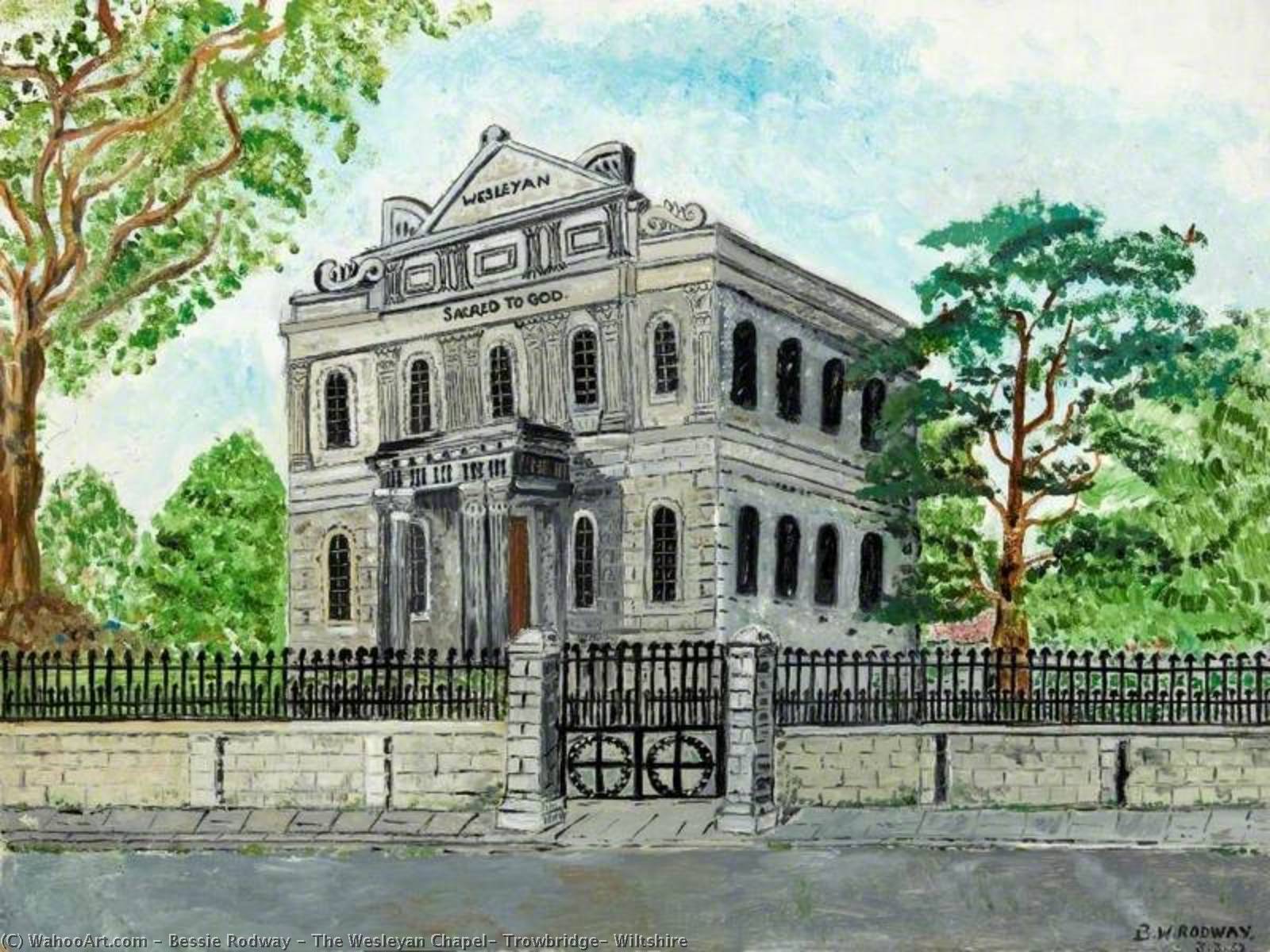
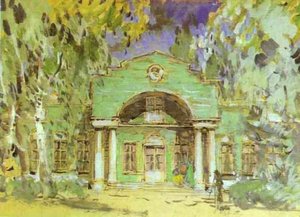
The Wesleyan Chapel, Trowbridge, Wiltshire
 46.0 x 61.0 cm
 Read More
Hand Made Oil Reproduction
Hand-painted oil on canvas in your size and frame, made to order by our artists. ( Buy Print Buy Image)




































Pick from our preset sizes that match the artwork's original proportions.

You may enter your own dimensions to fit a specific frame or space. If your selected size does not match the original image's proportions, we will either crop the artwork or extend the painting with additional hand-painted elements. A digital mockup will be sent for your approval before production begins.
Please note that the on-screen preview does not reflect the actual cropping or extension. Only the mockup will accurately show the final composition.
While custom sizes are available, we recommend selecting a dimension from the predefined list to preserve the original proportions.
After order, ArtsDot.com team will email client for instructions and provide a mockup preview
Worldwide Delivery () in 3/4 weeks instead of standard 5 weeks. (26 August). No compromise on quality.

Free Worldwide Express Shipping

High-Quality Linen Canvas

Full Shipping Insurance

Customs Tax Refund Guarantee

True Color Matching Guarantee

60-Day Return Policy (Defects Only)

100% Money-Back Guarantee

Bulk Discount Offer
 Glass option is only available in size under 110 CM

The Wesleyan Chapel, Trowbridge, Wiltshire
Reproduction Medium
Reproduction Size
-


Total Price
$ 263
Related Artworks








Artist Biography
The Luminous Legacy of the Empress of the Blues
In the quiet, rolling landscapes of Wiltshire, there exists a visual memory preserved in the delicate, translucent layers of watercolor. This is the world of Bessie Rodway (1901–1996), an artist whose name remains whispered with reverence in the corridors of Trowbridge’s history. Known affectionately by her peers as “The Empress of the Blues,” Rodway possessed a rare, almost supernatural ability to manipulate color, finding infinite depth within the coolest tones of the spectrum. Her work does not merely depict scenery; it breathes with the atmospheric moisture and the soft, shifting light of the English countryside, capturing a way of life that was beginning to transition into the modern era.
Born in London, Rodway’s early years provided her with a foundation of urban sophistication, yet her heart found its true resonance in the pastoral charm of her adopted home. Her formal education at the prestigious Slade School of Fine Art in London served as a crucible for her talent. Under the mentorship of the esteemed Frank Bramley, she learned to marry academic precision with an expressive, emotive use of medium. Bramley’s influence is evident in her disciplined approach to composition and her respect for the natural world, yet Rodway transcended mere imitation. She developed a signature style characterized by meticulous observation and a luminous palette that could make even a simple stone wall or a weathered pump appear imbued with a divine, quiet energy.
A Chronicler of Wiltshire’s Architectural Soul
While many artists of the early 20th century sought the grandiosity of sweeping vistas, Rodway found her muse in the intimate and the local. She embarked upon a profound, almost archival mission to document the landmarks of Trowbridge and its surrounding environs. Her paintings serve as a vital historical record, capturing architectural details that have since been altered or lost to time. Through her brush, one can wander through the following scenes:
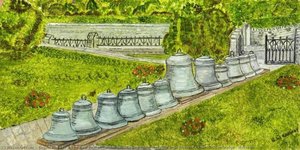
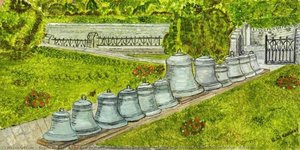
- The New Peal of Twelve Bells: A serene watercolor from 1934 that captures the weight and spiritual significance of the bells before their installation in St James's Church.
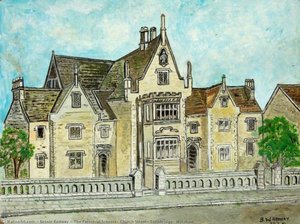
- The Parochial Schools on Church Street: A masterful study of historic architecture, where Rodway utilized muted tones to evoke the venerable age of the structure.
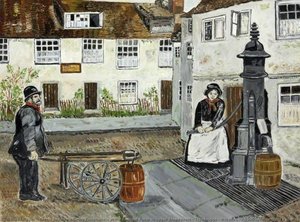
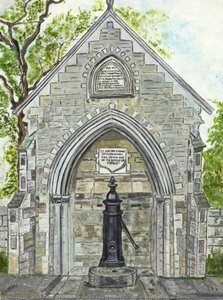
- The Memorial Arch and Pump: An evocative rendering of life along Frome Road, showcasing her ability to capture texture and light in a communal setting.
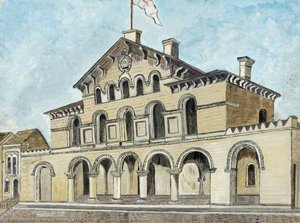
- The Town Hall: A nostalgic glimpse into the civic heart of Trowbridge, documenting the grandeur of the 1889 edifice.
Her technique was never about mere reproduction; it was about capturing the essence of a place. She had an uncanny knack for rendering the textures of damp stone, the dappled light filtering through leaves, and the subtle tonal harmonies that define a misty Wiltshire morning. This dedication to realism, tempered by a painterly sensitivity to atmosphere, ensured that her work felt both grounded in reality and elevated by art.
Historical Significance and Enduring Spirit
The significance of Bessie Rodway lies not only in the beauty of her individual works but in her role as a cultural custodian. At a time when the rapid pace of the 20th century threatened to obscure local heritage, Rodway’s systematic dedication to her surroundings provided a sense of continuity and pride for the people of Wiltshire. Her mastery of the watercolor medium—a notoriously difficult medium to control—allowed her to create works that feel as fresh today as they did when the paint first dried on her palette.
As we look back upon her prolific career, we see more than just a collection of landscapes; we see the soul of an era. Her ability to find majesty in the mundane and poetry in the blue shadows of a summer afternoon ensures her place in the pantheon of British watercolorists. Bessie Rodway remains a testament to the power of looking closely, teaching us that true beauty is often found in the quiet corners of our own backyards, waiting to be illuminated by a master's touch.
bessie rodway
1901 - 1996
Quick Facts
- Artistic Movement Or Style: Watercolor
- Date Of Birth: 1901
- Date Of Death: 1996
- Full Name: Bessie Rodway
- Nationality: British
- Notable Artworks:
- The Parochial Schools,
- Ginny Pumphandle
- Place Of Birth: Trowbridge, Wiltshire