Preview
 Send
Send Share
Share
 Details

 Download
 Similars
 X-Ray
X-Ray Diaporama
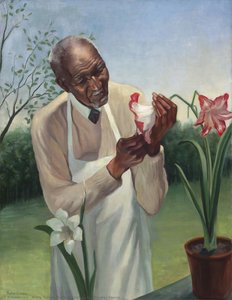
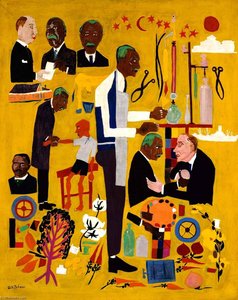
George Washington Carver
 Acrylic On Canvas
- WallArt
- Contemporary Realism
 1942
1942- 19th Century
 89.0 x 114.0 cm
 National Portrait Gallery
 Read More
Giclée / Art Print
Museum-quality giclée or canvas print with fast production and flexible finish options. ( Buy Hand Made Painting Buy Image)




P118B $10

P118H $10

P118W $10

P438Z $10

P508JH $12

P508YH $12

P805H $10

P805Z $10

P919BZ $10

P919G $10

P919XJ $10

P959ZH $10

P968JZ $12

W106C $8

W218G $10

W218JH $8

W218Y $10

W307PJ $10

W316G $10

W316PJ $8

W316Y $10

W398PJ $8

W4111J $10

W500HY $15

W500JH $15

W692G $12

W849H $8

W940BG $15

W953PJ $8




Pick from our preset sizes that match the artwork's original proportions.

You may enter your own dimensions to fit a specific frame or space. If your selected size does not match the original image's proportions, we will either crop the artwork or extend the image with a mirrored or solid-fill edge. A digital mockup will be sent for your approval before production begins.
Please note that the on-screen preview does not reflect the actual cropping or extension. Only the mockup will accurately show the final composition.
While custom sizes are available, we recommend selecting a dimension from the predefined list to preserve the original proportions.
Worldwide Delivery () in 2 weeks instead of standard 4/5 weeks. (18 August)

Free Worldwide Express Shipping

High-Quality Linen Canvas

Full Shipping Insurance

Customs Tax Refund Guarantee

True Color Matching Guarantee

60-Day Return Policy (Defects Only)

100% Money-Back Guarantee

Bulk Discount Offer
 Glass option is only available in size under 110 CM

George Washington Carver
Giclée / Art Print
Reproduction Size
-


Total Price
$ 63
Collectible Description
A Portrait of Resilience: Betsy Reyneau’s “George Washington Carver”
Betsy Graves Reyneau's 1942 painting, "George Washington Carver," transcends the simple portraiture of its time, offering a profound meditation on resilience, ingenuity, and the enduring spirit of an American icon. Executed during a period of significant social upheaval – the burgeoning Civil Rights Movement – the work speaks to Carver’s remarkable journey from enslaved origins to becoming a celebrated botanist and inventor, a testament to the transformative power of education and unwavering determination.
- Subject & Representation: The painting captures George Washington Carver in a moment of contemplative engagement with his beloved plants. Dressed in a practical white apron, he’s depicted holding what appear to be flowers or seedlings, surrounded by an abundance of potted flora – a direct reflection of his groundbreaking work in agricultural diversification and the exploration of alternative crops for Southern farmers.
- Technical Mastery: Reyneau's skill is evident in her meticulous realism, honed through rigorous training at the School of the Museum of Fine Arts in Boston. The brushwork is precise yet fluid, creating a palpable sense of texture in the fabrics, the leaves, and the earthenware vessels that populate the scene. Her use of light – particularly the soft illumination highlighting Carver’s face – draws the viewer into his world, fostering an immediate connection with the subject.
Historical Context & Social Significance
"George Washington Carver" was created in 1942, a year marked by World War II and escalating racial tensions in America. Reyneau’s decision to paint Carver – a Black man who had achieved national recognition through his scientific contributions – was itself a bold statement. At a time when artistic representation of African Americans was often limited and stereotypical, Reyneau sought to elevate Carver's image, portraying him not just as an inventor but as a dignified intellectual and a symbol of hope for marginalized communities. The painting’s creation coincided with the growing awareness of racial injustice and the increasing demand for social change, reflecting the broader cultural currents of the era.
- Civil Rights Advocacy: Reyneau's artistic career was inextricably linked to her commitment to civil rights. She actively supported organizations dedicated to advancing equality and frequently depicted African Americans in her portraits, challenging prevailing prejudices and promoting a more nuanced understanding of Black life.
- A Pioneer of Portraiture: Reyneau’s focus on portraying African American subjects was remarkably forward-thinking for the time, establishing her as a pioneer in portraiture and contributing significantly to the development of a richer, more diverse artistic landscape.
Symbolism & Emotional Impact
The composition of "George Washington Carver" is rich with symbolic meaning. The abundance of plants represents not only Carver’s scientific pursuits but also themes of fertility, growth, and renewal – mirroring his efforts to revitalize Southern agriculture. The carefully arranged vases and potted plants create a sense of order and harmony, reflecting Carver's methodical approach to problem-solving. The painting evokes a powerful emotional response, inviting viewers to contemplate Carver’s life story and the challenges he overcame. It is a portrait of quiet dignity, intellectual strength, and unwavering optimism – qualities that continue to inspire admiration and respect today.
- Color Palette: Reyneau employs a muted color palette dominated by earth tones—greens, browns, and creams—further emphasizing the connection between Carver and his botanical subjects.
- Overall Impression: The painting’s overall impression is one of serenity and intellectual engagement, inviting viewers to contemplate the beauty of nature and the transformative power of knowledge.
Dimensions & Reproduction
This original artwork measures 89 x 114 cm (35 x 45 inches) and was created in 1942 by Betsy Graves Reyneau. ArtsDot offers a meticulously crafted hand-painted reproduction of this iconic piece, ensuring the highest level of quality and authenticity. Each reproduction is created using traditional artistic techniques, capturing the nuances of Reyneau’s style and preserving the painting's historical significance for generations to come.
Related Artworks
Artist Biography
A Legacy of Dignity: The Life and Art of Betsy Graves Reyneau
In the tapestry of American art history, few threads are as poignant or as purposeful as those woven by Betsy Graves Reyneau. Born in 1888 in Battle Creek, Michigan, Reyneau was a woman whose life was defined by a profound defiance of the status quo. Growing up under the intellectual influence of her father’s legal profession and the prestigious lineage of her grandfather, Michigan Supreme Court Justice Benjamin F. Graves, she possessed an early inclination toward justice and formal excellence. Yet, her path was not one of easy conformity; she famously navigated societal expectations and familial disapproval to claim her place in the world of fine art. Her journey took her from the rigorous studios of the School of the Museum of Fine Arts in Boston to the culturally rich landscapes of France, where she immersed herself in European traditions, eventually returning to the United States with a refined mastery of realism and an eye for the subtle nuances of the human spirit.
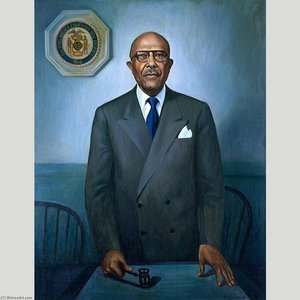
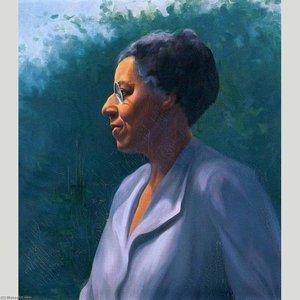
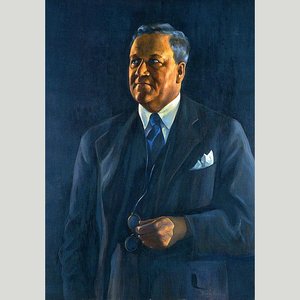
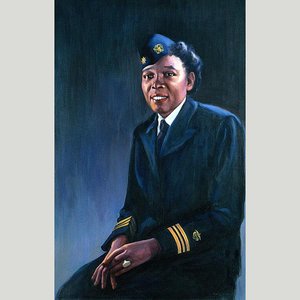
Reyneau’s artistry was never merely about the replication of form; it was an act of profound social witness. During an era when the narratives of African Americans were often marginalized or distorted, she utilized her brush to assert their undeniable dignity. Her most significant contribution to the American canon emerged through her collaboration with the Harmon Foundation during the monumental “Portraits of Outstanding Americans of Negro Origin” exhibition series, which toured from 1944 to 1954. Alongside fellow artist Laura Wheeler Waring, Reyneau undertook a sacred task: capturing the essence of Black excellence. Through her meticulous attention to detail and her ability to convey character through light and shadow, she transformed portraiture into a tool for civil rights advocacy, ensuring that the faces of leadership and intellect were etched permanently into the national consciousness.
Mastery of the Portrait and Historical Significance
The technical brilliance of Reyneau’s work lies in her ability to blend photorealism with an emotive depth that transcends simple likeness. Her portraits are characterized by a sense of quiet strength and poise, achieved through a masterful command of oil on canvas. When one examines her depictions of historical titans, the texture of the paint and the deliberate use of lighting serve to elevate the subject beyond the temporal. Her work does not merely document a face; it documents a legacy. This is perhaps most evident in her iconic portrait of George Washington Carver. This piece was not only a triumph of her realist technique but also a landmark moment in American curation, as it represented the first portrait of an African American to enter a national American collection, signaling a seismic shift in the recognition of Black contributions to the nation's cultural fabric.
Her oeuvre serves as a gallery of the most influential figures of her time, creating a visual pantheon of progress. Her subjects included:
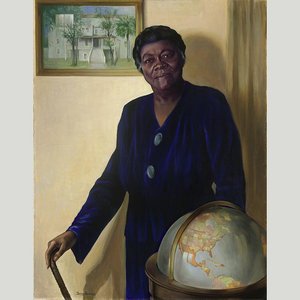
- Mary McLeod Bethune: Captured with the grace and authority of a foundational leader in education and civil rights.
- Joe Louis: Rendered with a strength that mirrored his status as a global icon of resilience.
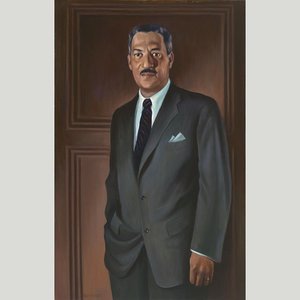
- Thurgood Marshall: Portrayed with the intellectual gravity that would later define his role in the Supreme Court.
- William Henry Hastie: A study in dignity and sophistication, currently preserved in the esteemed Hirshhorn Museum.
Beyond the canvas, Reyneau’s life was an extension of her art. As a suffragette and a dedicated advocate for equality, she lived the principles of justice that she painted. Her work remains a vital bridge between the struggle for civil rights and the evolution of American portraiture. To look upon a Reyneau portrait is to witness a moment of historical reclamation—a time when the brush was used to demand that the world see, recognize, and respect the profound humanity of all its citizens.
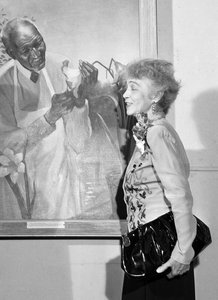
Betsy Graves Reyneau
1880 - 1964 , United States of America
Quick Facts
- Artistic Movement Or Style: Realism
- Date Of Birth: 1880
- Date Of Death: 1964
- Full Name: Betsy Graves Reyneau
- Nationality: American
- Notable Artworks: ['Portraits of Outstanding Americans of Negro Origin']
- Place Of Birth: Battle Creek, United States
Related Articles

Georges Braque's Masterpieces: 25 Paintings That Defined Cubism & Modern Art | ArtsDot
Explore 25 iconic Georges Braque paintings that revolutionized Cubism & modern art. Discover the stories behind his masterpieces, from Fauvism to Analytical Cubism. Find museum-quality reproductions & elevate your home decor with ArtsDot.com.

Georges Seurat's Masterpieces: 25 Paintings That Defined Pointillism | ArtsDot
Explore 25 iconic Georges Seurat paintings & discover the brilliance of Pointillism. From 'La Grande Jatte' to his harbor scenes, delve into art history with ArtsDot.com. Find museum-quality reproductions for your home decor. Explore the full collection online!
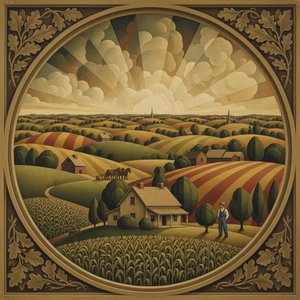
Grant Wood & American Regionalism: Identity, Myth & the Rural Landscape
Explore the world of Grant Wood & American Regionalism with ArtsDot. Discover the symbolism behind 'American Gothic', recurring themes, and the movement's lasting impact on art history. High-quality reproductions available.
American Realism's Defining Works: 10 Masterpieces for Your Home
Explore 10 defining American Realism masterpieces – Hopper, Homer & more. Discover the stories behind these iconic paintings and bring timeless art to your home with ArtsDot's museum-quality reproductions. Explore the full collection online.

John George Brown: Capturing American Life & Sentiment in 19th-Century Genre Painting
Explore the captivating genre paintings of John George Brown, celebrated for his realistic depictions of 19th-century American life. Discover his legacy & find museum-quality reproductions at ArtsDot.