

 Preview
 Send
Send Share
Share
 Details

 Download
 Similars
 X-Ray
X-Ray Diaporama
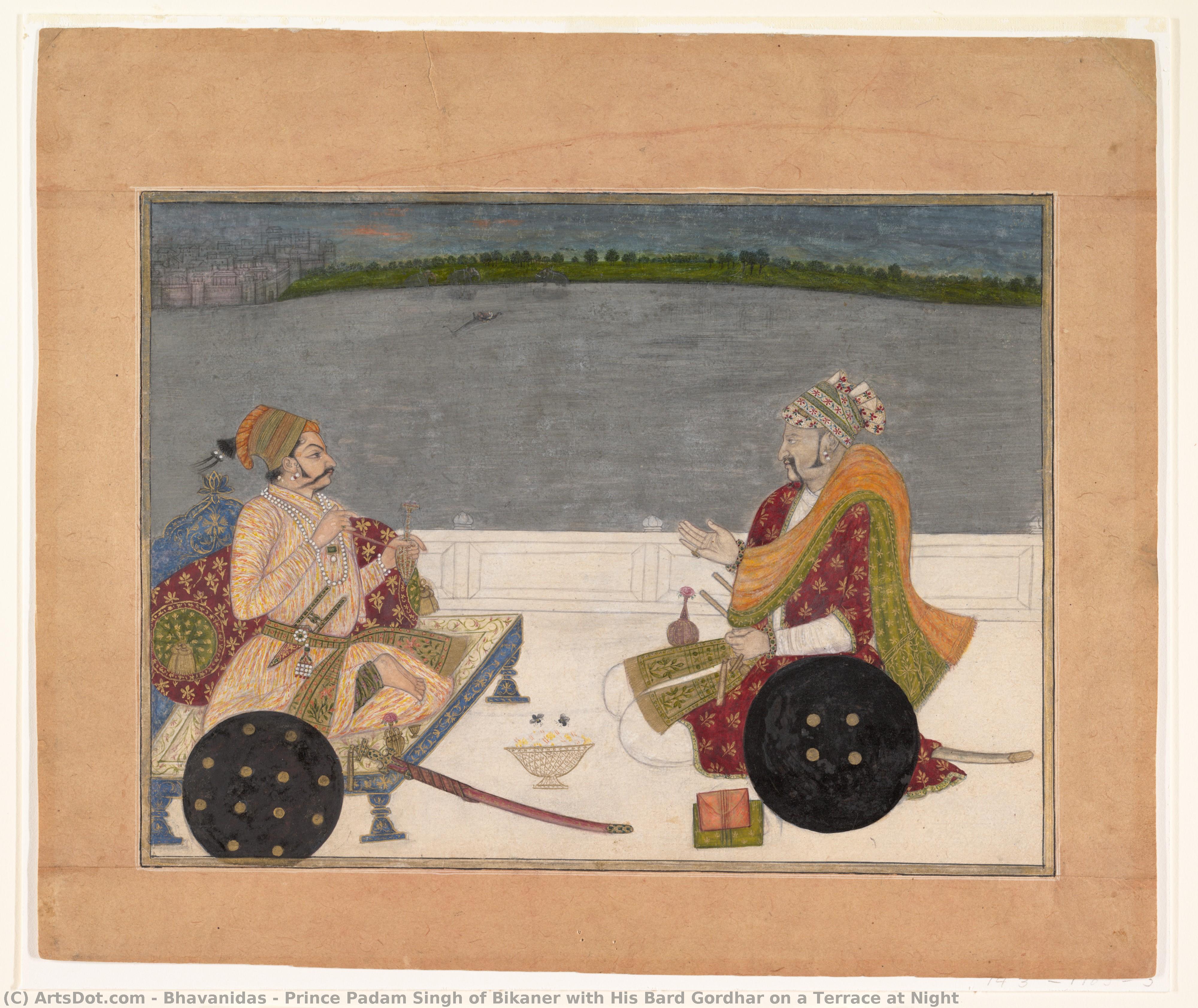
Prince Padam Singh of Bikaner with His Bard Gordhar on a Terrace at Night
 1725
1725 21.0 x 28.0 cm
 Read More
Purchase a high-resolution, enhanced digital image, far superior to the online preview.
Each file is meticulously prepared by our in-house specialists using advanced tools and expert manual retouching. We ensure every image has exceptional clarity, precise color accuracy, and fine detail.
The final file is delivered via email within 72 hours, optimized for immediate use in professional, editorial, and print environments. This is the same quality trusted by top-tier design studios, publishers, and galleries.
Digital Image
Download a high-resolution file for personal display, printing, and creative projects. ( Buy Print Buy Hand Made Painting)
Included in Every Digital Image Order
Expert Digital Delivery, Guaranteed
When you choose ArtsDot.com, you're not just getting an image - you're receiving a professionally enhanced digital artwork, crafted with precision and backed by a satisfaction guarantee. Here's everything that comes with your order, automatically:

Fast Email Delivery
Your high-resolution digital image file will be emailed to you within 72 hours of ordering - ready for immediate use.

AI-Enhanced Digital File
Your artwork is professionally optimized using advanced AI tools and manual editing, ensuring maximum detail, clarity, and color accuracy.

Free Lifetime Re-Delivery
Accidentally deleted or lost your file? No worries - we'll resend it to you anytime, free of charge.

No Import Fees - Ever
Enjoy your artwork instantly with zero customs, duties, or delivery fees - digital downloads are always tax-free.

Color Accuracy Guarantee
We ensure your digital image reflects the original colors as closely as possible using professional tools and color management.

60-Day Satisfaction Guarantee
If you're not satisfied with your digital image, we'll revise it or refund 100% within 60 days - no questions asked.

100% Money-Back Guarantee
Not satisfied? Get a full refund within 60 days of receiving your digital file - no questions asked.

Bulk Order Discounts
Buy 3 images, save 10% - Buy 5, save 15% - Buy 10+, save 20%. Great for creative projects, galleries, and agencies.
Related Artworks






Artist Biography
The Twilight of the Imperial Tradition
In the shifting landscape of the early eighteenth century, a period marked by both the fading grandeur of the Mughal Empire and the rising lyrical beauty of regional schools, Bhavanidas emerged as a preeminent master of the brush. Trained within the rigorous and prestigious confines of the Mughal imperial workshop, he was a scholar of the fine line and a devotee of meticulous detail. His early career was defined by his immersion in the imperial tradition, where he spent much of the first two decades of the century perfecting the art of generational portraiture. This foundational period allowed him to absorb the technical complexities of the Mughal style—a style that demanded an uncompromising commitment to realistic representation and a profound understanding of form. As he transitioned into the Kishangarh tradition, Bhavanidas did not merely replicate what he had learned; instead, he synthesized the formal precision of the imperial court with the evocative, emotive qualities of the Kishangarh school, creating a body of work that stands as a bridge between two monumental eras of Indian art.A Mastery of Detail and Atmosphere
The artistry of Bhavanidas is most profoundly felt in his ability to breathe life into the miniature format, transforming small surfaces into expansive, breathing worlds. His technique is characterized by an extraordinary delicacy, where every stroke serves to capture the very essence of his subjects. This is perhaps nowhere more evident than in his watercolor masterpiece, Stallion Kitab. In this work, a majestic stallion takes center stage, rendered with such anatomical precision that its power feels palpable, even as it is attended by four ghostly, ethereal grooms who lend the scene a sense of supernatural mystery.Beyond the singular focus on animal portraiture, Bhavanidas excelled at capturing the quiet, narrative intimacy of courtly life. In Prince Padam Singh of Bikaner with his bard Gordhar on a terrace at night, the artist demonstrates his command over light and shadow, utilizing the nocturnal setting to highlight the distinctive atmosphere of the Kishangarh school. Through his use of fine detail, he was able to render the subtle textures of silk, the soft glow of moonlight, and the profound stillness of a night scene, ensuring that his subjects were not merely depicted, but deeply felt by the viewer.
Historical Significance and Enduring Legacy
The historical importance of Bhavanidas lies in his role as one of the final great masters of the Mughal painting tradition. His work represents a sophisticated culmination of centuries of artistic evolution, incorporating the deep-seated influences of the Timurid period into a uniquely Indian aesthetic. By blending the realistic rigor of the imperial workshops with the more romantic and stylized elements of Kishangarh, he helped define a period of transition that would influence many subsequent generations of painters.Today, the legacy of Bhavanidas continues to resonate within the halls of the world's most esteemed institutions. His paintings, which serve as vital windows into the artistic soul of eighteenth-century India, are preserved in prestigious collections such as the National Gallery of Modern Art (NGMA) in New Delhi. Through his ability to capture both the physical reality and the spiritual essence of his subjects, Bhavanidas remains a cornerstone of Indian miniature art, leaving behind a visual heritage that continues to inspire awe and admiration for its technical brilliance and poetic depth.
bhavanidas
India
Quick Facts
- Artistic Movement Or Style: World Goes Pop
- Artists Or Movements Influenced By This Artist: ['Influences various contemporary artists']
- Artists Who Influenced This Artist: ['Influenced by diverse artists within the World Goes Pop movement']
- Date Of Death: Living
- Notable Artworks: ['Various works featured in The World Goes Pop exhibition']
- Place Of Birth: WahooArt

