 Preview
 Send
Send Share
Share
 Details

 Download
 Similars
 X-Ray
X-Ray Diaporama
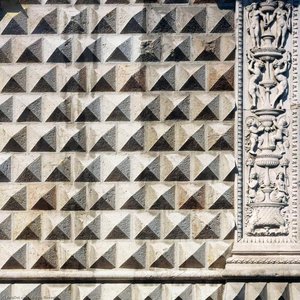
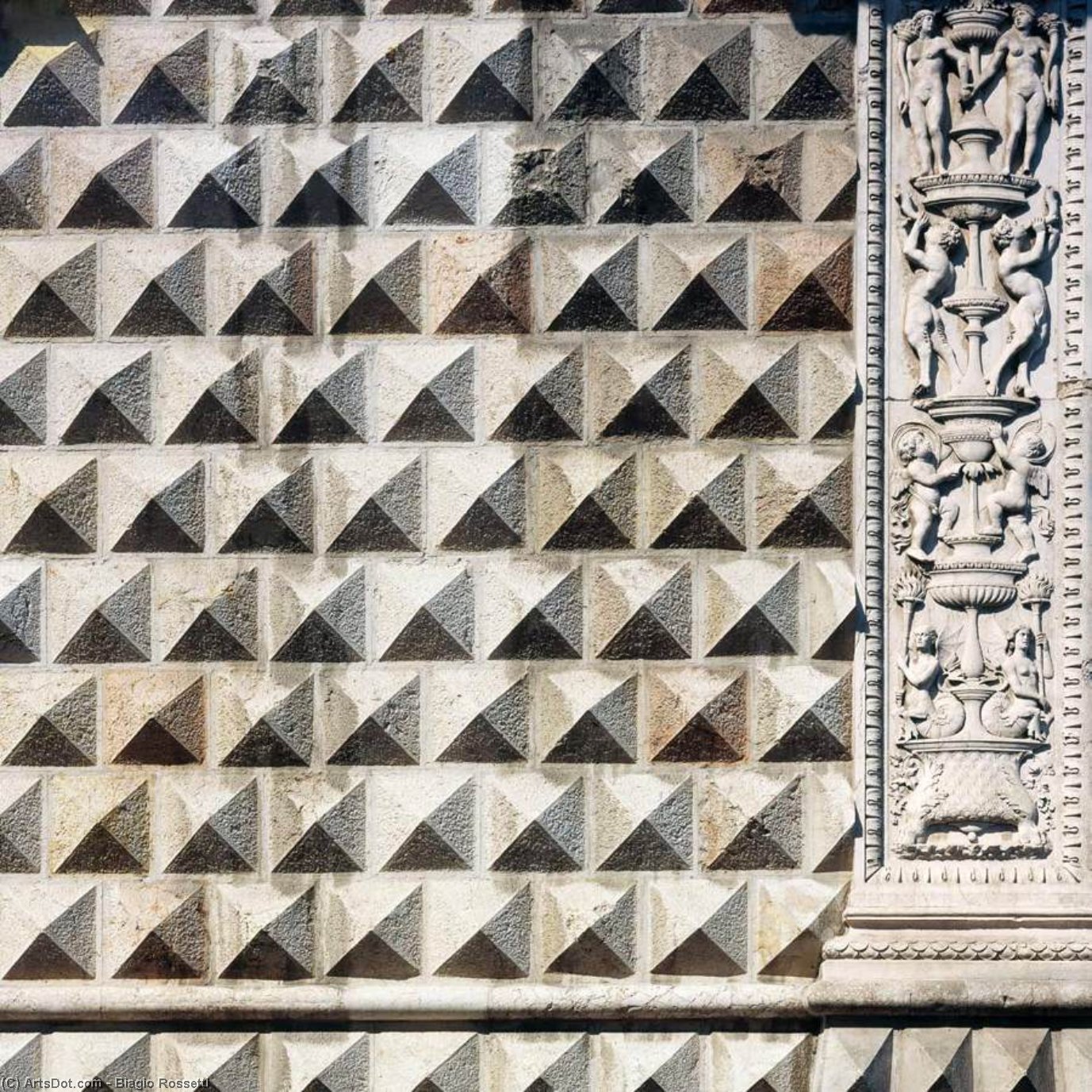
Detail of the exterior


 Read More
Hand Made Oil Reproduction
Hand-painted oil on canvas in your size and frame, made to order by our artists. ( Buy Print Buy Image)




































Pick from our preset sizes that match the artwork's original proportions.

You may enter your own dimensions to fit a specific frame or space. If your selected size does not match the original image's proportions, we will either crop the artwork or extend the painting with additional hand-painted elements. A digital mockup will be sent for your approval before production begins.
Please note that the on-screen preview does not reflect the actual cropping or extension. Only the mockup will accurately show the final composition.
While custom sizes are available, we recommend selecting a dimension from the predefined list to preserve the original proportions.
After order, ArtsDot.com team will email client for instructions and provide a mockup preview
Worldwide Delivery () in 3/4 weeks instead of standard 5 weeks. (30 August). No compromise on quality.

Free Worldwide Express Shipping

High-Quality Linen Canvas

Full Shipping Insurance

Customs Tax Refund Guarantee

True Color Matching Guarantee

60-Day Return Policy (Defects Only)

100% Money-Back Guarantee

Bulk Discount Offer
 Glass option is only available in size under 110 CM

Detail of the exterior
Reproduction Medium
Reproduction Size
-


Total Price
$ 263
Related Artworks


Artist Biography
The Architect of Dreams: The Visionary Legacy of Biagio Rossetti
In the golden age of the Italian Renaissance, while many artists were capturing the divine through pigment and brush, one man was reshaping the very earth to reflect the grandeur of human ambition. Biagio Rossetti (c. 1447–1516) did not merely paint scenes; he constructed the stage upon which history would unfold. Born in Ferrara, the son of a tailor, Rossetti’s ascent from humble beginnings to the position of ducal architect is a testament to a mind that could see order within chaos and beauty within stone. His life was inextricably woven into the destiny of Ferrara, serving as the primary instrument through which the House of Este expressed its power and sophistication.
Rossetti’s early years were defined by a rigorous immersion in the technical disciplines of engineering and military arts. This foundation in practical science provided him with a unique advantage over his more purely aesthetic contemporaries. As a military engineer, he understood the structural integrity required for defense, yet as an artist of space, he possessed the humanist sensitivity to transform fortifications into monuments of grace. This duality—the precision of the soldier and the soul of the architect—became the hallmark of his style, allowing him to balance the pragmatic needs of a growing city with the lofty ideals of Renaissance classicism.
The Addizione Erculea: A Masterpiece of Urbanism
The true magnitude of Rossetti’s genius is most profoundly felt in the Addizione Erculea, an unprecedented urban expansion project commissioned by Ercole I d'Este. This was not merely a way to enlarge the city boundaries; it was one of the first instances in history where modern urban planning principles were applied to create a cohesive, rationalized landscape. Rossetti acted as a conductor of stone and street, orchestrating a sprawling network of wide avenues and strategic intersections that doubled the size of Ferrara. He pioneered a method of "modern" urbanism, where the movement of people, the visibility of landmarks, and the integration of greenery were considered with the same care as the facades of the buildings themselves.
Through his meticulous surveying and strategic landscaping, Rossetti created a city that breathed. His work on the Piazza Nuova and the intersection of vital thoroughfares like Via Prione and Via degli Angeli established a new standard for European urban design. He moved away from the cramped, haphazard medieval layouts toward a vision of clarity and light, ensuring that Ferrara would stand as a beacon of architectural innovation. His ability to harmonize the rugged requirements of defensive walls with the elegant demands of residential palaces remains one of the most significant achievements in the history of the built environment.
The Diamond Facade and Lasting Significance
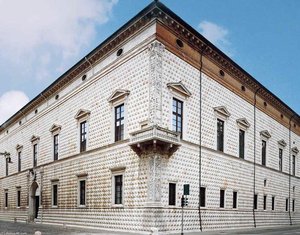
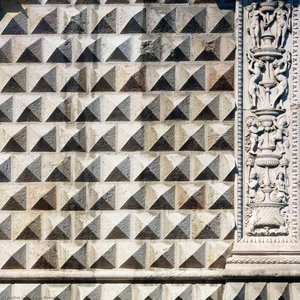
Perhaps no single structure captures the evocative magic of Rossetti’s hand quite like the Palazzo dei Diamanti. This masterpiece, with its extraordinary exterior clad in white marble blocks carved into sharp, diamond-shaped protrusions, serves as a breathtaking example of his ability to manipulate light and shadow. The bugnato a punta di diamante technique creates a dynamic, shimmering effect that changes with the sun's passage, turning a static wall into a living, breathing entity. It is a building that demands attention, embodying the prestige of the Este family through its sheer geometric audacity.
Beyond his most famous palaces, Rossetti’s influence extended to the spiritual heart of the city, as he contributed to the design of numerous churches, including San Giorgio and Santa Maria in Vado. Even after the death of Ercole I, Rossetti continued to shape the landscape under the patronage of Cardinal Ippolito d'Este, proving that his vision was not tied to a single ruler but was an enduring force of nature. Today, we remember Biagio Rossetti not just as an architect, but as the pioneer who taught the world that a city could be more than a collection of buildings—it could be a unified work of art, a rationalized masterpiece of human intention and classical beauty.
biagio rossetti
1447 - 1516 , Italy
Quick Facts
- Artistic Movement Or Style: Renaissance Architecture
- Artists Or Movements Influenced By This Artist: ['Pre-Raphaelitism']
- Artists Who Influenced This Artist: ['Brunelleschi']
- Date Of Birth: Ferrera, Italy (1447)
- Date Of Death: 1516
- Full Name: Biagio Rossetti
- Nationality: Italian
- Notable Artworks:
- Palazzo dei Diamanti
- Madonna di San Biagio
- Place Of Birth: Ferrara
Related Articles
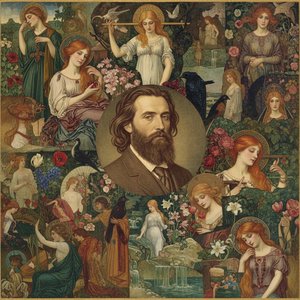
Dante Gabriel Rossetti's 25 Masterpieces: A Journey Through Victorian Art & Symbolism | ArtsDot
Explore 25 iconic artworks by Dante Gabriel Rossetti, a leading Pre-Raphaelite artist. Discover the stories behind masterpieces like 'Proserpine' & 'Beata Beatrix'. Find museum-quality art reproductions and elevate your home decor with ArtsDot.com.

Bronze Sculptures That Defined Art History | ArtsDot
Journey through art history with our Top 10 bronze sculptures! Explore masterpieces by Rodin, Michelangelo & more. Discover stories behind iconic statues and find museum-quality reproductions for your home decor at ArtsDot.com.

The Enduring Form: Exploring Themes & Techniques in Sculpture Across Historical Periods
Explore the rich history of sculpture from ancient masterpieces to contemporary innovations. Discover key techniques, influential artists & investment potential for discerning art collectors.

Bronze Age to Modern Masters: 10 Sculptures That Redefined Art | ArtsDot
Journey through art history with 10 legendary bronze sculptures – from Michelangelo's David to Rodin’s Thinker. Explore the stories, techniques & timeless beauty of these masterpieces. Find museum-quality reproductions & elevate your home decor on ArtsDot.com.

The Enduring Form: Sculpture Across History, Technique & Emotional Resonance
Explore the rich history of sculpture with ArtsDot. Discover key techniques, influential artists & investment potential for discerning collectors. Expert insights into valuing and collecting timeless masterpieces.