

 Preview
 Send
Send Share
Share
 Details

 Download
 Similars
 X-Ray
X-Ray Diaporama
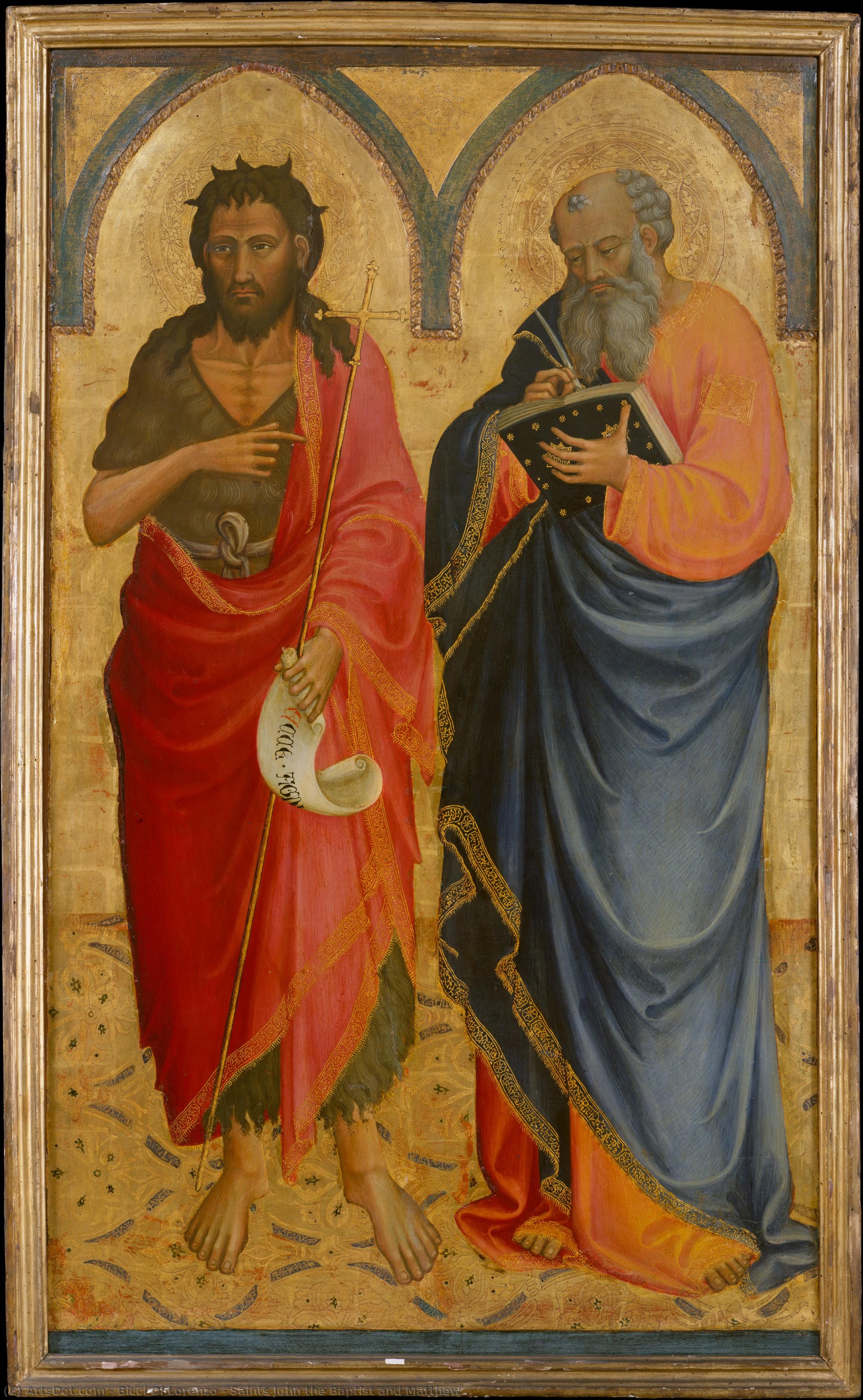
Saints John the Baptist and Matthew
 Tempera
- WallArt
- Early Renaissance
 1433
1433 124.0 x 74.0 cm
 Metropolitan Museum of Art
 Read More
Purchase a high-resolution, enhanced digital image, far superior to the online preview.
Each file is meticulously prepared by our in-house specialists using advanced tools and expert manual retouching. We ensure every image has exceptional clarity, precise color accuracy, and fine detail.
The final file is delivered via email within 72 hours, optimized for immediate use in professional, editorial, and print environments. This is the same quality trusted by top-tier design studios, publishers, and galleries.
Digital Image
Download a high-resolution file for personal display, printing, and creative projects. ( Buy Print Buy Hand Made Painting)
Included in Every Digital Image Order
Expert Digital Delivery, Guaranteed
When you choose ArtsDot.com, you're not just getting an image - you're receiving a professionally enhanced digital artwork, crafted with precision and backed by a satisfaction guarantee. Here's everything that comes with your order, automatically:

Fast Email Delivery
Your high-resolution digital image file will be emailed to you within 72 hours of ordering - ready for immediate use.

AI-Enhanced Digital File
Your artwork is professionally optimized using advanced AI tools and manual editing, ensuring maximum detail, clarity, and color accuracy.

Free Lifetime Re-Delivery
Accidentally deleted or lost your file? No worries - we'll resend it to you anytime, free of charge.

No Import Fees - Ever
Enjoy your artwork instantly with zero customs, duties, or delivery fees - digital downloads are always tax-free.

Color Accuracy Guarantee
We ensure your digital image reflects the original colors as closely as possible using professional tools and color management.

60-Day Satisfaction Guarantee
If you're not satisfied with your digital image, we'll revise it or refund 100% within 60 days - no questions asked.

100% Money-Back Guarantee
Not satisfied? Get a full refund within 60 days of receiving your digital file - no questions asked.

Bulk Order Discounts
Buy 3 images, save 10% - Buy 5, save 15% - Buy 10+, save 20%. Great for creative projects, galleries, and agencies.
Collectible Description
A Moment of Reverence: Exploring Bicci di Lorenzo’s “Saints John the Baptist and Matthew”
Bicci di Lorenzo's 1433 tempera painting, "Saints John the Baptist and Matthew," is more than just a devotional work; it’s a carefully constructed tableau of faith, wisdom, and the quiet dignity of early Renaissance spirituality. The piece, now housed in the Metropolitan Museum of Art, immediately draws the viewer into a space of serene contemplation, achieved through a masterful blend of color, form, and architectural detail. It's a painting that whispers stories of biblical narrative and embodies the burgeoning humanist ideals taking root within Florence at the time.
The composition is strikingly symmetrical, reflecting a desire for balance and harmony characteristic of the period. Two figures dominate the central space – Saint John the Baptist, identifiable by his staff and scroll (a symbol of authority and knowledge), and Saint Matthew, depicted with the book representing his role as the Evangelist. They are positioned within an arched architectural setting, reminiscent of a Roman basilica, which anchors the scene in both time and tradition. The background is not merely decorative; it’s a carefully rendered illusionistic space that subtly deepens the sense of depth and perspective – a key element of Renaissance painting.
The Language of Tempera: Technique and Detail
Bicci di Lorenzo's choice of tempera as his medium is crucial to understanding the painting’s character. Tempera, made from pigments mixed with egg yolk, allows for smooth layering of color and a remarkable level of detail. Observe closely, and you’ll notice the subtle gradations in tone, achieved through meticulous application of paint – a testament to the artist's skill and patience. The brushstrokes themselves are visible, lending a sense of texture and immediacy to the figures’ robes and drapery. This technique creates a slightly rough surface, adding a tactile quality that contrasts with the smooth transitions between colors.
The rendering of the fabrics is particularly noteworthy. The folds and creases in the garments are depicted with astonishing realism, conveying both their weight and movement. The use of gold leaf in the architectural elements further enhances the painting’s richness and luminosity, creating a sense of opulence and sacredness. The artist's attention to detail extends to the faces of the saints, which are rendered with a quiet solemnity that reflects their spiritual devotion.
Symbolism and Context: A Window into Florentine Faith
Beyond its formal beauty, “Saints John the Baptist and Matthew” is rich in symbolic meaning. The staff held by John represents his role as a prophet and herald of Christ’s coming, while the scroll he carries contains scripture – a direct reference to his prophetic mission. Matthew's book symbolizes his role as the author of one of the Gospels, documenting the life and teachings of Jesus. The architectural setting itself is significant, evoking the grandeur of Roman basilicas—places of worship and civic importance—and suggesting the enduring legacy of Christian faith.
Painted in 1433, during a period of immense artistic and intellectual ferment in Florence, this work reflects the city’s growing confidence as a center of art and learning. Bicci di Lorenzo was part of a vibrant workshop environment, influenced by masters like Jacopo di Cione and Andrea di Cione, who were experimenting with new techniques and styles. The painting stands as a testament to the flourishing of devotional art in Florence during this transformative era.
A Legacy of Devotion: Reproductions and Inspiration
“Saints John the Baptist and Matthew” continues to resonate today, offering a glimpse into the spiritual and artistic values of the early Renaissance. High-quality reproductions capture the painting’s luminous colors and intricate details, making it accessible for study and appreciation. Its serene composition and profound symbolism make it an ideal choice for interior design, bringing a sense of contemplative beauty to any space. The work serves as a reminder of the enduring power of faith, art, and human creativity.
Related Artworks
Artist Biography
Lorenzo di Bicci (c. 1373–1452): A Florentine Master of Devotion
Lorenzo di Bicci, born around 1373 in Florence, stands as a pivotal figure within the burgeoning Florentine School of painting during the second half of the fourteenth century and early fifteenth. While biographical details remain scarce—his father’s identity shrouded in obscurity—scholarly consensus firmly establishes Lorenzo's apprenticeship under Jacopo di Cione and Andrea di Cione, artists whose stylistic innovations profoundly shaped his artistic trajectory. This lineage cemented him within a vibrant milieu characterized by experimentation with color palettes and compositional fluidity, mirroring the broader trends of the era.- Early Life & Training: Lorenzo’s formative years were spent immersed in the workshop of his father, Jacopo di Bicci—a craftsman whose own artistic endeavors foreshadowed Lorenzo's distinctive approach. Membership in the Guild of Saint Luke by 1370 provided him with invaluable access to artistic knowledge and fostered connections within Florence’s burgeoning cultural landscape.
- Early Career & Patronage: His debut commission, a panel depicting St. Martin Enthroned for the Arte dei Vinattieri guild, exemplifies Lorenzo's commitment to serving the Florentine citizenry—particularly the clergy and guilds—a pattern that would define his artistic career. Collaborations with Agnolo Gaddi and Corso di Jacopo further honed his skills and exposed him to influential artistic currents.
- Style & Technique: Lorenzo’s style is instantly recognizable for its restrained elegance and masterful execution. Unlike many contemporaries who embraced grand narratives and elaborate ornamentation, he favored compositions characterized by balanced symmetry and a deliberate avoidance of complexity. Figures possessed serene expressions—often devoid of emotion—and were rendered with exceptional anatomical precision, reflecting the influence of Andrea di Cione’s meticulous draughtsmanship.
- Notable Works: Lorenzo’s artistic legacy is cemented by several iconic paintings that continue to captivate audiences today. The *Saints John the Baptist and Minias*, housed in San Francisco's Legion of Honor Museum, showcases his ability to convey spiritual depth through subtle color harmonies and architectural detail. Similarly, the *Four Evangelists* fresco—a testament to Lorenzo’s technical prowess—demonstrates a masterful command of perspective and shading techniques.
- Legacy & Influence: Lorenzo di Bicci's artistic output profoundly impacted subsequent generations of Florentine painters, notably his son Neri di Bicci, who carried forward the family tradition of devotional art. His unwavering dedication to portraying religious themes—coupled with his commitment to serving the Florentine community—solidifies his position as a cornerstone of Renaissance artistic development and an enduring symbol of Florentine piety.
The Frescoes of Palazzo Medici: A Reflection of Patronage & Artistic Innovation
Lorenzo’s most ambitious undertaking was undoubtedly the cycle of frescoes adorning Palazzo Medici—commissioned by Cosimo I de' Medici—a project that cemented his reputation as a leading artist of his time. These monumental paintings, depicting scenes from biblical history and mythological narratives, represent a pinnacle of Florentine Renaissance art, showcasing Lorenzo’s mastery of color, composition, and perspective. The frescoes served not only as decorative embellishments but also as powerful statements of Medici patronage—demonstrating the transformative role that aristocratic commissions played in shaping artistic trends.Exploring Lorenzo's Artistic Connections: Influences & Collaborations
Lorenzo’s artistic development was inextricably linked to his interactions with fellow masters and craftsmen, fostering a dynamic exchange of ideas within Florence’s artistic ecosystem. His apprenticeship under Jacopo di Cione instilled in him an appreciation for expressive color palettes—a characteristic that would permeate his own paintings—while collaborations with Andrea di Cione honed his draughtsmanship skills and exposed him to innovative compositional strategies. Furthermore, Lorenzo's engagement with the Guild of Saint Luke facilitated access to artistic resources and fostered connections within Florence’s vibrant cultural milieu.A Painter Dedicated to Faith: Themes & Symbolism in Lorenzo’s Oeuvre
Lorenzo di Bicci’s artistic output consistently centered on religious themes—primarily depictions of saints, biblical narratives, and liturgical scenes—reflecting the pervasive influence of piety within Florentine society during his lifetime. His paintings employed symbolic imagery—drawing upon established conventions of medieval iconography—to convey spiritual truths and evoke emotional responses from viewers. The serene expressions of his figures—often devoid of overt emotion—underscored a contemplative aesthetic that distinguished Lorenzo’s work from more flamboyant artistic endeavors prevalent elsewhere in Europe.Concluding Reflections: Lorenzo di Bicci's Enduring Significance
Lorenzo di Bicci’s contribution to Florentine art transcends mere stylistic innovation; he embodies the humanist spirit of his era—characterized by a profound engagement with classical ideals and a commitment to portraying human experience with dignity and compassion. His unwavering dedication to serving the Florentine community—coupled with his mastery of artistic technique—solidifies his position as one of the most influential painters of the fourteenth century, ensuring that his legacy continues to inspire artists and scholars alike.
bicci di lorenzo
1350 - 1427 , Italy
Quick Facts
- Artistic Movement Or Style: Florentine School
- Artists Or Movements Influenced By This Artist: ['Gentile da Fabriano']
- Artists Who Influenced This Artist:
- Andrea di Cione
- Jacopo di Cione
- Date Of Birth: c. 1373
- Date Of Death: 1452
- Full Name: Lorenzo di Bicci
- Nationality: Italian
- Notable Artworks:
- St Martin Enthroned
- Saints John & Matthew
- The Four Evangelists (detail)
- Saint Nicholas Resuscitating Three Youths
- Place Of Birth: Florence, Italy

