 Preview
 Send
Send Share
Share
 Details

 Download
 Similars
 X-Ray
X-Ray Diaporama
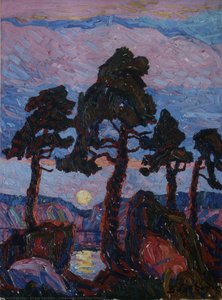
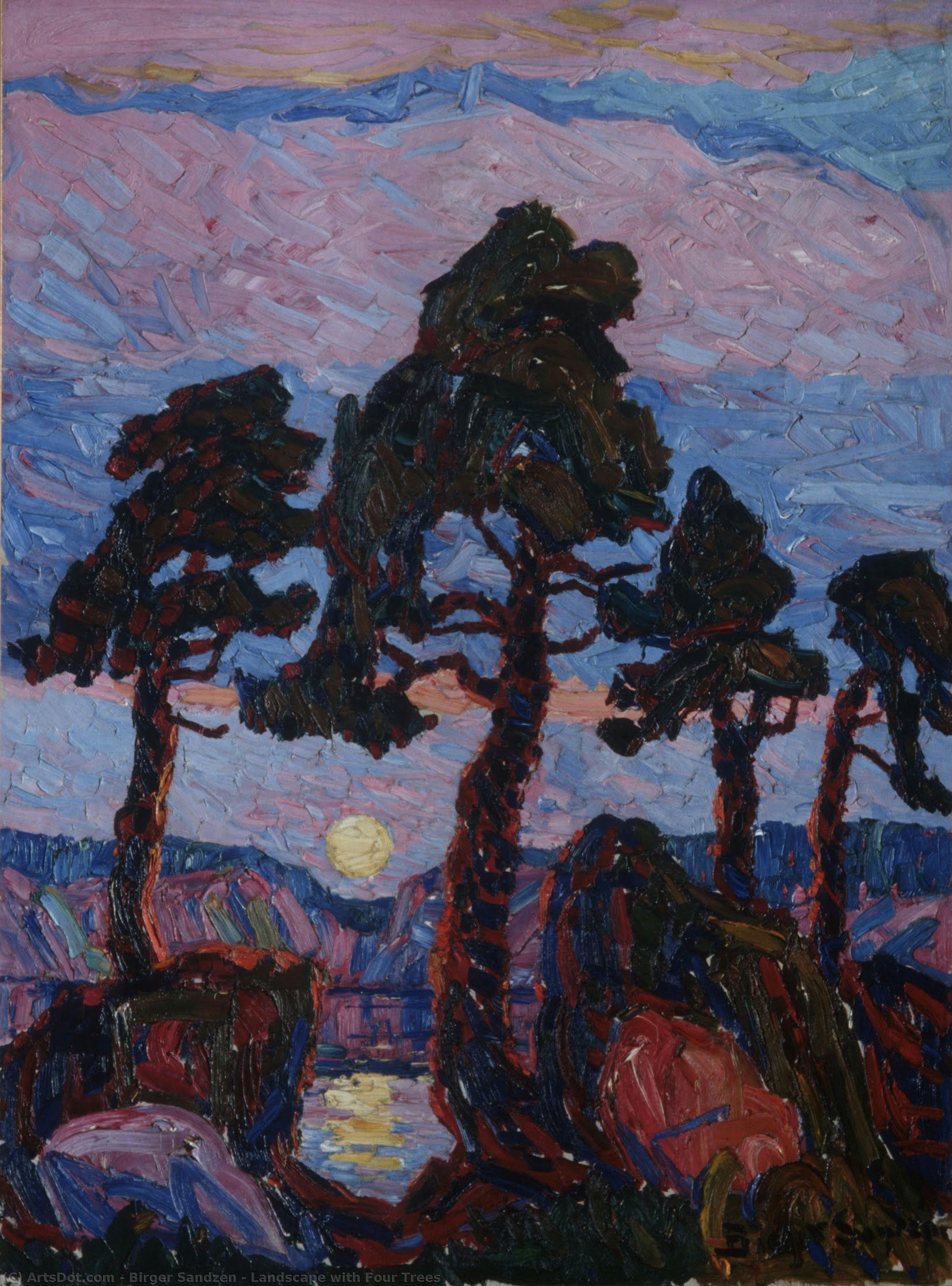
Landscape with Four Trees
 1920
1920 121.0 x 91.0 cm
 Read More
Giclée / Art Print
Museum-quality giclée or canvas print with fast production and flexible finish options. ( Buy Hand Made Painting Buy Image)




































Pick from our preset sizes that match the artwork's original proportions.

You may enter your own dimensions to fit a specific frame or space. If your selected size does not match the original image's proportions, we will either crop the artwork or extend the image with a mirrored or solid-fill edge. A digital mockup will be sent for your approval before production begins.
Please note that the on-screen preview does not reflect the actual cropping or extension. Only the mockup will accurately show the final composition.
While custom sizes are available, we recommend selecting a dimension from the predefined list to preserve the original proportions.
Worldwide Delivery () in 2 weeks instead of standard 4/5 weeks. (17 August)

Free Worldwide Express Shipping

High-Quality Linen Canvas

Full Shipping Insurance

Customs Tax Refund Guarantee

True Color Matching Guarantee

60-Day Return Policy (Defects Only)

100% Money-Back Guarantee

Bulk Discount Offer
 Glass option is only available in size under 110 CM

Landscape with Four Trees
Giclée / Art Print
Reproduction Size
-


Total Price
$ 63
Collectible Description
Related Artworks
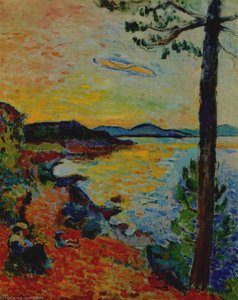
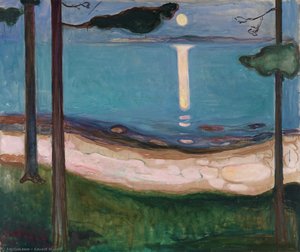
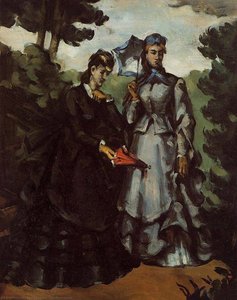
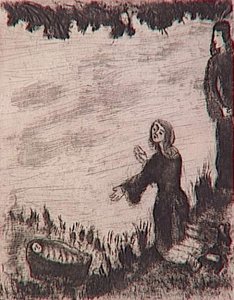
Artist Biography
A Life Rooted in Two Worlds
Sven Birger Sandzén, a name resonating with the vibrant spirit of post-impressionism and the raw beauty of the American West, was born February 5, 1871, in the small Swedish parish of Järpås. His artistic journey began not amidst grand academies but within the nurturing environment of his family home, where his father, a pastor, instilled a deep appreciation for culture, and his mother, an accomplished watercolorist, sparked his initial creative impulses. At ten years old, young Birger entered Skara School, receiving eight years of classical education alongside foundational training in drawing and design under Olof Erlandsson, a graduate of the Royal Academy of Art. This early exposure laid the groundwork for his future explorations, though it was at Lund University that Sandzén first felt the pull towards a more dedicated artistic path. A move to Stockholm followed, where he joined a collective of young artists—later known as the Artists League—under the guidance of luminaries like Anders Zorn, Richard Bergh, and Per Hasselberg. This period proved pivotal, fostering a sense of community and experimentation that would shape his evolving style. However, the waiting list for admission to the Royal Swedish Academy of Arts proved too long, prompting Sandzén to seek alternative mentorship. He found it in a group studying with Anders Zorn, Richard Bergh, and Per Hasselberg, an experience that ignited his passion but also led him across the Atlantic.From Stockholm to the Kansas Plains
In 1894, Sandzén’s life took an unexpected turn. Inspired by a book detailing the challenges and opportunities of pioneer life in America, penned by Bethany College president Carl A. Swensson, he responded to a call for talented individuals willing to contribute to the burgeoning cultural landscape of Kansas. He accepted a position at Bethany College in Lindsborg, intending initially to teach languages while assisting with art and vocal music. Little did he know this would become his lifelong home, a place where he would not only educate generations of students but also find the inspiration for his most enduring work. Sandzén quickly integrated into the community, establishing art clubs, exhibitions, and scholarships—a testament to his commitment to fostering artistic growth. In 1900, he married Augusta Alfrida Leksell, a gifted pianist, and together they raised their daughter, Margarita Elizabeth. He steadily rose through the ranks at Bethany College, eventually becoming head of the art department in 1899, a position he held until his retirement in 1946. But it was the landscape itself—the smoky hill river valley, the vastness of the plains, and the subtle shifts in light and color—that truly captured Sandzén’s imagination.Influences and Artistic Development
Sandzén's early work reveals a fascinating interplay of influences. His initial training in Sweden instilled a strong foundation in draftsmanship and tonalism. A brief but impactful period studying under Edmond Aman-Jean in Paris introduced him to the principles of pointillism, a technique championed by artists like Ernest Laurent and Georges Seurat. However, Sandzén didn’t simply adopt these styles wholesale; he synthesized them with his own unique vision. His palette began to brighten, reflecting the influence of Van Gogh and Cézanne—artists who prioritized emotional expression and subjective experience over strict realism. He embraced bold brushwork, vibrant colors, and a sense of dynamic energy that set his work apart. This distinctive style, characterized by its intensity and expressive power, became his hallmark. While initially displaying impressionistic tendencies, Sandzén’s art evolved into something uniquely his own—a post-impressionist vision deeply rooted in the American landscape.The Landscapes of the West: A Legacy in Paint
Sandzén was captivated by the dramatic scenery of central Kansas and beyond. The Smoky Hill River Valley became a recurring motif, providing endless subject matter for his paintings. He frequently ventured west, drawn to the majestic landscapes of Rocky Mountain National Park and Yellowstone National Park—venues that offered him breathtaking vistas and challenging artistic opportunities. But even when painting these grand scenes, Sandzén’s work retained a distinctly personal quality. He wasn't merely documenting scenery; he was conveying his emotional response to it. His paintings are characterized by their powerful sense of atmosphere, their dynamic compositions, and their vibrant use of color. He produced an astonishing volume of work—over 2600 oil paintings, 500 watercolors, hundreds of drawings, and over 300 prints—a testament to his tireless dedication and unwavering passion.Historical Significance and Enduring Appeal
Birger Sandzén’s impact extends far beyond the canvases he created. He was a founding member of several important art organizations, including the Mid-West Art Exhibition and the Smoky Hill Art Club, actively promoting artistic exchange and collaboration. His work gained national recognition through numerous exhibitions at leading galleries and museums across the United States and Europe. Today, his paintings are held in prominent collections, including those of the Nelson-Atkins Museum of Art, the Brooklyn Museum, and the Library of Congress. Sandzén’s legacy lies not only in his artistic achievements but also in his dedication to education. He nurtured generations of students at Bethany College, instilling in them a love for art and a commitment to creative expression. His paintings continue to resonate with audiences today, offering a powerful glimpse into the beauty and majesty of the American West—a testament to the enduring power of vision and the transformative potential of art. The Birger Sandzén Memorial Gallery in Lindsborg stands as a lasting tribute to his life and work, ensuring that his vibrant landscapes will continue to inspire and captivate for generations to come.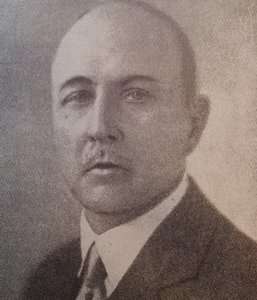
Quick Facts
- Artistic Movement Or Style: World Goes Pop
- Artists Or Movements Influenced By This Artist: ['Influences various contemporary artists']
- Artists Who Influenced This Artist: ['Influenced by diverse artists within the World Goes Pop movement']
- Date Of Death: Living
- Notable Artworks: ['Various works featured in The World Goes Pop exhibition']
- Place Of Birth: WahooArt