 Preview
 Send
Send Share
Share
 Details

 Download
 Similars
 X-Ray
X-Ray Diaporama
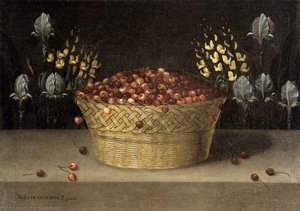
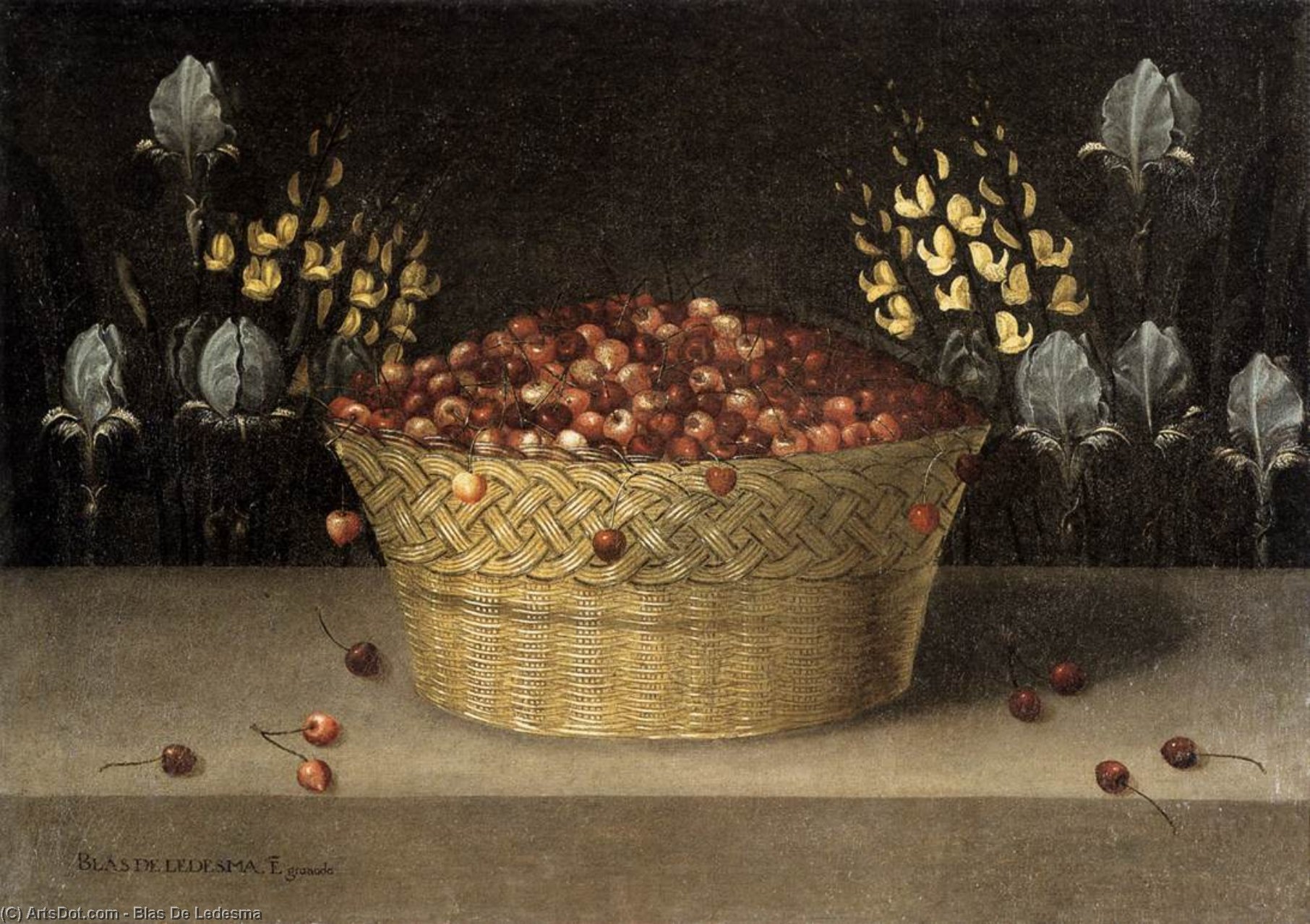
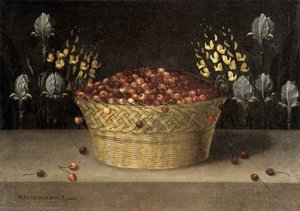
Basket of Cherries and Flowers
 1620
1620 79.0 x 59.0 cm
 High Museum of Art
 Read More
Giclée / Art Print
Museum-quality giclée or canvas print with fast production and flexible finish options. ( Buy Hand Made Painting Buy Image)




































Pick from our preset sizes that match the artwork's original proportions.

You may enter your own dimensions to fit a specific frame or space. If your selected size does not match the original image's proportions, we will either crop the artwork or extend the image with a mirrored or solid-fill edge. A digital mockup will be sent for your approval before production begins.
Please note that the on-screen preview does not reflect the actual cropping or extension. Only the mockup will accurately show the final composition.
While custom sizes are available, we recommend selecting a dimension from the predefined list to preserve the original proportions.
Worldwide Delivery () in 2 weeks instead of standard 4/5 weeks. (25 August)

Free Worldwide Express Shipping

High-Quality Linen Canvas

Full Shipping Insurance

Customs Tax Refund Guarantee

True Color Matching Guarantee

60-Day Return Policy (Defects Only)

100% Money-Back Guarantee

Bulk Discount Offer
 Glass option is only available in size under 110 CM

Basket of Cherries and Flowers
Giclée / Art Print
Reproduction Size
-


Total Price
$ 63
Related Artworks
Artist Biography
The Enigmatic Master of Granada
Blas de Ledesma remains one of the most captivating enigmas of the Spanish Baroque, a painter whose name whispers through the halls of history despite the shadows that shroud his personal life. Active during the transition from the late 16th to the early 17th century, Ledesma’s biography is a tapestry woven with fragments of archival evidence and the silent testimony of his canvases. While much of his individual history remains obscured by the scarcity of verifiable records, his presence in the artistic landscape of Granada is undeniable. He emerged as a significant figure in a period of profound cultural transformation, leaving behind a legacy that bridges the meticulous detail of the Renaissance with the dramatic intensity of the Baroque era.
The traces of his professional journey are most notably found in the writings of Francisco Pacheco, whose seminal Arte de la Pintura places Ledesma within the vibrant artistic community of Granada between 1602 and 1614. This period was one of immense prestige for the region, as it served as a vital center for cultural production under Habsburg rule. Perhaps the most illustrious testament to his skill was his commission for the Alhambra palace, where he designed a monumental stucco vault decoration. Such an undertaking required not only technical mastery of illusionistic painting but also a profound understanding of how light and architecture interact—a feat that solidified his reputation among the elite painters of his time.
A Symphony of Light and Nature
Ledesma’s true genius is most vibrantly expressed through his mastery of the still life, a genre he elevated from mere observation to a profound spiritual and sensory experience. His works are characterized by an exquisite sensitivity to the natural world, where the humble subjects of fruit and flora are transformed into icons of beauty and contemplation. In his compositions, one finds a meticulous rendering of textures: the velvety skin of a peach, the translucent sheen of a grape, or the delicate, dew-kissed petals of a rose. He possessed a rare ability to capture the ephemeral nature of life, using light to breathe vitality into the inanimate.
The stylistic evolution of his work suggests a sophisticated dialogue with the great movements of his age. Scholars often detect the lingering elegance of Flemish Mannerism in his precise compositions, yet there is an undeniable tension introduced by the dramatic chiaroscuro reminiscent of the Italian Caravaggisti. This interplay of deep, velvety shadows and piercing highlights creates a sense of theatrical depth, pulling the viewer into a space where the boundaries between reality and art dissolve. His palettes, often rich and vibrant, serve to emphasize the tactile reality of his subjects, making each arrangement of plums, pears, or lilies feel as though it could be plucked from the canvas.
Legacy and Artistic Significance
The historical significance of Blas de Ledesma lies in his ability to infuse the commonplace with a sense of the divine. Through his lens, a basket of fruit is never just food; it is a meditation on abundance, decay, and the fleeting nature of time—themes central to the Baroque consciousness. Although his oeuvre is relatively rare and often difficult to attribute due to the prevalence of unsigned works and occasional confusion with other artists like Blas de Prado, his impact on the Spanish still life tradition is profound.
His contributions can be summarized through several key artistic pillars:
- Technical Innovation: His mastery of illusionistic techniques in large-scale decorative projects like those at the Alhambra.
- Genre Elevation: The transformation of the still life into a medium for complex symbolic and spiritual narratives.
- Stylistic Synthesis: The seamless blending of Northern European precision with the dramatic, light-driven intensity of the Southern Baroque.
- Cultural Impact: Establishing Granada as a pivotal location for high-level artistic commissions during the Spanish Golden Age.
Today, Ledesma’s work continues to enchant collectors and historians alike. He remains a painter of shadows and light, an artist who found the infinite within the finite, leaving behind a visual language that speaks of the enduring beauty found in the simplest elements of the natural world.
blas de ledesma
1556 - 1598 , Spain
Quick Facts
- Artistic Movement Or Style: Still Life
- Date Of Death: 1598
- Full Name: Blas de Ledesma
- Nationality: Spanish
- Notable Artworks: ['Stucco vault decoration for the Alhambra']
- Place Of Birth: Spain