

 Preview
 Send
Send Share
Share
 Details

 Download
 Similars
 X-Ray
X-Ray Diaporama
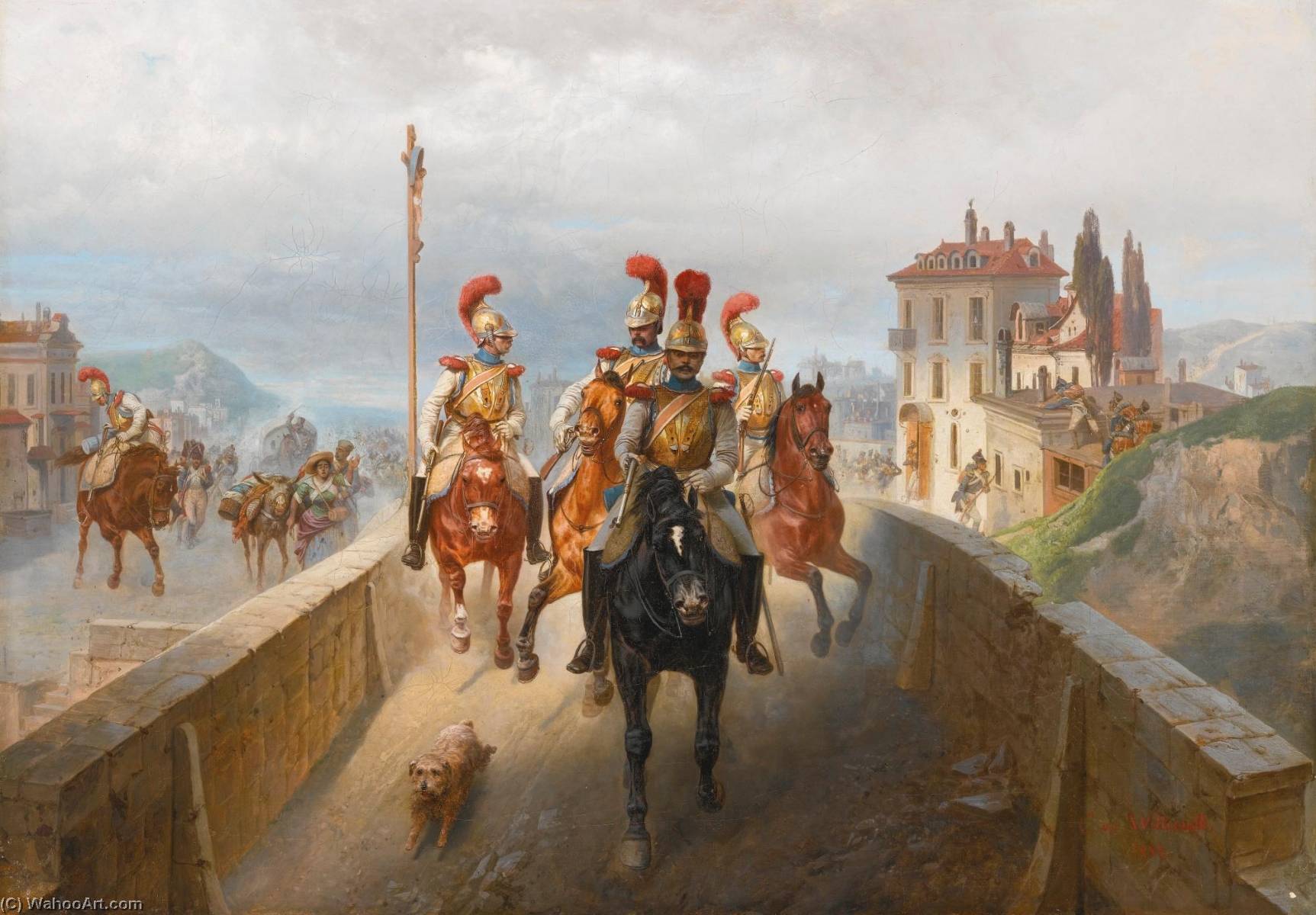
Napoleonic troops
 43.0 x 61.0 cm
 Read More
Purchase a high-resolution, enhanced digital image, far superior to the online preview.
Each file is meticulously prepared by our in-house specialists using advanced tools and expert manual retouching. We ensure every image has exceptional clarity, precise color accuracy, and fine detail.
The final file is delivered via email within 72 hours, optimized for immediate use in professional, editorial, and print environments. This is the same quality trusted by top-tier design studios, publishers, and galleries.
Digital Image
Download a high-resolution file for personal display, printing, and creative projects. ( Buy Print Buy Hand Made Painting)
Included in Every Digital Image Order
Expert Digital Delivery, Guaranteed
When you choose ArtsDot.com, you're not just getting an image - you're receiving a professionally enhanced digital artwork, crafted with precision and backed by a satisfaction guarantee. Here's everything that comes with your order, automatically:

Fast Email Delivery
Your high-resolution digital image file will be emailed to you within 72 hours of ordering - ready for immediate use.

AI-Enhanced Digital File
Your artwork is professionally optimized using advanced AI tools and manual editing, ensuring maximum detail, clarity, and color accuracy.

Free Lifetime Re-Delivery
Accidentally deleted or lost your file? No worries - we'll resend it to you anytime, free of charge.

No Import Fees - Ever
Enjoy your artwork instantly with zero customs, duties, or delivery fees - digital downloads are always tax-free.

Color Accuracy Guarantee
We ensure your digital image reflects the original colors as closely as possible using professional tools and color management.

100-Day Satisfaction Guarantee
If you're not satisfied with your digital image, we'll revise it or refund 100% within 100 days - no questions asked.

100% Money-Back Guarantee
Not satisfied? Get a full refund within 100 days of receiving your digital file - no questions asked.

Bulk Order Discounts
Buy 3 images, save 10% - Buy 5, save 15% - Buy 10+, save 20%. Great for creative projects, galleries, and agencies.
Related Artworks









Artist Biography
Early Life and Academic Foundations
Bogdan Pavlovich Willewalde, born Gottfried Willewalde on December 31, 1818, in the picturesque town of Pavlovsk near Saint Petersburg, emerged from a noble family with roots tracing back to Bavaria. From his earliest years, he was immersed in an environment steeped in aristocratic connections and proximity to the Imperial court—a formative influence that would subtly shape both his subject matter and artistic trajectory. His initial exposure to art came through tutelage under Jungstedt before formally enrolling at the prestigious St. Petersburg Academy of Arts in 1838. There, he honed his skills under the guidance of luminaries like Karl Bryullov and Alexander Sauerweid, absorbing the prevailing academic traditions that emphasized meticulous realism and historical accuracy. This rigorous training laid a solid foundation for Willewalde’s future specialization in military art, a genre deeply valued within the Russian Empire.The Rise of a Military Painter: Influences and Early Works
Willewalde's artistic development was initially marked by the influence of German masters, particularly Peter von Hess of Munich. His early work, such as “The Battle of Gissgubel,” reflects this aesthetic—a focus on detailed depictions of conflict rendered with a certain formality. However, he soon gravitated towards the more dynamic and expressive style of French artist Horace Vernet, though he strived to capture Vernet’s effortless brushwork and elegance. A pivotal moment arrived in 1844 when Willewalde was recalled from Dresden—where he had been studying depictions of the Napoleonic Wars—to complete Alexander Sauerweid's unfinished cycle illustrating Russia’s triumph over Napoleon. This commission propelled him into prominence, tasking him with monumental canvases destined for the Alexander Hall of the Winter Palace: “The Battles of Kulm,” “Leipzig,” “Fère-Champenoise,” and “Paris.” These works weren’t merely historical representations; they were powerful statements of national pride and military valor. In 1848, Willewalde was appointed professor at the Imperial Academy of Arts, assuming leadership of the military arts section—a testament to his growing reputation and expertise.A Life Immersed in Conflict: Sketching from Experience
Willewalde distinguished himself not merely as a studio painter but as an artist deeply engaged with the realities of war. He actively sought opportunities to witness battles firsthand, joining military campaigns to create sketches and *études* that would inform his monumental canvases. This commitment to authenticity set him apart—his paintings weren’t reconstructions based on second-hand accounts but visceral depictions born from direct observation. Commissions followed depicting key conflicts: the Polish November Uprising of 1831 (“Grokhovo” and “Ostrolenka”), the Hungarian Revolution of 1848 (“Surrender of Görgey at Világos,” “Advance into Kronstadt”), and the Crimean War (scenes from the Siege of Sevastopol). Perhaps most significantly, his involvement in the Russian conquest of the Caucasus led to an extraordinary series of watercolors and sketches documenting the landscape and people of Dagestan—works that hold immense historical value today.Legacy and Historical Significance
Bogdan Pavlovich Willewalde’s career spanned decades, culminating in a substantial body of work that captured pivotal moments in Russian military history. While his style evolved over time, he consistently prioritized realism and narrative clarity. His later paintings, though sometimes smaller in scale, explored the everyday lives of soldiers—a subtle shift towards humanizing the experience of war. Willewalde’s influence extended beyond his own artistic output; as a professor at the Imperial Academy of Arts, he shaped generations of military painters, instilling in them a commitment to accuracy and patriotic themes. His paintings served not only as historical records but also as powerful tools for reinforcing national identity and celebrating Russian military prowess. His works remain significant today, offering invaluable insights into 19th-century warfare, the complexities of imperial power, and the artistic conventions of their time. The Khanenko Museum holds a notable collection of his paintings, providing a window into this artist’s unique vision and enduring legacy. Willewalde died in Dresden on March 11, 1903, leaving behind a rich artistic heritage that continues to captivate and inform viewers today.
Quick Facts
- Artistic Movement Or Style: Napoleonic realism
- Artists Who Influenced This Artist:
- Karl Bryullov
- Horace Vernet
- Peter von Hess
- Date Of Birth: January 12, 1819
- Date Of Death: March 24, 1903
- Full Name: Bogdan Pavlovich Villevalde
- Nationality: Russian
- Notable Artworks:
- Asking for directions
- Siege of Silistria works
- Napoleonic troops
- Place Of Birth: Pavlovsk, Russia