Menu
FREE ART CONSULTATION
PreviewPreview AR previewAR preview Buy Print Buy PrintBuy Hand Made Painting Buy Hand Made Painting SendSend
DetailsDetails Add to favorites Add to favorites DownloadDownload SimilarsSimilars X-RayX-Ray DiaporamaDiaporama

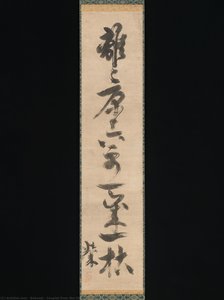
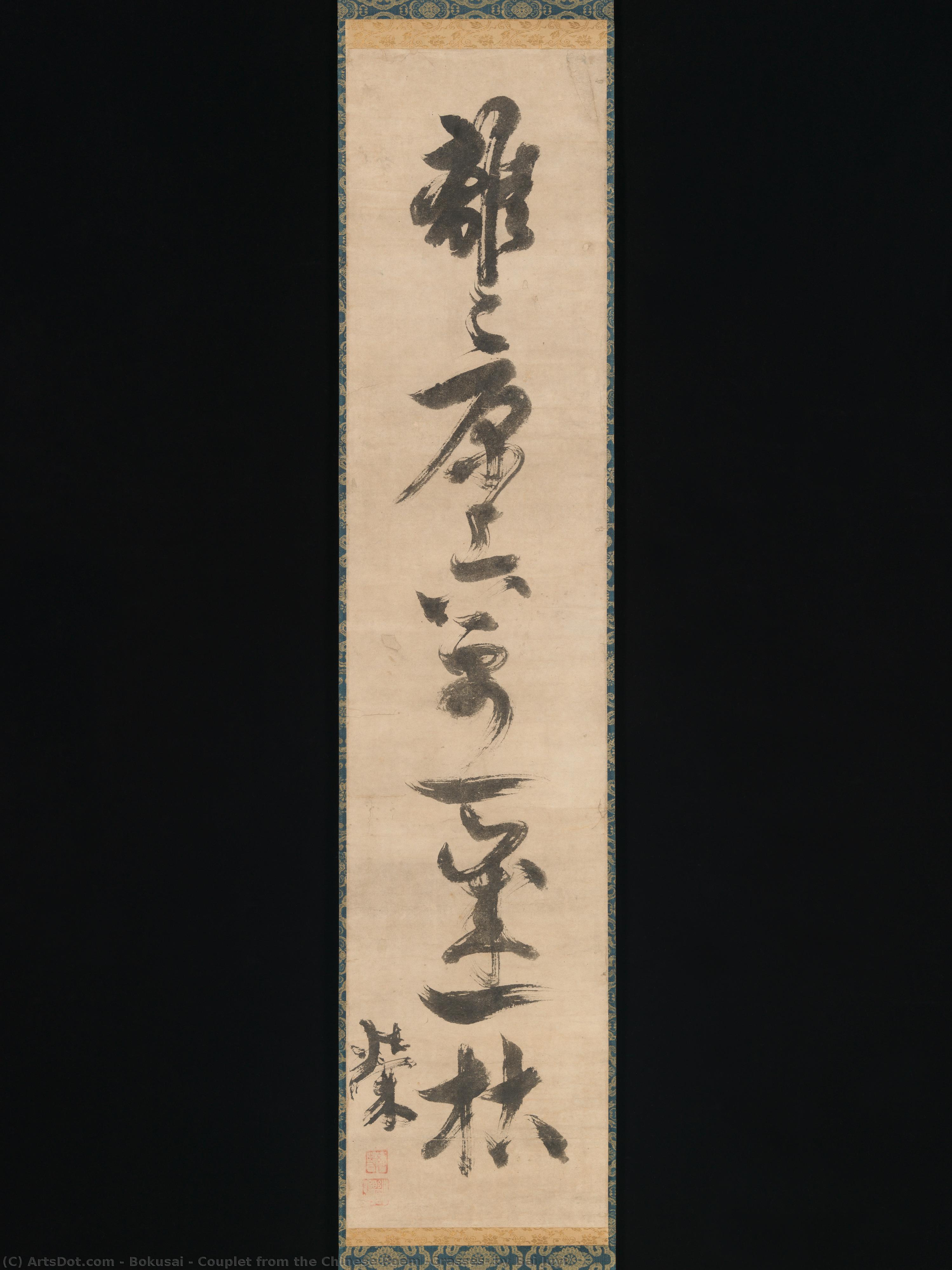
Couplet from the Chinese Poem “Grasses” by Bai Juyi

  • Creation date401
  • Dimensions119.0cm x 26.0cm

A master of Ukiyo-e woodblock printing, Bokusai's iconic 'Thirty-Six Views of Mount Fuji' and prolific series capture the beauty of Japanese landscapes and life—discover his timeless artistry today.

Purchase a high-resolution, enhanced digital image, far superior to the online preview.

Each file is meticulously prepared by our in-house specialists using advanced tools and expert manual retouching. We ensure every image has exceptional clarity, precise color accuracy, and fine detail.

The final file is delivered via email within 72 hours, optimized for immediate use in professional, editorial, and print environments. This is the same quality trusted by top-tier design studios, publishers, and galleries.

Digital Image

Download a high-resolution file for personal display, printing, and creative projects. (Buy Print Buy PrintBuy Hand Made Painting Buy Hand Made Painting)

Total Price

$ 24.00

Included in Every Digital Image Order

Expert Digital Delivery, Guaranteed

When you choose ArtsDot.com, you're not just getting an image - you're receiving a professionally enhanced digital artwork, crafted with precision and backed by a satisfaction guarantee. Here's everything that comes with your order, automatically:

shipping_icon
Fast Email Delivery

Your high-resolution digital image file will be emailed to you within 72 hours of ordering - ready for immediate use.

canvas_icon
AI-Enhanced Digital File

Your artwork is professionally optimized using advanced AI tools and manual editing, ensuring maximum detail, clarity, and color accuracy.

insurance_icon
Free Lifetime Re-Delivery

Accidentally deleted or lost your file? No worries - we'll resend it to you anytime, free of charge.

tax_icon
No Import Fees - Ever

Enjoy your artwork instantly with zero customs, duties, or delivery fees - digital downloads are always tax-free.

color_icon
Color Accuracy Guarantee

We ensure your digital image reflects the original colors as closely as possible using professional tools and color management.

return_icon
60-Day Satisfaction Guarantee

If you're not satisfied with your digital image, we'll revise it or refund 100% within 60 days - no questions asked.

guarantee_icon
100% Money-Back Guarantee

Not satisfied? Get a full refund within 60 days of receiving your digital file - no questions asked.

discount_icon
Bulk Order Discounts

Buy 3 images, save 10% - Buy 5, save 15% - Buy 10+, save 20%. Great for creative projects, galleries, and agencies.


A scroll with boldly inscribed Chinese characters by or attributed to a prominent Zen monk such as Motsurin Jōtō would have been used for display in an alcove during a tea ceremony. Motsurin Jōtō, or Bokusai, was a close disciple of the famous Zen monk Ikkyū (1394–1481) of Daitokuji. Because of this close connection, Motsurin’s briskly brushed calligraphy closely resembles that of his master. Here he has brushed a couplet by the Tang poet Bai Juyi (772–846): Wild grasses spread out far across the plains. Each year they wither, only to flourish again. —Trans. John T. Carpenter

Artist Biography

The Enigmatic World of Bokusai

Bokusai, a name whispered among collectors and art enthusiasts, represents a fascinating anomaly in the landscape of contemporary Japanese painting. Unlike many artists whose lives are meticulously documented, Bokusai remains shrouded in mystery, an intentional veil cultivated by the artist himself. Born in Japan in an unknown year – the exact date deliberately withheld from public record – Bokusai’s existence is as much performance art as it is artistic creation. This deliberate obscurity adds a layer of intrigue to works that already possess a captivating and often unsettling beauty. While biographical details are scarce, what *is* known suggests a childhood steeped in traditional Japanese aesthetics, though the specifics remain elusive. It's believed Bokusai received early training in calligraphy and ink wash painting, foundational skills that would later define his unique style. However, he quickly diverged from conventional paths, rejecting formal instruction in favor of self-directed exploration.

A Rejection of Tradition: The Birth of a Singular Vision

Bokusai’s artistic philosophy centers on a profound rejection of established norms. In an art world historically governed by precise techniques and adherence to classical motifs, Bokusai emerged as a defiant individualist. His paintings are characterized by bold, unconventional compositions, often featuring distorted figures and unsettling juxtapositions. He eschews the delicate precision favored by many contemporaries, opting instead for raw, expressive brushstrokes that convey a sense of immediacy and emotional intensity. This deliberate departure from tradition wasn’t merely stylistic; it was a conscious attempt to dismantle conventional notions of beauty and representation. Bokusai sought not to *depict* reality but to evoke its underlying essence, often through the exploration of darker themes and psychological states. His early works, though already hinting at his future direction, were largely ignored by the established art community, dismissed as amateurish or even grotesque. This initial rejection fueled his determination to forge a path entirely his own.

Themes and Techniques: Exploring the Shadow Self

The thematic core of Bokusai’s oeuvre revolves around the exploration of human vulnerability, isolation, and the darker aspects of the psyche. Recurring motifs include solitary figures lost in desolate landscapes, fragmented portraits that hint at inner turmoil, and unsettling depictions of everyday objects imbued with a sense of foreboding. His technique is equally distinctive. Bokusai masterfully employs sumi-e ink wash painting, but pushes its boundaries to create textures and effects rarely seen before. He frequently utilizes negative space to amplify the emotional impact of his compositions, leaving vast areas of blank paper that seem to breathe with a palpable sense of emptiness. The artist’s use of color is equally restrained, often limited to shades of black, gray, and white, further enhancing the somber mood of his works. He doesn't paint what he sees, but what he feels, as one critic famously noted. Bokusai also incorporates elements of calligraphy into his paintings, blurring the lines between visual art and poetic expression.

Achievements and Legacy: A Cult Following Emerges

Despite initial indifference from the mainstream art world, Bokusai’s work gradually began to attract a devoted following among a small circle of collectors and fellow artists. His refusal to compromise his artistic vision resonated with those who felt alienated by the rigid conventions of traditional Japanese painting. In recent years, there has been a surge in interest in Bokusai's art, fueled by exhibitions at prominent galleries and museums worldwide. While he remains largely unknown to the general public, his influence on contemporary artists is undeniable. His willingness to challenge established norms, embrace unconventional techniques, and explore difficult themes has inspired generations of painters to push the boundaries of their own creative expression. Bokusai’s legacy lies not in technical mastery or adherence to classical ideals, but in his unwavering commitment to artistic authenticity and his ability to evoke a profound emotional response through his hauntingly beautiful works. He continues to live and work in Japan, maintaining his deliberate anonymity and continuing to create art that challenges, provokes, and captivates.