 Preview
 Send
Send Share
Share
 Details

 Download
 Similars
 X-Ray
X-Ray Diaporama
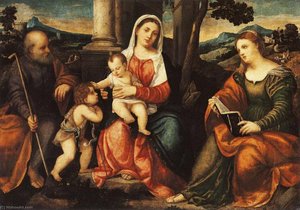
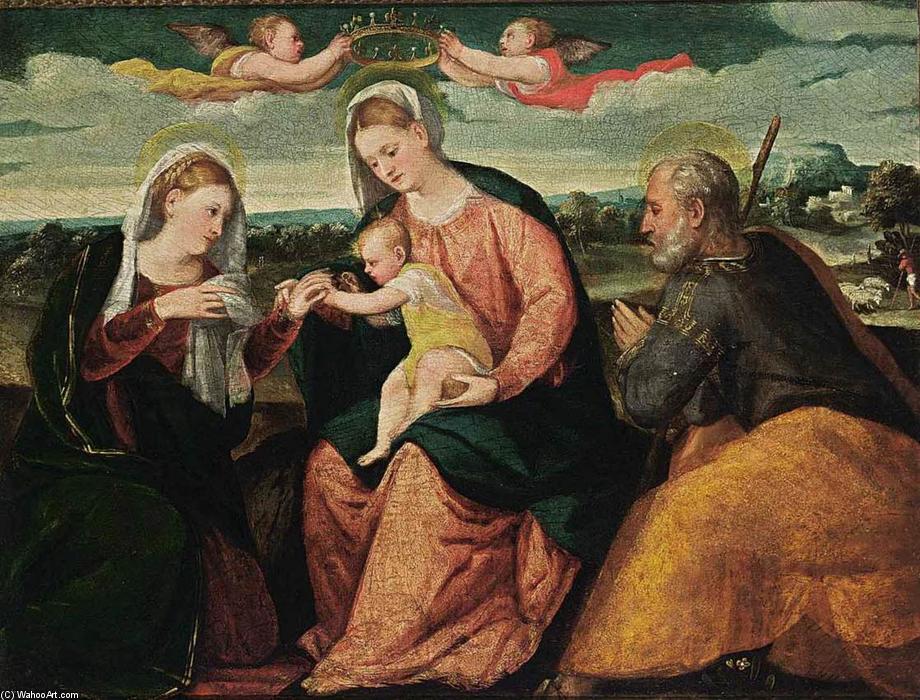
The Mystic Marriage of St Catherine
 1545
1545 69.0 x 92.0 cm
 Read More
Giclée / Art Print
Museum-quality giclée or canvas print with fast production and flexible finish options. ( Buy Hand Made Painting Buy Image)




































Pick from our preset sizes that match the artwork's original proportions.

You may enter your own dimensions to fit a specific frame or space. If your selected size does not match the original image's proportions, we will either crop the artwork or extend the image with a mirrored or solid-fill edge. A digital mockup will be sent for your approval before production begins.
Please note that the on-screen preview does not reflect the actual cropping or extension. Only the mockup will accurately show the final composition.
While custom sizes are available, we recommend selecting a dimension from the predefined list to preserve the original proportions.
Worldwide Delivery () in 2 weeks instead of standard 4/5 weeks. (6 September)

Free Worldwide Express Shipping

High-Quality Linen Canvas

Full Shipping Insurance

Customs Tax Refund Guarantee

True Color Matching Guarantee

60-Day Return Policy (Defects Only)

100% Money-Back Guarantee

Bulk Discount Offer
 Glass option is only available in size under 110 CM

The Mystic Marriage of St Catherine
Giclée / Art Print
Reproduction Size
-


Total Price
$ 63
The Composition
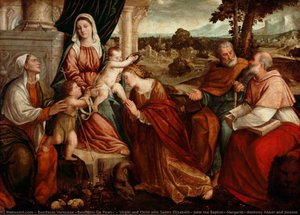
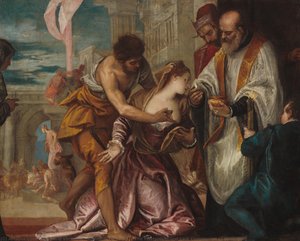
The painting depicts a momentous event from Christian tradition, where St Catherine is mystically married to Christ. The composition is characterized by a sense of harmony and balance, with the figures arranged in a triangular formation. The use of light and shadow adds depth and dimension to the scene, while the colors are rich and varied, contributing to the overall complexity of the painting. Key elements of the painting include the figure of St Catherine, who is shown kneeling in devotion, and the Christ child, who is held by the Virgin Mary. The background features a landscape with trees, buildings, and a body of water, providing context for the setting. The painting's composition reflects the artistic conventions of the Renaissance period, where symmetry and harmony were highly valued.Artistic Significance
Bonifazio Veronese's The Mystic Marriage of St Catherine is a significant work in the history of art, showcasing the artist's technical skill and artistic vision. The painting is reminiscent of other works by renowned artists, such as Raphael and Paolo Veronese, who also explored themes of religious devotion and mysticism in their work.- View more paintings by Bonifazio Veronese on ArtsDot.com
- Learn more about the Museum San Bartolomeo on ArtsDot.com
- Discover the life and work of Bonifazio Veronese on Wikipedia
The Mystic Marriage of St Catherine is a captivating painting that showcases the artistic skill and vision of Bonifazio Veronese. With its rich colors, harmonious composition, and profound themes, this masterpiece is a must-see for art lovers and historians alike.
Related Artworks
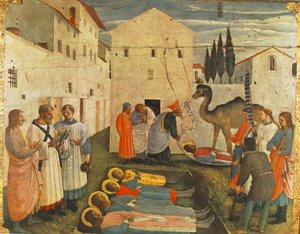
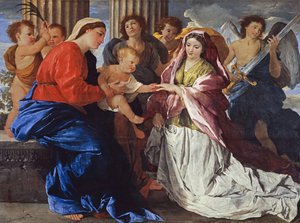
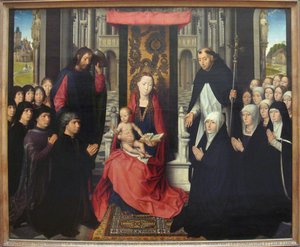
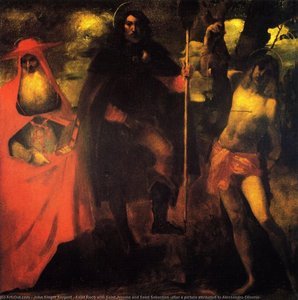
Artist Biography
The Luminous Legacy of Bonifazio Veronese
In the golden age of the Venetian Renaissance, few artists captured the atmospheric splendor and narrative depth of the era quite like Bonifazio Veronese, also known as Bonifazio de' Pitati. Born in Verona around 1487, Veronese emerged from a landscape steeped in classical tradition to become a pivotal figure in the evolution of Venetian painting. His journey began under the watchful eye of Palma il Vecchio, a mentorship that provided him with a robust foundation in the use of color and light. As he migrated to the vibrant Republic of Venice, Veronese did not merely observe the existing masters; he absorbed the very soul of the city's artistic currents, weaving together the legacies of Giorgione and Titian into a style that was uniquely his own.
The essence of Veronese’s artistry lies in his ability to balance the soft, emotive qualities of the Venetian school with a structured, almost monumental clarity. His early works reveal a profound reverence for the atmospheric perspective pioneered by Giorgione, where figures seem to emerge naturally from a hazy, dreamlike landscape. Yet, as his career progressed, he began to integrate the more rigorous, humanist influences flowing from Central Italy, particularly the balanced compositions of Raphael. This synthesis allowed him to move beyond mere imitation, creating works that possessed both a psychological intimacy and a grand, theatrical presence.
A Master of Narrative and Scale
Veronese’s reputation was truly cemented through his monumental commitment to large-scale storytelling. His most significant professional triumph was the decades-long undertaking for the Palazzo dei Camerlenghi. This massive cycle of paintings required not only immense technical skill but also an extraordinary capacity for narrative orchestration. Within these works, one can witness his mastery of color as a tool for drama, using rich pigments to guide the viewer's eye through complex historical and allegorical scenes. This project served as a testament to his endurance and his ability to command the vast architectural spaces of Venice.
Beyond his grand commissions, Veronese excelled in creating intimate, spiritually resonant compositions that continue to captivate collectors today. His religious works often feature a serene, almost tender humanity:
- Madonna of the Tailors: A masterpiece of familial warmth, where the divine meets the everyday through a delicate arrangement of figures and soft, luminous light.
- The Mystic Marriage of St Catherine: An exploration of sacred devotion, showcasing his ability to render texture and grace within a holy context.
- Saint Jerome in the Wilderness: A striking departure into the rugged and the visceral, where the sinewy strength of the saint is set against an evocative, untamed landscape.
Historical Significance and Enduring Influence
The historical importance of Bonifazio Veronese extends far beyond his own canvas. He acted as a vital bridge between the early, experimental days of the Venetian Renaissance and the more dramatic, high-style period that followed. His sophisticated approach to light and his ability to infuse narrative scenes with emotional weight laid the groundwork for the next generation of masters. The stylistic DNA of Veronese can be traced through the works of Tintoretto and Schiavone, both of whom inherited his penchant for dramatic composition and atmospheric depth.
As we look back upon his life, which concluded in 1553, we see an artist who was fundamentally a storyteller of the Venetian spirit. Through his fusion of local tradition and external innovation, Veronese helped define the visual language of an era. His paintings remain enduring windows into the sixteenth century, offering a glimpse of a world where color, light, and human emotion were woven into a single, breathtaking tapestry of art.
bonifazio veronese (bonifazio de pitati)
1487 - 1553 , Italy
Quick Facts
- Artistic Movement Or Style: Venetian Renaissance
- Artists Or Movements Influenced By This Artist:
- Tintoretto
- Schiavone
- Artists Who Influenced This Artist:
- Giorgione
- Titian
- Date Of Birth: 1487 Verona Italy
- Date Of Death: 1553
- Full Name: Bonifazio Veronese
- Nationality: Italian Renaissance
- Notable Artworks:
- The Adoration of the Kings
- The Legend of the Infant Servius Tullius
- The Mystic Marriage of St Catherine
- Place Of Birth: Verona Italy